September 2025

Click on image to download the issue in PDF format
Cover Story
Over the past century, the Akin osteotomy has earned the nickname “cheater Akin,” a term that reflects both its simplicity and the skepticism surrounding its standalone value. However, a deeper look into the history and evolving practices of podiatric and orthopedic surgeons reveals a more nuanced role for this procedure.
By Bradley P. Abicht, DPM, FACFAS
Guest Perspective
In the late 70s, newly involved with the late, great sports therapist Bob Gajda’s new Sports Fitness Institute in Glen Ellyn Illinois, I met figure skating coach, former National champion competitor, Candy Brown. Candy was coaching a young 12-year-old neighbor. Angelo, who I had seen flying around...
By Dr. Robert Weil, DPM
Features
Ankle-Foot Orthoses (AFOs) play an essential role in the management of various lower extremity conditions. Coding and compliance accuracy and proper documentation can pose a challenge. Providers must accurately explain why the specific AFO is needed. This is not just a box-ticking exercise but a fundamental element to avoid audit failures.
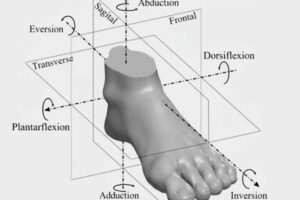
Each one of these so-called “Dirty Truths” has its specific reason, or reasons, for making the list. This one gets most of its “dirtiness” educationally and clinically. Many patients are familiar with the term “pronation,” though their understanding may vary. A clear explanation of body planes and planes of motion is important for an accurate understanding of this concept.
By Jay Segel, DPM; Sally Crawford, MS
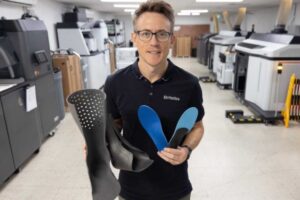
I am regularly asked, “Why 3D printed?” There are obvious environmental and manufacturing benefits, although speaking from my clinical perspective–it is the design freedom that is most important. The ability to have an unrestricted design envelope, being able to design and manufacture devices lighter, thinner, fully-custom and quicker are just a few of the benefits.
By Dean Hartley (Podiatrist & Adjunct Engineering Fellow–University of Queensland)
ShortTakes From the Literature
Although surgical alignment of the rear-foot might be sufficient to achieve acceptable correction of pronation-distortion deformity, concomitant correction of the medial arch might improve functional results. These authors present experience with combined hind-foot alignment and medial arch reconstruction by...
Soccer is associated with substantial injury risk, with reported between 13 to 35 injuries per 1000 player-hours of competitive play. Notably, approximately 77% of soccer-related ankle injuries are attributed to ankle sprain injuries (ASIs). ASI can lead to chronic ankle instability, obesity, and post-traumatic...
Running is a popular form of physical activity with significant health benefits, but improper technique can lead to running-related injuries. Understanding the risk factors associated with these injuries is crucial for mitigating their negative effects as such injuries can compel individuals to reduce their physical activity...
Even though dancers have good postural control ability, ankle sprain is the most common injury among dancers, developing into chronic ankle instability (CAI). While dancers rely on visual cues during stage and practice, it is unknown how dancers with CAI perform balance in different visual conditions.
Achilles tendon ruptures (ATRs) often occur in competitive athletes. Various studies have been conducted to improve the treatment outcomes for ATRs, but the results remain unsatisfactory for athletes. The purpose of this study was to clarify the clinical outcomes of the addition of Freeze-dried Platelet-derived...
Chronic lateral ankle sprains are common injuries that are largely sequelae of inversion injuries of the ankle. These injuries are amenable to surgical intervention, namely, Broström-Gould reconstruction, which is commonly performed for the above injury. Many open and arthroscopic variations of the...
One of the most common foot health problems in adults is hallux valgus. The primary goal of hallux valgus therapy is to reduce pain, which affects 76%–83% of people with this deformity and to improve the positioning of the first toe. This study aimed to assess the effect of corrective exercises and exercises...
Below-knee amputations significantly affect quality of life by eliminating the critical biomechanical functions of the ankle joint, which is essential for gait stability and propulsion. While prostheses aim to restore mobility, passive prostheses fail to replicate ankle dynamics, leading to gait asymmetry and musculoskeletal...
The Ground Truth: Foot & Ankle Unlocked
The Ground Truth: Foot & Ankle Unlocked is a bold, monthly exploration of foot and ankle anatomy, biomechanics, and clinical pathology–where foundational science meets modern medicine.
The Ground Truth isn’t just clinical, anatomy-driven–it’s education elevated, surgery informed, and innovation inspired. For podiatrists, orthopedic specialists, educators, and students alike, this is where lower extremity excellence begins–one structure, one pathology, one breakthrough at a time.
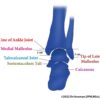
The ankle is a complex and dynamic joint essential for load transfer, balance, and ambulation. This review presents a 360° exploration of ankle biomechanics by integrating structural anatomy, neuromuscular control, and the biomechanical principles that govern function and dysfunction.
By Dr. Hooman MIR, DPM, MSci, FAPWCA
Industry News & Updates
For those living with obesity, who are known to exhibit differences in walking gait, speed, energy burned and more, fitness trackers often inaccurately measure activity–until now. Scientists at Northwestern University have developed a new algorithm that enables smartwatches to more accurately monitor the...
A team led by researchers at Pennsylvania State University (Penn State) developed a new fabrication approach that optimizes the internal structure of electrospun fibers to improve their performance in electronic applications. This novel electrospinning approach could open the door to more...
Massachusetts Institute of Technology (MIT) researchers have developed a bionic knee that can help people with transfemoral amputations walk faster, climb stairs, and avoid obstacles more easily than they could with a traditional prosthesis. Their innovation is now being used in conjunction with a...
Massachusetts Institute of Technology (MIT) researchers have developed a bionic knee that can help people with transfemoral amputations walk faster, climb stairs, and avoid obstacles more easily than they could with a traditional prosthesis. Their innovation is now being used in conjunction with a...
Researchers from the University of Oxford and University College London have collaborated on the development of an artificial intelligence (AI)–enabled piezoelectric wearable device for accurate joint torque sensing, leveraging the unique properties of boron nitride nanotubes (BNNTs).
The Last Word
Superset training of multi-joint exercises hampered maximal strength gains somewhat compared with traditional-set training. However, there were very similar improvements in body composition, and strength gains were observed for all exercises in the superset group.
Featured Products