CMS Announces 2 New L-codes

CMS Announces 2 New L-codes

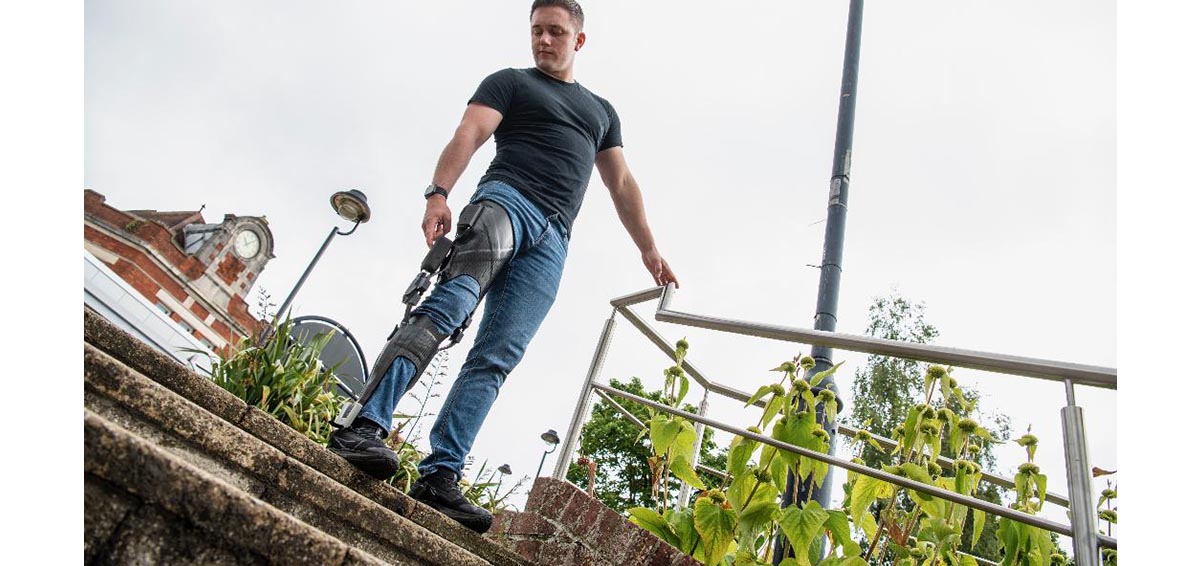
The Centers for Medicare & Medicaid Services (CMS) recently released their final determinations from the Second Biannual 2025 Healthcare Common Procedure Coding System (HCPCS) code application meetings. Among the final determinations are 2 new L-codes pertaining to the lower limb, which are valid for claims with dates of service on or after April 1, 2026, as follows…

read more
Implantable Neurotechnology Could Help Prosthetic Legs Work More Like Intact Limbs

Implantable Neurotechnology Could Help Prosthetic Legs Work More Like Intact Limbs

A research team led by researchers at Chalmers University of Technology in Sweden has successfully decoded leg movements directly from the remaining nerves in people with transfemoral amputations. Using novel implantable neurotechnology and an artificial intelligence (AI) method based on the nervous system’s own “language,” the researchers could interpret detailed movements—even the will to wiggle toes.

read more
Researcher Developing New Diabetic Neuropathy Treatment

Researcher Developing New Diabetic Neuropathy Treatment

A University of Central Florida (UCF) College of Medicine scientist is investigating a new approach to treat neuropathy without relying on pain pills and antidepressants. Assistant Professor Dr. Jim Nichols is focused on overlooked mechanisms in the body that may show how the inability to make insulin has “downstream” consequences in other areas, such as how the brain processes and registers sensation in the limbs.

read more
Trigger of Tendon Disease Discovered

Trigger of Tendon Disease Discovered

Overuse of our tendons can cause painful medical conditions, known as tendinopathy. Researchers have now deciphered an important molecular mechanism that triggers these problems. Their findings will facilitate the development of new treatments. A team of researchers led by Jess Snedeker, a professor of orthopedic biomechanics at ETH Zurich and Balgrist University Hospital in Zurich, and Katrien De Bock, professor of exercise and health at ETH Zurich, has

read more
Generative AI Can Help Athletes Avoid Injuries

Generative AI Can Help Athletes Avoid Injuries

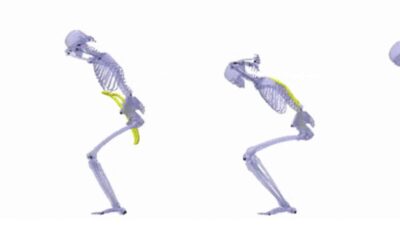
Researchers at the University of California San Diego (UCSD) have created a model driven by generative artificial intelligence (AI) that will help prevent injuries in athletes and also aid in rehabilitation after an injury. The model could also help athletes train better. The model, called BIGE (for Biomechanics-informed GenAI for Exercise Science), was trained with athlete movements together with information about the biomechanical constraints on the human body, such as…

read more
Shape-Shifting Scaffold Fights Infection, Rebuilds Bone

Shape-Shifting Scaffold Fights Infection, Rebuilds Bone

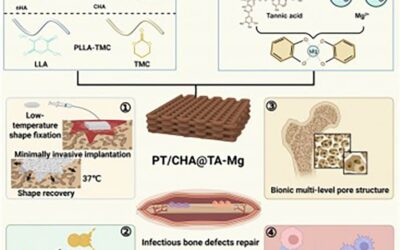
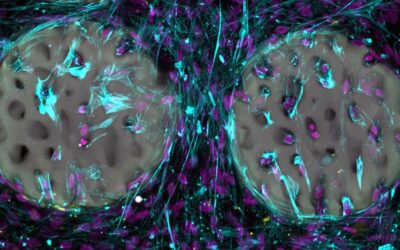
Researchers from Chongqing Medical University and Chengdu University in China have developed a body-temperature responsive, 3D-printed shape-memory scaffold coated with a metal polyphenol network to treat infectious bone defects. Using a combination of low-temperature 3D printing and surface biofunctionalization, the scaffold was designed to adapt to irregular bone defects while providing antibacterial activity, immune regulation, and osteogenic support.

read more
New Shoe Better Accommodates an AFO

New Shoe Better Accommodates an AFO

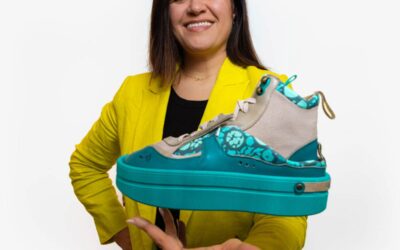
When 2 faculty members in the Colorado State University (CSU) Department of Design and Merchandising learned from ankle-foot orthosis (AFO) users that most of the shoes used to accommodate the brace are big, black, and bulky, they decided to reinvent it. Associate Professor Kristen Morris and Assistant Professor Lida Aflatoony started their project to create the new Ultra Adapt shoe by interviewing people who wear AFOs to learn about the common barriers they face.

read more
Jelly-like Material Used to Produce Bone Implants

Jelly-like Material Used to Produce Bone Implants

If a broken bone is too severe to heal on its own or a bone tumor needs to be removed, surgeons insert an implant that enables the bone to grow back together. These implants often consist of pieces of the patient’s own bone, known as autografts, or metal or ceramic parts. A key drawback of many implants is that they require a second surgery to harvest the tissue for the autografts. Additionally, metal implants tend to be too rigid and may loosen over time…

read more
Customizable 3D-Printed Socket Is Lightweight, More Comfortable

Customizable 3D-Printed Socket Is Lightweight, More Comfortable

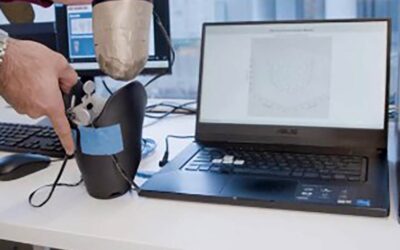
A reimagined limb socket interface combines highly personalized pressure mapping with artificial intelligence (AI) software and a lighter infill, creating a customized prosthesis that’s more comfortable to wear, for much longer, said researchers at Simon Fraser University (SFU). “For the first time, this 3D-printing technology is capturing unique pressure and force distribution data from a patient and using that data to design a custom prosthetic device and…

read more
Lightweight Exoskeleton Helps Stroke Survivors Walk

Lightweight Exoskeleton Helps Stroke Survivors Walk

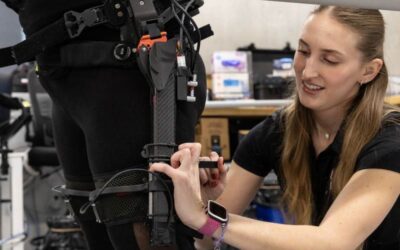
Researchers led by Tommaso Lenzi, associate professor in the mechanical engineering department at the University of Utah’s John and Marcia Price College of Engineering, are piloting a portable, lightweight hip exoskeleton that can reduce the energy required to walk by nearly 20% in individuals with post-stroke hemiparesis. The 5.5-pound device is worn around the hips and straps to the user’s thighs.

read more
Dual-Targeted Nanotherapy Accelerates Diabetic Wound Repair

Dual-Targeted Nanotherapy Accelerates Diabetic Wound Repair

Researchers from Huazhong University of Science and Technology report a novel nanotherapeutic platform that accelerates diabetic wound healing by simultaneously targeting blood vessels and inflamed tissue. The research team engineered hybrid extracellular vesicles by merging vesicles derived from endothelial cells and neutrophils, then loading them with deferoxamine. By fusing endothelial- and neutrophil-derived membranes, the system achieves…

read more
Hanger Inc. Acquires LTI

Hanger Inc. Acquires LTI

In March, Hanger Inc. announced the acquisition of Liberating Technologies (LTI), a research organization founded in 2000 and previously owned by Coapt. Since 2008, LTI’s specialized research team has secured numerous government-funded grants to pursue cutting-edge, high impact concepts and develop next generation technologies for the O&P field.

read more
Inform Diagnostics Completes Acquisition of Bako Diagnostics

Inform Diagnostics Completes Acquisition of Bako Diagnostics

Inform Diagnostics, a Fulgent Genetics company, announced that the acquisition of Bako Diagnostics was completed on March 17. Fulgent is an innovative leader in the clinical diagnostic and pathology fields. The acquisition underscores the company’s unwavering commitment to the podiatric medical community and strengthens its leadership position within…

read more
Study Reveals Injury Patterns Based on Gender, Age

Study Reveals Injury Patterns Based on Gender, Age

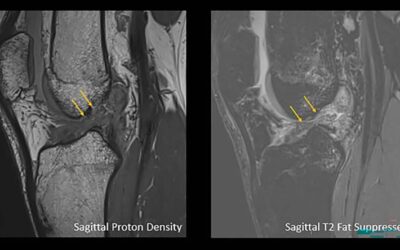
One of the largest MRI-based studies comparing knee injuries between men and women reveals surprising differences in injury patterns based on gender and age. The findings can be used to improve risk assessment and develop early intervention strategies. The study included 13,549 consecutive routine knee MRI exams performed between 2019 and 2024 at…

read more

Join

Subscribe For Updates

Stay in the loop with the latest news and updates! Subscribe now to receive exclusive content, special offers, and important announcements straight to your inbox. Don’t miss out – join our community today for all the latest updates delivered directly to you.