September 2024
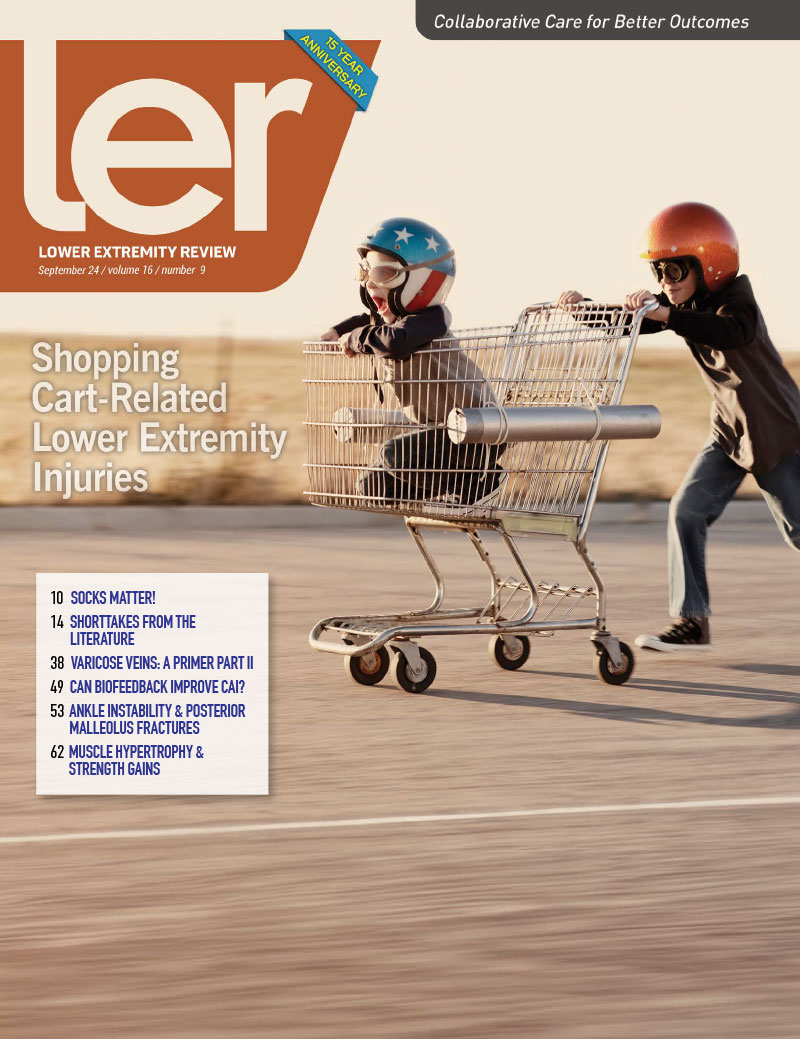
Click on image to download the issue in PDF format
Cover Story
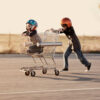
Tens of thousands of shopping cart-related injuries are treated at United States (US) hospital emergency departments (EDs) each year. This study described shopping cart-related lower extremity injuries treated at US hospital EDs. Methods: An analysis was performed of shopping cart-related lower extremity injuries reported to the National Electronic Injury Surveillance System during 2000-2023.
By Mathias B. Forrester, BS
Guest Perspective
A better understanding of pedal biomechanics combines with textile science and evolving manufacturing techniques to take this humble piece of clothing to the next level. I’ve been doing my radio show, The Sports Doctor, for 40 years now and we’ve covered a lot of topics in that time. Ankle sprains, parenting young athletes, cleat placement, new shoe designs, bunions, all the usual stuff…but there’s something new in the air. Lately we’ve been discussing, believe it or not, socks! Socks are essential to sports as well as everyday activities, especially for those who spend all day on their feet.
By Robert Weil, DPM
Features
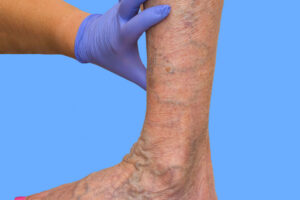
Varicose veins affect nearly one third of the adult population and are considered early warnings of the more serious chronic venous insufficiency. Early recognition and prevention are key to suppressing potential life-threatening damage and maintaining patient quality of life. Varicose veins (VVs)—those bulging, twisted blood vessels typically seen on the legs—are more than an esthetic issue. They can be painful and affect patients’ quality of life; left untreated, they can lead to life-threatening chronic venous insufficiency and venous ulcers and warrant a clinician’s attention.
By Angela Kelley, PA-C, MSM
Restoring correct ankle biomechanics is essential for maintaining long-term joint health of the ankle in patients with chronic ankle instability. Lateral ankle sprain (LAS) is 1 of the most common musculoskeletal injuries in athletes and the general public. Incomplete recovery and inadequate restoring of function due to lack of appropriate rehabilitation can lead to chronic ankle instability (CAI). Loss of passive ligamentous stability and deficits in neuromuscular control and...
By Seyed Hamed Mousavi, Fateme Khorramroo, Hooman Minoonejad, and Johannes Zwerver
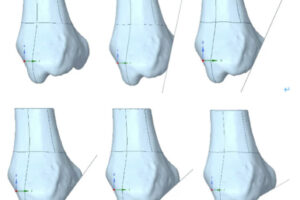
Posterior malleolus fractures have been associated with ankle instability because the ligament pull that follows such fractures can lead to movement of the fracture fragment and consequently disrupt the weight-bearing surface’s integrity. Posterior malleolus fractures have a reported prevalence spanning 10% to 44% of all ankle fractures and are known to be associated with ankle instability and a heightened development of complications like traumatic arthritis.
By Jichong Ying, Jianlei Liu, Hua Wang, Yunqiang Zhuang, Tianming Yu, Shuaiyi Wang, and Dichao Huang
ShortTakes From the Literature
More than 200 million people around the world have osteoporosis, and women are at especially high risk after menopause due to declining levels of the hormone estrogen, which helps keep bones strong. While osteoporosis rarely has noticeable symptoms, it can lead to serious injuries when otherwise minor falls cause broken bones that lead...
People with multiple sclerosis (MS) are far less likely than those without the condition to have the molecular hallmarks of Alzheimer’s disease (AD), according to new research from Washington University School of Medicine in St. Louis. The discovery suggests a new avenue of research through which to seek Alzheimer’s treatments, said...
The Walking Impairment Questionnaire (WIQ) is a common and easy-to-use assessment of walking incapacity in people with claudication due to peripheral artery disease (PAD). It has 4 subscales: pain severity, walking distance, walking speed, and ability to climb stairs. It is one of several clinical measurements useful for predicting patients’ functional limitations, assessing...
Romosozumab, a humanized monoclonal antibody sclerostin inhibitor, was FDA-approved in 2019 for the treatment of osteoporosis in postmenopausal women and men who are at increased risk of fracture. Significantly, the FDA applied a black box warning for the drug noting the potential risk of myocardial infarction, stroke and cardiovascular death.
About 38 million Americans have diabetes, and each year a staggering 154,000 Americans will suffer amputations, roughly 80% of which will be the result of complications from diabetes. Their life expectancy following this procedure is five years; the probability of a second amputation is up to 35%. By comparison, a total of 1,700 American soldiers had limbs removed since 2002 due to injuries sustained during combat tours in...
This study, the first of its kind, aimed to explore the connection between Obstructive Sleep Apnea (OSA) and osteoarthritis (OA) and evaluate causality using Mendelian randomization (MR), utilizing large-scale observational study data and genetic datasets.
High Preload increases shortening work, explains ~2/3 of the SSC-effect BUT despite identical preload and tendon-based passive elastic behavior less work in MATCHED compared to SSC. Stretch-induced intramuscular Force enhancement conveys to the shortening phase of SSC, explains ~1/3 of the SSC-effect. Stretch-induced increased performance in SSCs is attributed to passive-elastic structures within the contractile element, resulting in higher neuromuscular efficiency.
The presence of peripheral artery disease (PAD) in patients with diabetic foot ulcers (DFUs) is a significant risk factor for chronicity and amputation. Ankle–brachial pressure index (ABPI) is a screening tool for PAD. Brachial systolic pressure measurement, used as a denominator in the calculation of...
Noting a lack of evidence-based guidance on mobility challenges in individuals with neuropathic conditions, in particular Charcot-Marie-Tooth (CMT) disease and Cerebral Palsy (CP), researchers from the University of Iowa in Iowa City identified a critical need for a better understanding of how surgical correction affects mobility, balance confidence, and gait compared to ankle-foot-orthosis (AFO) bracing.
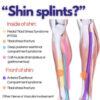
Shin splints are a label often given for shin pain, but this is NOT a diagnosis as several conditions can cause pain in this region. So here are some of the common causes; Front of shin: Anterior exertional compartment syndrome, Tibial stress fracture. Inside of shin: Medial tibial stress syndrome (MTSS), Tibial stress fracture, Deep posterior exertional compartment syndrome, Calf muscle strain (soleus or gastrocnemius).
Knee osteoarthritis (KOA) is a common disease in elderly adults. While previous studies have mainly focused on pathological changes, such as synovial and cartilage alterations, these authors sought to focus on changes in muscle quality. Echo intensity, shear modulus, and Myoton PRO (Tallinn, Estonia) are all potential and convenient tools for evaluating muscle properties. In addition to measuring muscle morphology, echo intensity and shear modulus also expand the scope of...
…The current review sought to analyze the evidence for changes in foot biomechanics during pregnancy and the postpartum period. These authors found that around half of the body mass acquired during pregnancy is in the woman’s abdominal region (anterior part of the trunk), which leads to changes in the center of gravity and more significant oscillations in the center of pressure. These factors induce disturbances in the pregnant woman’s gait.
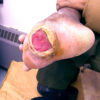
Diabetic foot is a common complication of diabetes that affects quality and prognosis of life for patients and often requires hospitalization. Infection, alone or in association with ischemia, is the main cause of hospital admission and impacts prognosis. The aim of this study is to analyze the costs of diabetic foot lesions and assess factors that influence the economic impact, focusing on infection.
Ankle fractures are common among healthy adults, but even moreso among elderly patients. And the population of so-called Baby Boomers (today’s 60–78-year-olds) is expected to nearly double by 2050. Ankle fractures in patients with osteopenia and in diabetic patients with deranged bone remodeling constitute high-risk injuries that may result in catastrophic complications.
Industry News & Updates
Hanger, Inc., along with the American Orthotic and Prosthetic Association (AOPA), announced the creation of the Dr. James H. Campbell Commitment to Outcomes Award during the General Session at the annual AOPA National Assembly. The award was created to honor Hanger Senior Vice President and Chief Clinical Officer Jim Campbell, PhD, CO, FAAOP, for his exceptional contributions to...
Gait analysis is emerging as a valuable, non-invasive complement to cognitive assessments that aid in early diagnosis and management. In clinical settings, gait and balance tests typically focus on a straight walking path. However, researchers at Florida Atlantic University (FAU) have ventured into a different realm—curved path walking—a more natural yet complex activity. Straight walking is a rhythmic and...
A team of researchers from the National University of Singapore (NUS) engineered an innovative magnetic wound-healing gel that promises to accelerate the healing of diabetic wounds, reduce the rates of recurrence, and thus lower the incidents of limb amputations. Each treatment involves the application of a bandage preloaded with a hydrogel containing skin cells for healing and magnetic particles.
A team of researchers from the New Jersey Institute of Technology (NJIT) have demonstrated a new method that leverages artificial intelligence (AI) and computer simulations to train robotic exoskeletons that can help users save energy while walking, running, and climbing stairs. The novel method rapidly develops exoskeleton controllers to assist locomotion without relying on lengthy human-involved experiments.
Arizona State University (ASU) bioengineers have developed a multistep strategy that applies different nanomaterials to diabetic wounds at different times to support both early- and late-stage healing. Their work showed this method outperformed a common wound dressing in a diabetic mouse model, closing wounds faster and producing more robust skin tissue. The researchers’ analysis also suggests that their...
The Last Word
It remains unclear whether non–animal-derived dietary protein sources (and therefore vegan diets) can support resistance training-induced skeletal muscle remodeling to the same extent as animal-derived protein sources.
Featured Products