July 2024

Click on image to download the issue in PDF format
Cover Story
Backward walking offers many benefits relative to forward walking, not least of which is a decrease in C-reactive protein, body mass index, and blood pressure levels. It is a widely accepted fact that obesity is not much amenable to medical treatment. Diet and exercise, systematically undertaken, is the only way to treat obesity, manifested as...
By Ajith Soman, Sunil Chandy, Khalid Alkhathami, Baranitharan Ramamoorthy, and Bijad Alqahtani
Features
There is a need for guidance to help allied healthcare professionals manage an evidence-based treatment plan of usual care for ankle osteoarthritis. International clinical guidelines recommend non-pharmacological interventions such as exercises and weight loss as first-line management for osteoarthritis (OA), regardless of joint site. Whereas several evidenced-based non-surgical management...
By Michael J. Callaghan, Jinal Pravin Gala, and Edward Roddy
Pes planus is also known as flatfoot. It comes from Latin word that means pes as foot and planus as flat or ground level. Here, the medial longitudinal arch of the foot descends, resulting in a lack of spring action and increased stress on the entire foot with each step. It serves as an adaptive support base for the entire body, functions to...
By Pradhyum D. Kolhe , H V Sharath , Siddhi G. Rathi , Deepali S. Patil
This study came as highly needed because it highlighted the benefit of aquatic training in the rehabilitation of Grade 3 acute ankle sprain by showing very promising results.Ankle sprains are the second most common sports injury after knee injuries, with about 85% of them affecting the lateral ankle ligaments, and ankle injuries account for 14% of orthopedic emergency...
By Maryam M. Sadaak, Salwa Fadl AbdElMageed, and Mona Mohamed Ibrahim
ShortTakes From the Literature
The treatment for multiple sclerosis (MS) does not cure the disease, but it is intended to reduce the intensity, duration, and frequency of symptoms. Rehabilitation therapy (RT), including an individualized physical therapy program (PTP) and adapted occupational therapy (OT), has benefits in terms of aerobic capacity, muscle strength, coordination, and ability to perform...
In releasing its new clinical practice guideline focused on acute isolated meniscal pathology, the American Academy of Orthopaedic Surgeons (AAOS) sought to help the medical community treat patients suspected of or diagnosed with an acute isolated meniscal tear. Acute isolated meniscal tears often occur from a traumatic injury with...
Peripheral neuropathy affects millions of individuals worldwide. The lifetime prevalence of peripheral neuropathy is estimated to be 50% among individuals with diabetes mellitus and this prevalence tends to increase with the duration of diabetes. Diabetic peripheral neuropathy (DPN) typically affects the distal extremities (feet and hands) and is, therefore...
Ankle sprains are the most common lower-leg musculoskeletal injuries, frequently occurring among athletes and other physical active individuals. Theses authors from Saudi Arabia sought to compare the ankle range of motion (ROM) and dynamic stability of healthy and injured athletes for their dominant and nondominant legs.
Based on findings from a systematic review and meta-analysis, researchers from the University of Jaén in Spain reported that, when compared to corticosteroid injections: At 3 months, extracorporeal shock wave therapy (ESWT) was better than corticosteroids injections in reducing pain (SMD −0.6; 95%CI −1.1 to −0.11) and thickness of the plantar fascia...
Long-term lifestyle change programs can be effective at achieving weight loss for adults with overweight or obesity and can lower their risks for developing chronic diseases, such as type 2 diabetes. However, enrollment and retention are challenging in long-term interventions.
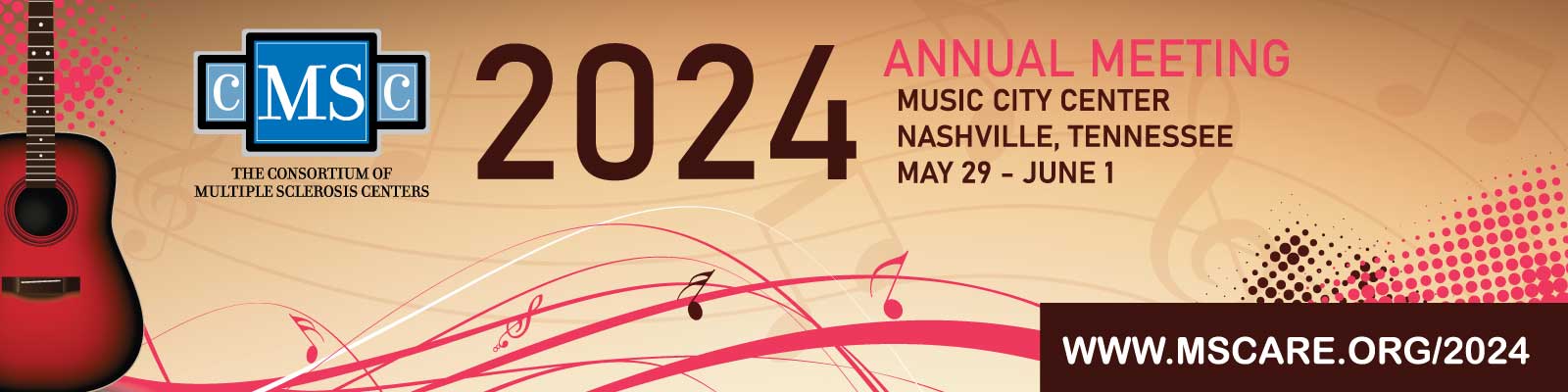
The Annual Meeting of the CMSC
The Annual Meeting of the CMSC is the largest North American meeting for healthcare professionals and researchers engaged in MS care.
While glatiramer acetate (GA; Copaxone®, Teva Neuroscience) has long been FDA-approved for relapsing forms of multiple sclerosis (MS), a new safety and efficacy snapshot study from Israel looked at its use in primary progressive MS (PPMS). Two GA depot doses (40 mg or 25 mg) were studied in a 12-week trial that included 30 patients...
Today’s disease-modifying immunotherapies (DMTs) have altered the course of multiple sclerosis (MS) and led to the introduction of high-efficacy early treatment (HEET). However, HEET does not prevent a portion of patients from experiencing relapse activity and disease progression. This single-center retrospective analysis looked at...
Backward Walking (BW), as compared with Forward Walking (FW), is known to better differentiate fallers from nonfallers in people with multiple sclerosis (MS). However, the effectiveness of BW training in improving walking and balance in the MS population is now well studied. Researchers from Wayne State University used interim data from an ongoing study to examine the issue.
Industry News & Updates
Engineers at the Massachusetts Institute of Technology (MIT) have designed a sort of workout mat for cells that can help scientists zero in, at the microscopic level, on exercise’s purely mechanical effects. The new design is not so different from a yoga mat: Both are rubbery, with a bit of stretch. In the case of the MIT mat, it’s made from hydrogel—a soft, gel-like material that is about the...
Samsung Electronics has developed EX1, an exercise assistance robot, with the goal to amplify physical function and strength in senior individuals. This advanced robotic aid offers tailored workouts with both assistive and resistive modes, aiming to prevent falls and bolster overall health in this demographic.
A research team led by Dr. Sangheon Kim of the Center for Biomaterials Research at the Korea Institute of Science and Technology (KIST) announced that they have developed a 3D stem cell therapy to treat critical limb ischemia (CLI) through a self-assembling platform technology using a new material microgel. By using collagen microgels, a new...
Using wearable sensors and advanced machine learning algorithms, researchers from Florida Atlantic University’s College of Engineering and Computer Science have developed a novel approach that addresses a crucial gap in balance assessment and sets a new benchmark in the application of wearable technology and machine learning in healthcare.
JMIR Rehabilitation and Assistive Technologies, a member publication of the University of Toronto is a new venue for publishing interdisciplinary research on the development, implementation, and evaluation of health innovations and emerging technologies in the field of rehabilitation, with a focus on pragmatic yet rigorous and impactful science.
A research team led by Professor Sang-hoon Lee at the Department of Robotics and Mechatronics Engineering, Daegu Gyeongbuk Institute of Science and Technology. South Korea, has successfully developed an imperceptive surface electromyography (sEMG) sensor. The sensor is crucial in allowing people with lower limb amputations to control robotic prosthetic legs as...
The Last Word
Adaptation to heat stress and hypoxia are relevant for athletes participating inTour de France or similar cycling races taking place during the summertime in landscapes with varying altitude. Both to minimize detrimental performance effects associated with arterial desaturation occurring at moderate altitudes in elite athletes, respectively, reduce the risk of hyperthermia on hot days.
Featured Products