 Long-term lifestyle change programs can be effective at achieving weight loss for adults with overweight or obesity and can lower their risks for developing chronic diseases, such as type 2 diabetes. However, enrollment and retention are challenging in long-term interventions.
A new systematic review and meta-analysis has found that even programs less than 13 weeks can indeed be helpful, as can programs that run 13–26 weeks. The findings demonstrated that multicomponent nutrition and physical activity interventions of 6 months or less can achieve weight loss by the end of the intervention period.
The pooled mean difference for weight change was less than −2.59 kg (95% CI, −3.47 to −1.72; 14 RCTs; 2,407 participants; I2 = 69%) (Figure 1). The negative difference in mean weight change indicates that people in the intervention groups lost more weight than those in the comparison groups. For the studies with interventions lasting less than 13 weeks, the pooled mean difference for weight change was −2.70 kg (95% CI, −3.69 to −1.71; 7 RCTs, 1,051 participants, I2 = 73%). For the studies with interventions lasting 13 to 26 weeks, the pooled mean difference for weight change was −2.40 kg (95% CI, −4.44 to −0.37; 7 RCTs, 1,356 participants, I2 = 69%) (Figure 2).
The authors concluded that short-term multicomponent interventions involving physical activity and nutrition can achieve weight loss for adults with overweight or obesity. Offering short-term interventions as alternatives to long-term ones may reach people who otherwise would be unwilling or unable to enroll in or complete longer programs.
Source: Rotunda W, Rains C, Jacobs SR, et al. Weight Loss in Short-Term Interventions for Physical Activity and Nutrition Among Adults With Overweight or Obesity: A Systematic Review and Meta-Analysis. Prev Chronic Dis. 2024;21:E21. doi: 10.5888/pcd21.230347.
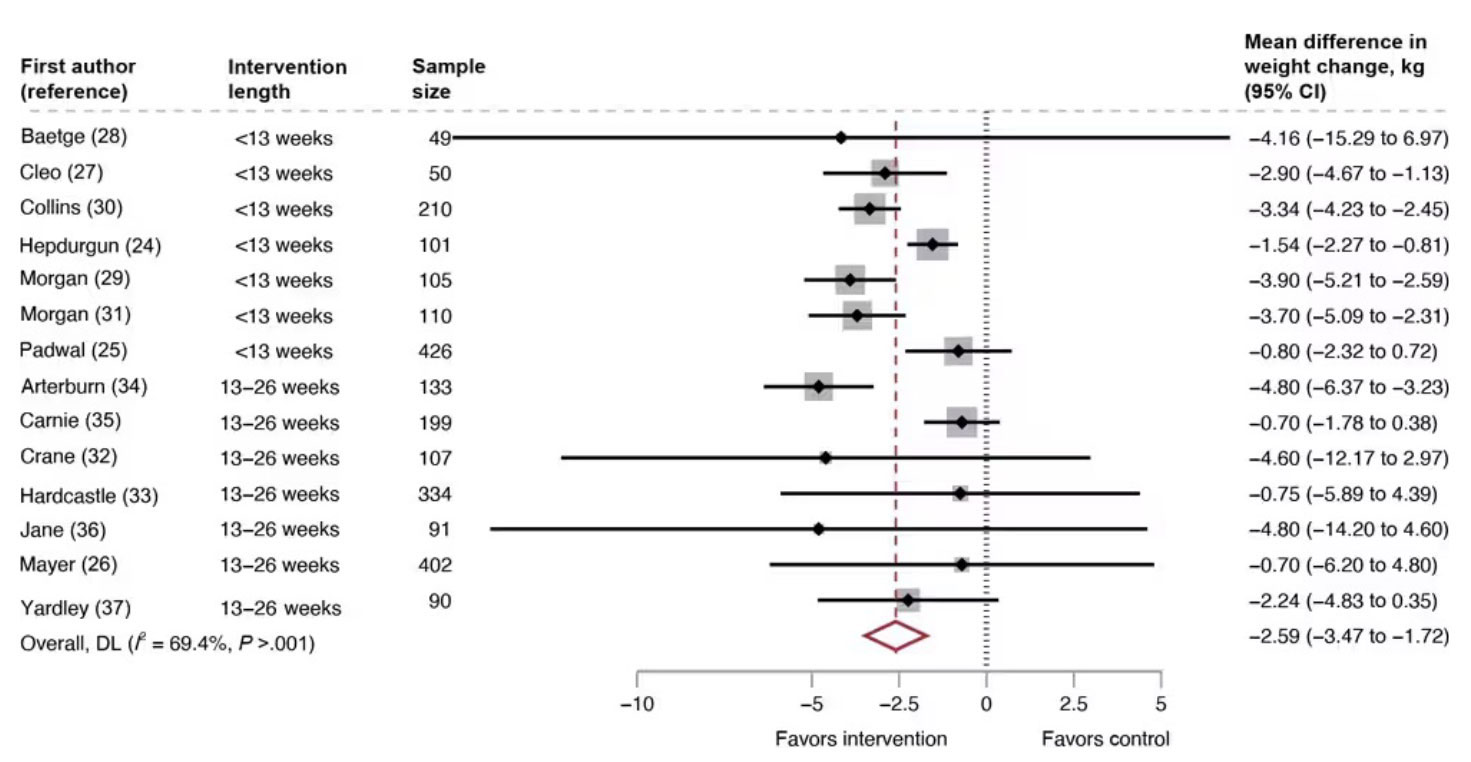
Figure 1: Mean difference in weight change across all included studies, intervention versus control, systematic review of weight loss in short-term interventions (N = 14) for physical activity and nutrition among adults with overweight or obesity. Meta-analysis was of the effects of intervention versus control on mean difference in weight change (kg) among the 14 included studies. Values less than 0 indicate an intervention effect (ie, favors intervention), and values greater than 0 indicate no intervention effect (ie, favors control). Abbreviation: DL, DerSimonian and Laird’s Q test.
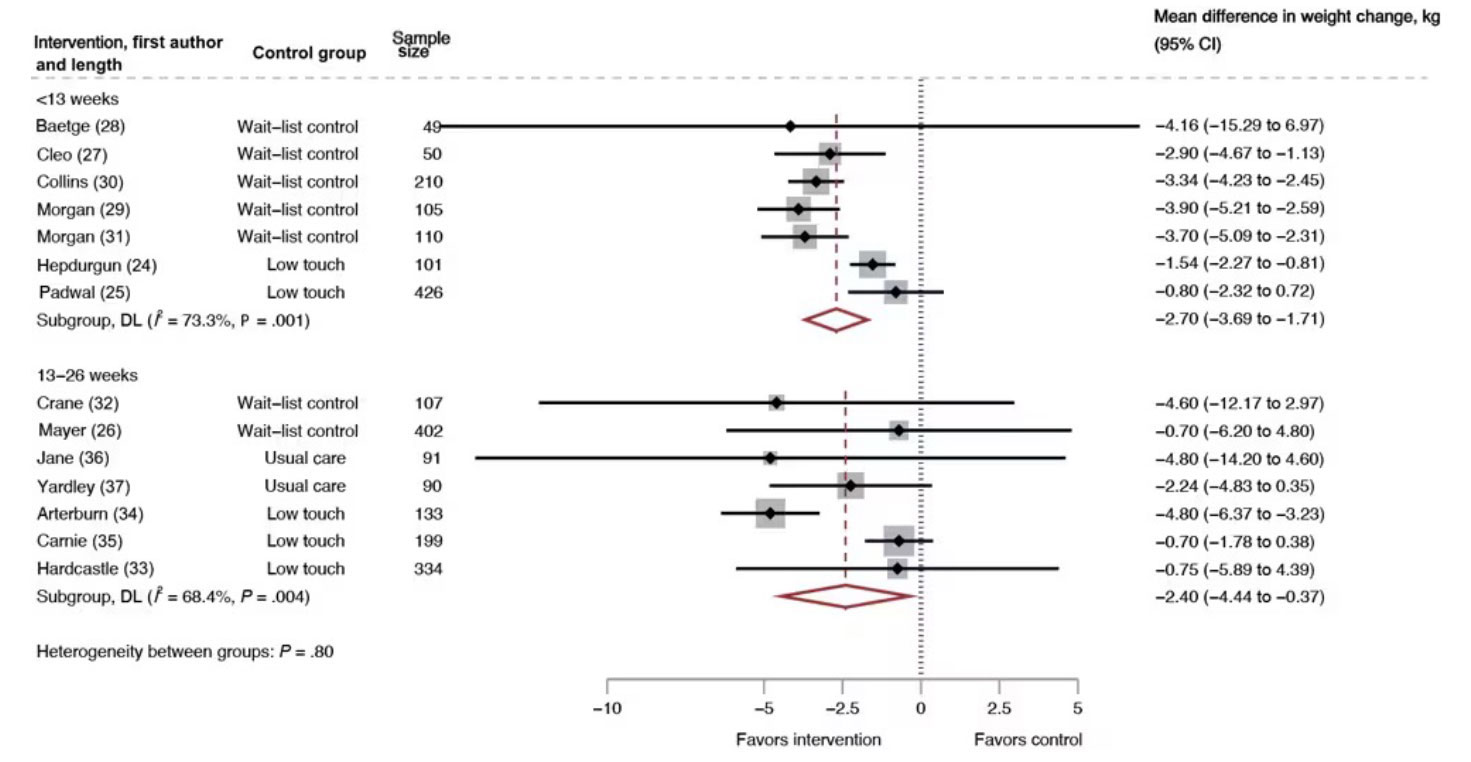
Figure 2: Mean difference in weight change by intervention duration, intervention versus control, systematic review of weight loss in short-term interventions (N = 14) for physical activity and nutrition among adults with overweight or obesity. Meta-analysis was of the effects of the intervention versus control on mean difference in weight change (kg), stratified by intervention duration. Intervention duration is defined as less than 13 weeks or 13 to 26 weeks. Values less than 0 indicate an intervention effect (ie, favors intervention), and values greater than 0 indicate no intervention effect (ie, favors control). Abbreviation: DL, DerSimonian and Laird’s Q test. Overall, DL (I2= 69.4%, P > .001).