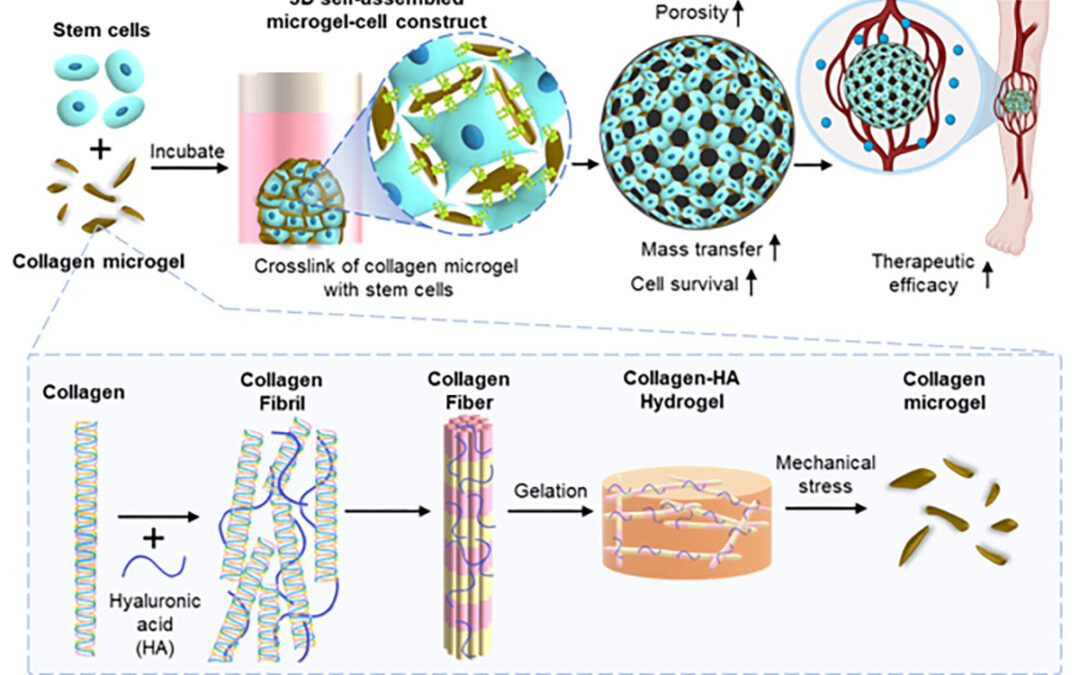








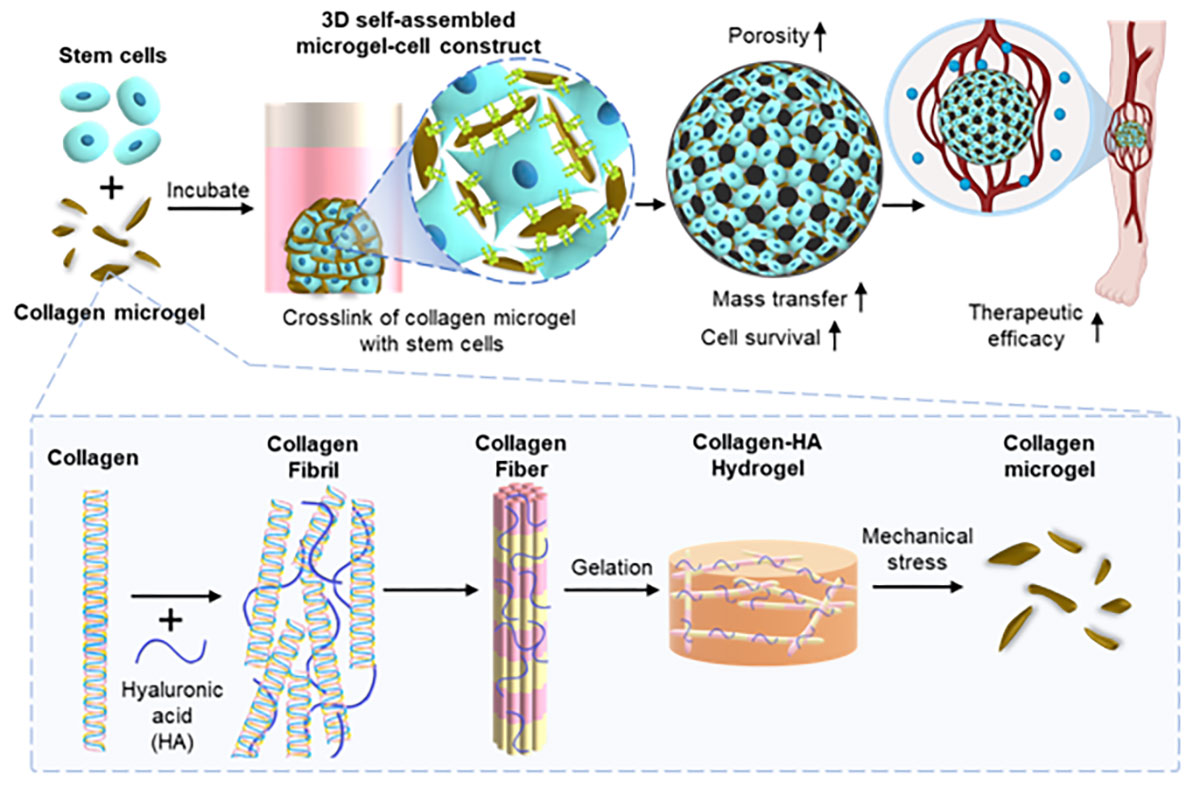
This image depicts the concept of self-assembling stem cell therapy. Image courtesy of KIST
A research team led by Dr. Sangheon Kim of the Center for Biomaterials Research at the Korea Institute of Science and Technology (KIST) announced that they have developed a 3D stem cell therapy to treat critical limb ischemia (CLI) through a self-assembling platform technology using a new material microgel. By using collagen microgels, a new biocompatible material, the researchers were able to easily transplant stem cells into the body and increase cell survival rate compared to 3D stem cell therapies made of cells alone.
The team processed collagen hydrogels to micro-scale to create porous, 3D scaffolds that are easy to inject in the body and have a uniform cell distribution. The microgel-cell constructs developed by the researchers expressed more pro-angiogenic factors and exhibited higher angiogenic potential than cell-only constructs. When microgel-cell constructs were injected into the muscle tissue of mice with CLI, blood perfusion rate increased by about 40% and limb salvage ratio increased by 60% compared to the cell-only constructs, confirming their effectiveness in increasing blood flow and preventing necrosis in the ischemic limb.
Due to its excellent angiogenic effect, the new stem cell therapy is expected to provide an alternative for patients with CLI who have limited treatment options other than amputation. Furthermore, since angiogenesis is an essential component of various tissue regeneration processes, it can be extended to other diseases with similar mechanisms to peripheral arterial disease.