The Middle Ground: Minimally Invasive Procedures Redefine Lower Extremity Care

The Middle Ground: Minimally Invasive Procedures Redefine Lower Extremity Care

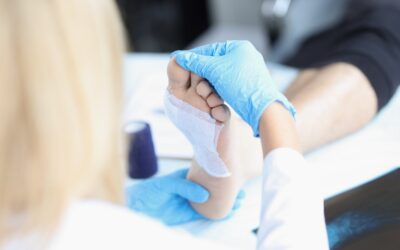
Many patients with chronic foot and ankle conditions face treatment decisions that often fall into a frustrating gray area. Conservative therapies such as orthotics, physical therapy and injections may no longer provide relief, yet the prospect of surgery and its associated downtime can feel premature or undesirable. In response, clinicians are increasingly turning to minimally invasive procedures that offer…

By Keith Loria

read more
The Modern Clinical Practice Keeps Asking for More

The Modern Clinical Practice Keeps Asking for More

In healthcare, one pattern has become hard to ignore. Every time the system identifies a problem, the default solution is to add another task, another field, another attestation, another screen, and another layer of proof for the physician to produce. In podiatry, that pattern is especially visible because so much of what should be straightforward diabetic foot prevention has been converted into a…

By Mikel D. Daniels, DPM, MBA, President and Chief Medical Officer, WeTreatFeet Podiatry

read more
lerEXPO Highlights: Clinical Protocol for Revision Digital Surgery and Forefoot Salvage

lerEXPO Highlights: Clinical Protocol for Revision Digital Surgery and Forefoot Salvage

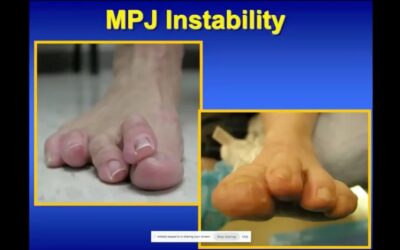
In the demanding arena of revision digital surgery, success is predicated on a strict “Proximal-to-Distal” hierarchy. The primary driver of surgical failure in this discipline is the isolated digital approach–addressing the toe as a localized deformity without considering the global biomechanical forces acting upon it. Long-term stability requires the neutralization of these forces through a systematic stabilization of the forefoot foundation.

By Tom Chang, DPM

read more
Correlation Between Vitamin B12 Levels and Peripheral Neuropathy in Diabetic Patients

Correlation Between Vitamin B12 Levels and Peripheral Neuropathy in Diabetic Patients

Diabetic peripheral neuropathy is a common and debilitating complication of diabetes mellitus, significantly impacting the quality of life of affected individuals. Vitamin B12 is essential for nerve function and myelin synthesis and its deficiency can lead to neuropathy that resembles diabetic neuropathy. Long-term metformin use in diabetic patients increases the risk of vitamin B12 deficiency, making the relationship between the 2 critical to explore.

read more
Sensory Nerves at Risk During Hallux Valgus Surgery

Sensory Nerves at Risk During Hallux Valgus Surgery

Hallux valgus is a common forefoot deformity. Sensory complications after correction can result from iatrogenic injury to the medial branch of the medial dorsal cutaneous nerve (MDCNm), lateral dorsal cutaneous nerve (LDCN), medial plantar cutaneous nerve (MPCN), and lateral plantar cutaneous nerve (LPCN). Following PRISMA (Preferred Reporting Items for Systematic Reviews and Meta-Analyses) guidelines, PubMed…

read more
Comparing Scarf/Akin Osteotomy vs Modified Lapidus Procedure in Hallux Valgus

Comparing Scarf/Akin Osteotomy vs Modified Lapidus Procedure in Hallux Valgus

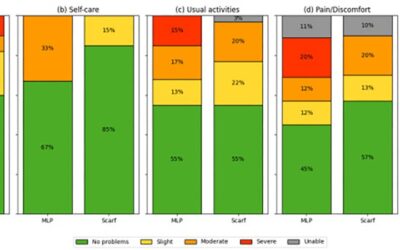
Hallux valgus is a common forefoot deformity. Both Scarf/Akin osteotomy and the modified Lapidus procedure (MLP) are established surgical options for moderate to severe cases, but few studies directly compare outcomes. A retrospective cohort study of patients undergoing Scarf/Akin osteotomy or MLP between 2019 and 2020 was performed. Patient-reported outcomes (Manchester Oxford Foot Questionnaire (MOXFQ)…

read more
Functional Outcomes of All-Inside Arthroscopic Repair for CAI in Adolescents

Functional Outcomes of All-Inside Arthroscopic Repair for CAI in Adolescents

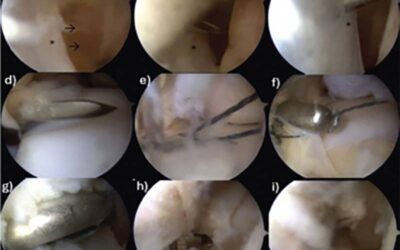
Lateral ankle sprain is a very common orthopedic injury and may progress to chronic ankle instability (CAI), particularly in adolescents engaged in sports. Approximately 20-40% of patients with acute ankle sprains develop CAI, which is associated with instability, pain, and impaired performance. Results of surgical management of CAI in the pediatrics is limited. This study evaluates outcomes of arthroscopic ligament repair in adolescents.

read more
Correlation Between Functional Impairment and MRI Assessment of Cartlidge in CAI

Correlation Between Functional Impairment and MRI Assessment of Cartlidge in CAI

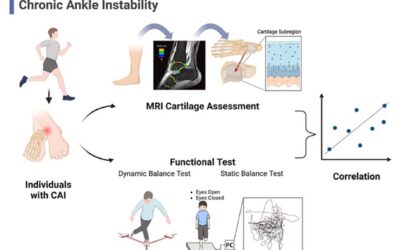
Chronic ankle instability (CAI) is characterized by persistent ankle pain, instability, and recurrent sprains. Previous studies have investigated functional impairments and cartilage degeneration separately, but the relationship between them in CAI remains unclear and unexplored. This study aimed to compare the outcomes of functional impairments and cartilage composition between individuals with CAI and healthy controls.

read more
Remote Monitoring Technology in Patients at Risk for DFUs

Remote Monitoring Technology in Patients at Risk for DFUs

Globally, a lower-extremity amputation occurs every 20 seconds as a complication of a diabetic foot ulcer, underscoring the urgent need for effective preventive strategies. Previous studies have shown that temperature-based foot monitoring can reduce both the incidence and severity of diabetic foot ulcers. However, real-world adherence data for remote temperature monitoring remain limited, particularly in diverse or…

read more
Lapidus Procedure without Focused Frontal Plane Rotation of the First Metatarsal Trial

Lapidus Procedure without Focused Frontal Plane Rotation of the First Metatarsal Trial

The correction of hallux valgus using the Lapidus arthrodesis without focused frontal plane rotation of the first metatarsal is common and researchers studied the outcomes in a trial. Thirty-three feet in 30 patients who had undergone Lapidus arthrodesis for the treatment of hallux abducto valgus deformity were studied. Median age was 55.4 years (range, 33-78 years), 23 were female (76.7%), 3 (10%) underwent bilateral Lapidus…

read more
Dandelion Medical Dressing for Diabetic Wound Care

Dandelion Medical Dressing for Diabetic Wound Care

Developing bioactive dressings to remodel pathological microenvironments is critical for diabetic foot ulcer management. Drawing inspiration from the traditional “smashed for external application” of Taraxacum mongolicum Hand.-Mazz., a biomimetic film (TH-EVLPs@CNF-) is engineered by integrating extracellular vesicle-like particles (TH-EVLPs) from fresh dandelion juice with carboxylated cellulose nanofibrils…

read more
Diabetic Foot: The Scope of the Problem

Diabetic Foot: The Scope of the Problem

The human foot is often treated as a medical afterthought–a neglected masterpiece at the very end of the body. In the hierarchy of anatomy, we prioritize the head and the heart, yet we frequently ignore the foundation that allows us to navigate our lives until the moment it begins “killing us.” Practicing at this anatomic peninsula requires a unique perspective.

By Dr. David Armstrong, DPM, PHD

read more
Clinical Case Review: Complications and Failure Modes in MIS Hallux Arthrodesis

Clinical Case Review: Complications and Failure Modes in MIS Hallux Arthrodesis

The strategic transition from open to minimally invasive surgery (MIS) for hallux metatarsophalangeal (MTP) arthrodesis represents a significant shift in delivery, yet the biomechanical mandate remains unchanged. Correction mechanisms in the forefoot are fundamentally grounded in soft-tissue dynamics. Regardless of the surgical approach, the realignment of the hallux is predicated on the appropriate tensioning and pull of the surrounding structures.

By Amiethab Aiyer, MD

read more
Functional Resistance Training for the Leg, Foot, and Ankle

Functional Resistance Training for the Leg, Foot, and Ankle

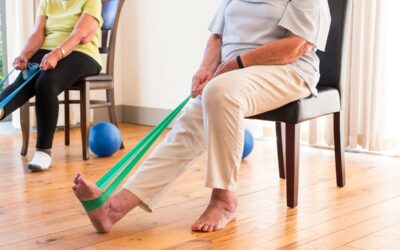
I often classify exercise as what I teach clients/patients to do to improve impairment at the body structure function level often targeting joint range of motion and muscle strength. Gains in joint flexibility and muscle strength through isometric, concentric or eccentric force generation is based on the position of the body part in open or closed chain and whether resistance is placed close to or far from the joint and or muscle insertion or origin.

By Dr. Jennifaye V. Brown

read more
Podiatric Case Study: Post-Operative Rehabilitation Following Achilles Tendon Repair

Podiatric Case Study: Post-Operative Rehabilitation Following Achilles Tendon Repair

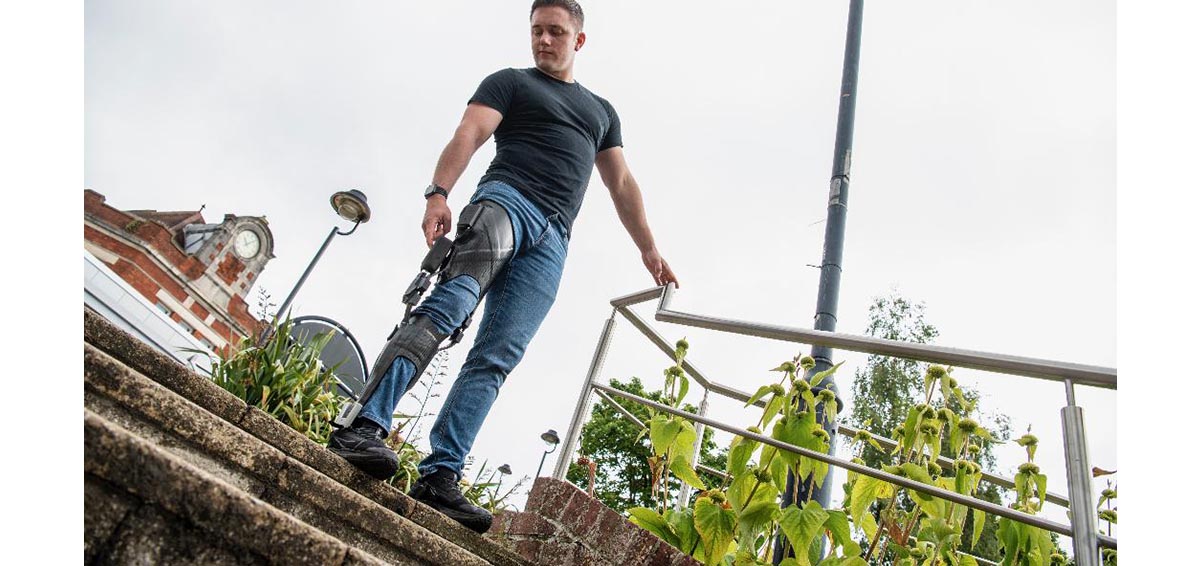
This case study documents the transition from rigid post-operative immobilization to dynamic carbon fiber bracing in a 46-year-old patient following primary open Achilles tendon repair performed in a foot and ankle surgical practice. At 6 weeks post-op, the patient was transitioned out of a tall controlled-ankle-motion boot into the Trulife L-Pace, a posterior lateral strut carbon fiber AFO selected for its intermediate stiffness, energy return characteristics, and compatibility with standard footwear.

read more

Join

Subscribe For Updates

Stay in the loop with the latest news and updates! Subscribe now to receive exclusive content, special offers, and important announcements straight to your inbox. Don’t miss out – join our community today for all the latest updates delivered directly to you.