
What Contributes to Tendon Thickness After Stroke–A Commentary

What Contributes to Tendon Thickness After Stroke–A Commentary

April, August, and December are months reserved to address comments made to articles written for “A Foot Forward for Optimum Health”. However, I did not have any comments from May, June and July and I wanted to make some comments and pose clinical questions from the article titled, “Changes in Lower Extremity Tendon Thickness After Stroke Rehab (Balance and Outcomes)” in the series “From The Literature” for June 2026.

By Dr. Jennifaye V. Brown

read more
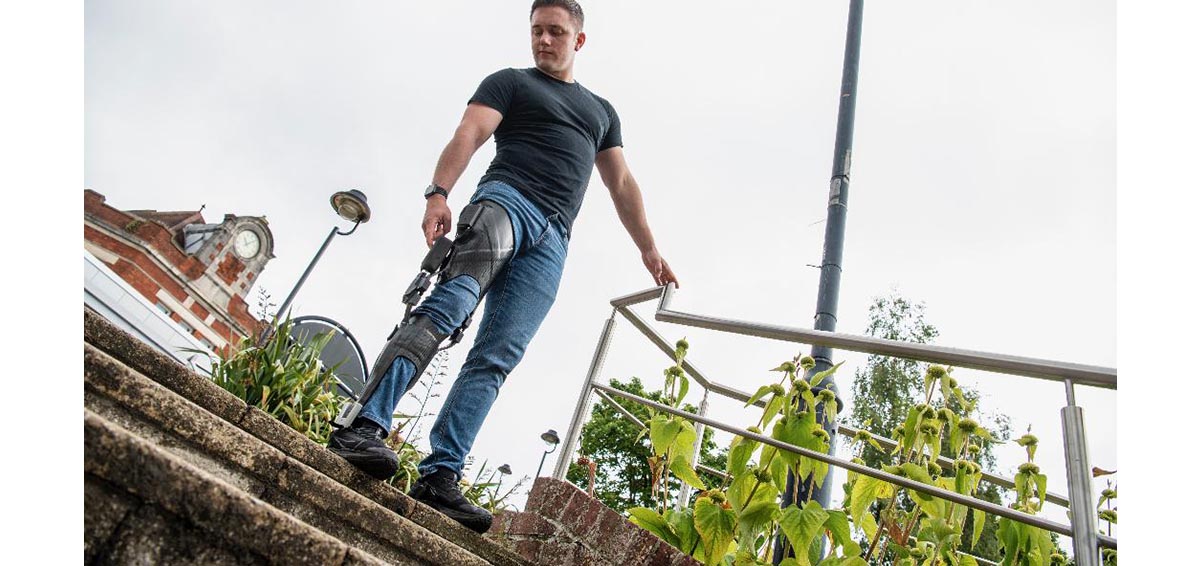
Stopping Knee Hyperextension Starts with a Physical Therapy Examination and Then CPO Collaboration

Stopping Knee Hyperextension Starts with a Physical Therapy Examination and Then CPO Collaboration

Genu recurvatum or knee hyperextension is extension of the tibiofemoral joint beyond 0˚ in stance phase, commonly seen during hemiplegic gait. If initial contact of the foot occurs with plantarflexion, the ground reaction force vector (GRFV) at the ankle passes in front of the knee resulting in the hyperextension. Furthermore, hip flexion occurs with the trunk coming forward as the GRFV passes in front of the hip. However, hyperextension can be seen in terminal swing due to decrease control of the hamstrings from midswing to terminal swing prior to initial contact. This eccentric weakness is often missed during gait analysis.

By Dr. Jennifaye V. Brown

read more
Translating Evidence to Clinical Practice–Implications for Functional Resistance Training for the Leg, Foot, and Ankle

Translating Evidence to Clinical Practice–Implications for Functional Resistance Training for the Leg, Foot, and Ankle

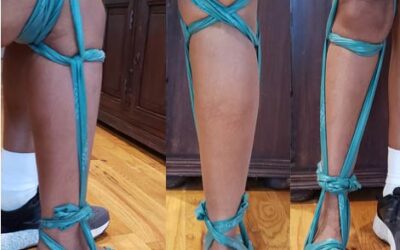
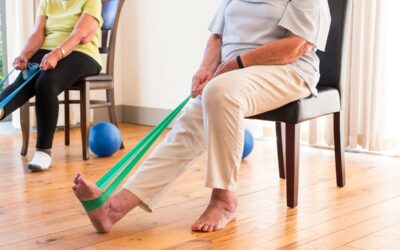
This article is a follow-up to the article titled, “Functional Resistance Training for the Leg, Foot, and Ankle.” The focus is to demonstrate how research can be translated to clinical practice through creative interventions. Functional resistance training has been used to improve outcomes associated with participation in life roles.

By Dr. Jennifaye V. Brown

read more
Functional Resistance Training for the Leg, Foot, and Ankle

Functional Resistance Training for the Leg, Foot, and Ankle

I often classify exercise as what I teach clients/patients to do to improve impairment at the body structure function level often targeting joint range of motion and muscle strength. Gains in joint flexibility and muscle strength through isometric, concentric or eccentric force generation is based on the position of the body part in open or closed chain and whether resistance is placed close to or far from the joint and or muscle insertion or origin.

By Dr. Jennifaye V. Brown

read more
Questions, Answers & Commentaries About AFOs

Questions, Answers & Commentaries About AFOs

I would like to thank the reader for acknowledging my expertise. I want to reiterate that the literature supports functional context as a focus of rehabilitation as opposed to just impairment-based interventions. We must treat the person as a whole entity (person: mental, emotional, physical, spiritual, intellectual) of who they are in their lived spaces (environment) and what they do in that space (tasks).

By Dr. Jennifaye V. Brown

read more
Charcot-Marie-Tooth (CMT): College is My Time…to Put My Foot Forward for Lifespan and Healthspan Success

Charcot-Marie-Tooth (CMT): College is My Time…to Put My Foot Forward for Lifespan and Healthspan Success

I recently explored and explained the use of mobilization and tactile stimulation (MTS) in the previous article titled, “Sensory Input is Needed for Motor Output–The Foot of the Matter.” In this article, I focus on self-mobilization of the foot and ankle to promote self-efficacy for individuals with lower extremity (LE) sensory impairment resulting in…

By Dr. Jennifaye V. Brown

read more
Sensory Input is Needed for Motor Output: The Type of Self-Work for the Best Foot Work Matters

Sensory Input is Needed for Motor Output: The Type of Self-Work for the Best Foot Work Matters

I recently explored and explained the use of mobilization and tactile stimulation (MTS) in the previous article titled, “Sensory Input is Needed for Motor Output–The Foot of the Matter.” In this article, I focus on self-mobilization of the foot and ankle to promote self-efficacy for individuals with lower extremity (LE) sensory impairment resulting in…

By Dr. Jennifaye V. Brown

read more
Sensory Input is Needed for Motor Output–The Foot of the Matter

Sensory Input is Needed for Motor Output–The Foot of the Matter

The somatosensory system is responsible for processing information from the skin and the musculoskeletal system to determine body position and movement. Particularly for the lower extremity when impaired by stroke, somatosensory loss is detrimental to walking which is considered as the highest level of function to be achieved post-stroke.1-4 Somatosensory information is associated with vertical perception and the subsequent ability to balance oneself and therefore…

By Dr. Jennifaye V. Brown

read more

Join

Subscribe For Updates

Stay in the loop with the latest news and updates! Subscribe now to receive exclusive content, special offers, and important announcements straight to your inbox. Don’t miss out – join our community today for all the latest updates delivered directly to you.