April 2026

Click on image to download the issue in PDF format
Cover Story
Background: Thousands of snake bites occur in the U.S. each year. Venomous snake bites can produce serious adverse effects, and even bites from nonvenomous snakes may cause adverse effects. Snake bites are often treated at hospital emergency departments (EDs). The objective of this study was to describe snake bites to the lower extremity treated at US hospital EDs.
Methods: The data source for this study was the National Electronic Injury Surveillance System (NEISS), a database of consumer product- and activity-related injuries collected from a representative sample of approximately 100 U.S. hospital EDs. National estimates are calculated from database records according to the sample weight assigned to each case based on the inverse probability of the hospital being selected for the NEISS sample. Cases were snake bites to the lower extremity treated during 2000–2024. The distribution of snake bites to the lower extremity was determined for selected variables.
By Mathias B. Forrester, BS
Features
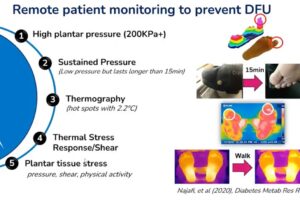
The current model for managing diabetic foot syndrome is characterized as reactive and fragmented, contributing to a global crisis where a limb is lost to amputation every 20 seconds. Dr. Bijan Najafi, a bioengineer and research director at UCLA Center for Advanced Surgical and Interventional Technology (CASIT), says that “we can’t manage what we can’t measure,” advocating for a shift toward decentralized, proactive care facilitated by digital health technologies.
By Bijan Najafi, PHD, MSc
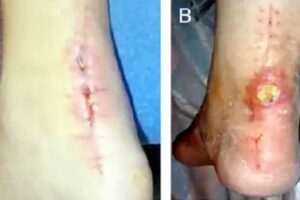
Achilles tendon ruptures are among the most devastating lower extremity injuries an athlete can face. Historically, the medical community has been divided between traditional open surgery and non-operative management. While open surgery effectively lowers the risk of re-rupture, the posterior ankle’s poor blood supply can sometimes lead to severe wound complications that can end careers. High-profile cases, such as NFL player Robert Mathis and...
By Kirk McCullough, MD
Like many physicians, coming out of residency I thought I’d fix the world one bunion at a time. Somewhere between my 745 and 746th bunion procedure, I came to the realization that while I was helping to relieve the pain my patients were feeling, this might not be a way for me to make a difference. Taking an objective look at my practice, I decided to focus on diabetics. That was the point that made me ask how I could make a practice financially viable with this as a focus.
By Mikel D. Daniels, DPM, MBA, President and Chief Medical Officer, WeTreatFeet Podiatry
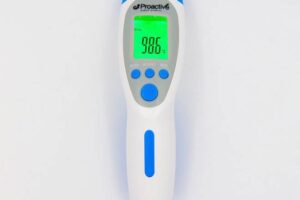
One simple step in every patient evaluation can help save limbs and potentially save lives: assess the feet and lower legs for temperature on every patient who enters your office. A basic infrared temperature gun is inexpensive, easy to use, and widely available. Many clinicians already have one at home. These devices typically cost around $20–$25 and can be easily incorporated into daily clinical screening.
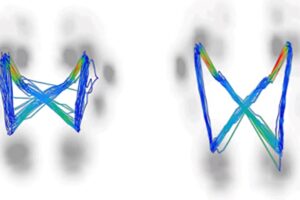
Dirty Truth: #8 Every step is different - The Importance of Tracking Gait Variability Through Aging. This dirty truth sits like an unrecognized norm in our DNA and plays out like a knee-jerk reaction until we give it a little thought. We have 2 legs, 2 knees (no pun intended), 2 ankles, and 2 feet. The general public thinks they are the same in both form and function, but that is rarely the case.
By Jay Segel, DPM; Sally Crawford, MS
ShortTakes From the Literature
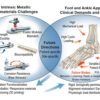
Metallic biomaterials enable successful reconstruction of skeletal tissues by supporting repair, load-bearing function, and anatomical alignment in foot and ankle surgery. The unique anatomic and biomechanics in this region, and challenging pathologies such as flatfoot and Charcot neuroarthropathy, present challenges. Intervention requires targeted biomaterial solutions.
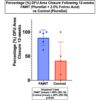
A novel folinic acid (FA) wound treatment (FAWT) significantly (P < 0.05) improved healing of chronic diabetic foot ulcers (DFUs). In a double-blind randomized controlled trial, 10 subjects with chronic DFUs were treated daily with either control therapy (n = 5; PluroGel) or FAWT (n = 5; PluroGel containing 2.5% FA). After 12 weeks, the FAWT group demonstrated significantly greater DFU area reduction compared with controls (88% [SD 16] vs 40% [SD 39], respectively).
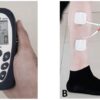
Chronic ankle instability (CAI) is a common functional disorder in older adults, affecting their balance and quality of life. Effective ways to enhance ankle stability and function remains a key for healthy aging. This study aims to explore the effects of the Otago Exercise Program (OEP) combined with Neuromuscular Electrical Stimulation (NMES) on ankle stability, the pain index, and balance ability in older adults aged 60 and above with CAI.
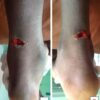
Achilles tendon (AT) wounds are defined as partial or complete disruptions of the tendon that create direct communication with the external environment (Lamah L Diallo M Tekpa JBD). The incidence of bilateral AT lacerations in children remains unknown. These researchers report a case of simultaneous bilateral AT laceration in a 14-year-old adolescent following a domestic accident.
Diabetic peripheral neuropathy (DPN) is a common and debilitating complication of diabetes that leads to chronic pain, sensory loss, and functional decline. While spinal cord stimulation (SCS) is FDA-approved for painful diabetic neuropathy, its potential to modify disease pathology rather than merely suppress symptoms remains poorly understood. This narrative review bridges this knowledge gap by elucidating the role of SCS in mitigating structural and...
The Achilles tendon (AT) plays a crucial role in force transmission and movement efficiency, and greater tendon stiffness may enhance elastic energy storage and improve performance in explosive movements. Shear-wave elastography (SWE) enables reliable, non-invasive assessment of tendon stiffness, yet its associations with other ultrasound (US)-derived properties and functional outcomes remain insufficiently defined in athletes.
In recent years, various diabetic socks have been developed and introduced to help prevent diabetes related foot ulcers (DFUs). However, the question of which type of sock is most suitable for individuals with diabetes has not been adequately addressed. This review systematically explores the current evidence regarding the performance and structural properties of diabetic socks, along with a narrative analysis of commercial socks.
Peripheral musculoskeletal structures may undergo changes after stroke, but tendon-specific adaptations with functional recovery are not well defined. This study examined lower extremity tendon thickness in patients with post-stroke hemiplegia before and after an inpatient rehabilitation program and explored associations between tendon thickness and clinical improvement. 45 patients with post-stroke hemiplegia completed a 4-week rehabilitation program.
A Foot Forward for Optimum Health

“A Foot Forward for Optimum Health” is a column designed to enlighten the old guard in a new way about lower extremity impairment as it pertains to foot drop. The intent is to challenge evidence-based research and practice so that it addresses real world issues shaped by social determinants of health. For every common issue is an uncommon response that will provide insight to improve health outcomes by putting one foot forward at a time–efficiently and effectively.
I recently explored and explained the use of mobilization and tactile stimulation (MTS) in the previous article titled, “Sensory Input is Needed for Motor Output–The Foot of the Matter.” In this article, I focus on self-mobilization of the foot and ankle to promote self-efficacy for individuals with lower extremity (LE) sensory impairment resulting in...
By Dr. Jennifaye V. Brown
Industry News & Updates
In March, Hanger Inc. announced the acquisition of Liberating Technologies (LTI), a research organization founded in 2000 and previously owned by Coapt. Since 2008, LTI’s specialized research team has secured numerous government-funded grants to pursue cutting-edge, high impact concepts and develop next generation technologies for the O&P field.
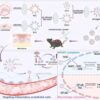
Researchers from Huazhong University of Science and Technology report a novel nanotherapeutic platform that accelerates diabetic wound healing by simultaneously targeting blood vessels and inflamed tissue. The research team engineered hybrid extracellular vesicles by merging vesicles derived from endothelial cells and neutrophils, then loading them with deferoxamine. By fusing endothelial- and neutrophil-derived membranes, the system achieves...
Researchers led by Tommaso Lenzi, associate professor in the mechanical engineering department at the University of Utah’s John and Marcia Price College of Engineering, are piloting a portable, lightweight hip exoskeleton that can reduce the energy required to walk by nearly 20% in individuals with post-stroke hemiparesis. The 5.5-pound device is worn around the hips and straps to the user’s thighs.
A reimagined limb socket interface combines highly personalized pressure mapping with artificial intelligence (AI) software and a lighter infill, creating a customized prosthesis that’s more comfortable to wear, for much longer, said researchers at Simon Fraser University (SFU). “For the first time, this 3D-printing technology is capturing unique pressure and force distribution data from a patient and using that data to design a custom prosthetic device and...
If a broken bone is too severe to heal on its own or a bone tumor needs to be removed, surgeons insert an implant that enables the bone to grow back together. These implants often consist of pieces of the patient’s own bone, known as autografts, or metal or ceramic parts. A key drawback of many implants is that they require a second surgery to harvest the tissue for the autografts. Additionally, metal implants tend to be too rigid and may loosen over time...
When 2 faculty members in the Colorado State University (CSU) Department of Design and Merchandising learned from ankle-foot orthosis (AFO) users that most of the shoes used to accommodate the brace are big, black, and bulky, they decided to reinvent it. Associate Professor Kristen Morris and Assistant Professor Lida Aflatoony started their project to create the new Ultra Adapt shoe by interviewing people who wear AFOs to learn about the common barriers they face.
The Last Word
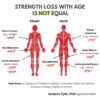
Between muscles, that is…We often blame ageing for muscle weakness, and think all muscles suffer the same. But in fact, that’s not the case.And that tells us something important about what’s really going on. Because the muscles hit hardest–our lower-body and stabilizing muscles (like those around the hips)–are the same ones we rely on most for daily movement. In other words, it’s not just aging. It’s inactivity. When we stop using these muscles as much, they...
Featured Products