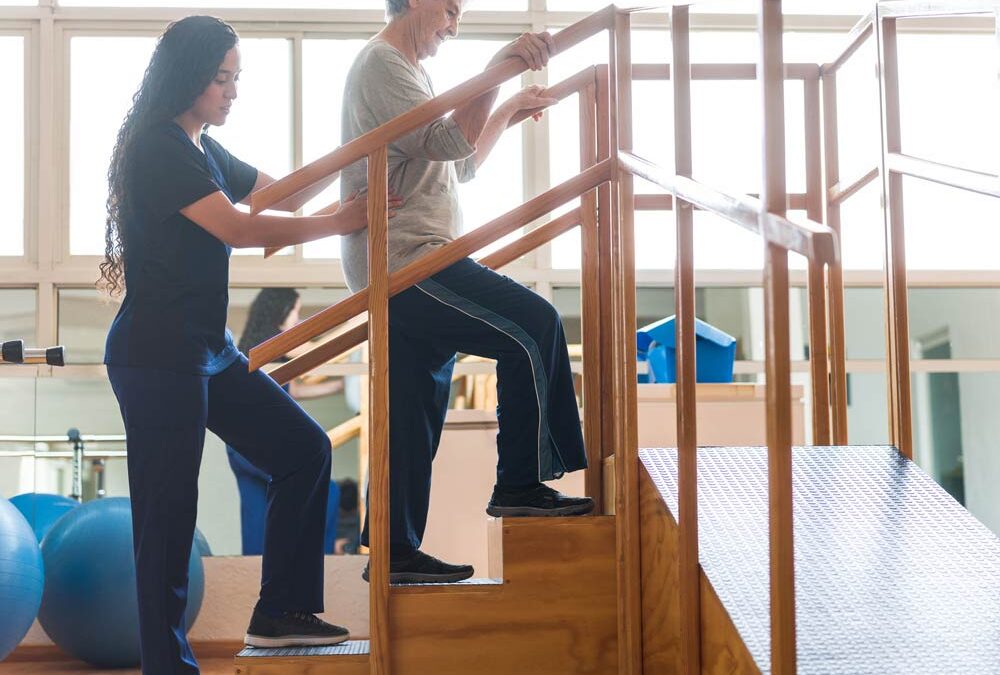








 Peripheral musculoskeletal structures may undergo changes after stroke, but tendon-specific adaptations with functional recovery are not well defined. This study examined lower extremity tendon thickness in patients with post-stroke hemiplegia before and after an inpatient rehabilitation program and explored associations between tendon thickness and clinical improvement. 45 patients with post-stroke hemiplegia completed a 4-week rehabilitation program. Quadriceps, patellar, Achilles tendon and plantar fascia thicknesses were measured bilaterally at baseline and post-treatment using ultrasonography. Fifteen healthy volunteers served as controls. Continuous variables are presented as mean ± SD when approximately normally distributed and as median (IQR) otherwise; p-values were adjusted for multiplicity in secondary analyses as specified. Paretic-side quadriceps tendon thickness increased from 5.94 ± 0.96 to 6.48 ± 0.95 mm (P < 0.001), with 21/45 (46.7%) exceeding minimal detectable change with a 95% confidence interval (MDC95). Baseline paretic-side quadriceps thickness was lower than controls (P_adj = 0.048) but did not differ post-treatment (P_adj > 0.99). Patellar and Achilles tendons and plantar fascia also showed consistent bilateral increases (all P < 0.001). Balance and functional outcomes improved over the period (BBS Δ: 6 [4-9]; FAC improved by ≥1 level in 27/45 [60.0%]; Barthel improved with median paired Δ: 0 [0-5]; all P < 0.001). Changes in quadriceps tendon thickness showed positive associations with changes in BBS (both sides) and Barthel (non-paretic side). Lower-extremity tendon morphology in post-stroke hemiplegia appeared dynamic over the rehabilitation period, with quadriceps tendon thickness paralleling improvements in balance and functional independence. Longer-term studies are needed to clarify.
Source: Alisik T, Demir E. Ultrasonographic changes in lower extremity tendon thickness after stroke rehabilitation and their associations with balance and functional outcomes. Front Neurol. 2026 17;17:1773636. doi: 10.3389/fneur.2026.1773636.