








 By Mathias B. Forrester, BS
Abstract
Background: Thousands of snake bites occur in the U.S. each year. Venomous snake bites can produce serious adverse effects, and even bites from nonvenomous snakes may cause adverse effects. Snake bites are often treated at hospital emergency departments (EDs). The objective of this study was to describe snake bites to the lower extremity treated at U.S. hospital EDs.
Methods: The data source for this study was the National Electronic Injury Surveillance System (NEISS), a database of consumer product- and activity-related injuries collected from a representative sample of approximately 100 U.S. hospital EDs. National estimates are calculated from database records according to the sample weight assigned to each case based on the inverse probability of the hospital being selected for the NEISS sample. Cases were snake bites to the lower extremity treated during 2000–2024. The distribution of snake bites to the lower extremity was determined for selected variables.
Results: Based on the NEISS database, there were an estimated 14,837 snake bites to the lower extremity treated at US hospital EDs during 2000–2024, representing 53.8% of the 27,561 total snake bites. The bitten body part was 37.7% lower leg, 28.4% foot, 18% ankle, 11.6% toe, 2.2% upper leg, and 2.1% knee. By 3-month period, 3.3% of the snake bites to the lower extremity were treated during November-January, 11.2% during February-April, 48.9% during May-July, and 36.5% during August-October. The circumstances of the bite were 43% sports and recreation, 24.4% yardwork and landscaping, and 32.6% other and unknown.
Conclusion: Snake bites to the lower extremity treated at US hospital EDs most often involved the lower leg followed by the foot, ankle, and toe and rarely the upper leg and knee. The bites were seasonal, with the highest proportion occurring in May-July followed by August-October. The bites most often occurred during sports and recreation followed by yardwork and landscaping. This study may provide information useful for developing strategies to prevent snake bites to the lower extremity.
According to the Centers for Disease Control and Prevention (CDC), 7,000–8,000 bites by venomous snakes occur in the U.S. annually.1 Two subfamilies of venomous snakes are native to the U.S. The Crotalinae (pit vipers, subfamily of family Viperidae) includes rattlesnakes, copperheads, and water moccasins (cottonmouths). The Elapidae (subfamily of family Colubridae) includes coral snakes.1-5 Although venomous snakes can be found throughout the continental U.S., the ranges of the particular venomous snakes vary.3 In addition, exotic snakes, including venomous species, may be kept as pets in the U.S.2,6
Snake bites can occur in a variety of circumstances. A study of U.S. snake bites involving toxicologist consultations reported that the most common circumstances or activities at the time of snake bite were sports and recreational (30%) and hobbies (14%). The most common sports and recreational activities were walking (62%) and hiking (17%). The most common hobbies were playing and gardening.7
Venomous snake bites can produce serious adverse effects. Commonly reported symptoms include puncture marks, bleeding (including from locations other than the bite site), pain, erythema, edema, nausea, vomiting, tachycardia, hypotension, ecchymosis, numbness or tingling, coagulopathy, and rhabdomyolysis.1,3-5 During 1999–2022, 159 deaths in the U.S. had a multiple cause of death including snake venom.8 In addition, bites from nonvenomous snakes can result in infection or allergic reactions.4,9
Many people with snake bites, particularly by snakes known or suspected of being venomous, seek treatment through emergency departments (EDs) or first-aid providers who consult with emergency clinicians.3 According to a study of snake bites reported to the National Electronic Injury Surveillance System-All Injury Program (NEISS-AIP), which collects data on all injuries treated by a sample of U.S. hospital EDs, approximately 10,000 snake bites were treated at U.S. hospital EDs annually during 2001–2004. Thirty percent of the bites were reported to have involved venomous snakes (although most records did not mention the species of snake).10
The objective of this study was to describe snake bites to the lower extremity treated at U.S. hospital EDs. Prior studies reported that the lower extremity was the second most bitten body part, after the upper extremity.2,10
Methods
The study’s data source was the National Electronic Injury Surveillance System (NEISS) available at https://www.cpsc.gov/cgibin/NEISSQuery/home.aspx. Previously described in detail in Lower Extremity Review,11 the NEISS collects data on consumer product- and activity-related injuries from a probabilistic sample of approximately 100 U.S. hospital EDs. National estimates can be calculated from these data according to the sample weight assigned to each case based on the inverse probability of the hospital being selected for the NEISS sample.12,13 The study is exempt from institutional review board approval because the data are publicly available and de-identified.
Cases were snake bites to the lower extremity reported to NEISS during 2000–2024. To select snake bite cases, first all records with “bit,” “sting,” or “stung” in the Narrative text field (a text field that summarizes the circumstances of the injury) were identified. Then, all records in this subset with “snak,” “ratt,” “copp,” “moc,” “cotton,” or “coral” in the Narrative field were identified. The Narrative fields in this final subset of records were individually reviewed to identify those that indicated a snake bite had occurred. At the same time, the type of snake (venomous, nonvenomous, unknown venomous status) and circumstance of the bite (what the patient was doing at the time of the bite) were documented.
The study examined the following variables: type of snake, affected body part, symptoms (diagnosis, type of injury), patient disposition, circumstance of the bite, location of the incident, year and month of treatment, and patient age and sex. The symptoms could be documented in 5 fields: Diagnosis (a numeric field for coding the most severe diagnosis), Diagnosis_2 (a numeric field for coding a second diagnosis–first used in 2019), Other_Diagnosis and Other_Diagnosis_2 (first used in 2019) (both text fields for documenting additional diagnoses), and the Narrative field. All 5 fields were used to identify all reported symptoms of the snake bite. Any symptoms clearly not related to the snake bite (eg, the patient fractured a wrist when they fell running from the snake) were excluded from the analysis.
The affected body part is documented in 3 fields: Body_Part (a numeric field for coding the body part associated with the most severe diagnosis), Body_Part_2 (a numeric field for coding the body part associated with a second diagnosis–first used in 2019), and the Narrative field. All 3 fields were used to identify the body part that was bitten. The study was limited to those snake bites where the body part was the lower extremity.
Microsoft 365 Access and Excel (Microsoft Corp, Redmond, WA) was used for the analyses. The distribution of the national injury estimates was determined for the selected variables by summing up the values in the Weight numeric field in the NEISS database. The U.S. Consumer Product Safety Commission (CPSC), which operates the NEISS, considers an estimate unstable and potentially unreliable when the estimate is <1,200.12
Results
Based on the NEISS database, there were an estimated 14,837 snake bites to the lower extremity treated at U.S. hospital EDs during 2000–2024, representing 53.8% of the 27,561 total snake bites. The snake was 4,942 (33.3%) venomous, 499 (3.4%) nonvenomous, and 9,396 (63.3%) venomous status unknown. The bitten body part was 5,589 (37.7%) lower leg, 4,221 (28.4%) foot, 2,667 (18.0%) ankle, 1,719 (11.6%) toe, 323 (2.2%) upper leg, and 317 (2.1%) knee. The most common symptoms were 4,651 (31.3%) puncture, 1,858 (12.5%) pain, 1,676 (11.3%) edema, and 1,037 (7%) abrasion.
There were an estimated 1,804 (12.2%) snake bites to the lower extremity reported during 2000–2004, 2,555 (17.2%) during 2005–2009, 2,447 (16.5%) during 2010-2014, 3,781 (25.5%) during 2015–2019, and 4,250 (28.6%) during 2020–2024. By 3-month period, an estimated 496 (3.3%) snake bites to the lower extremity were treated during November-January, 1,666 (11.2%) during February-April, 7,260 (48.9%) during May-July, and 5,415 (36.5%) during August-October. The patient age was 549 (3.7%) 0–5 years, 1,158 (7.8%) 6–12 years, 1,640 (11.1%) 13–19 years, 2,750 (18.5%) 20–29 years, 2,481 (16.7%) 30–39 years, 1,903 (12.8%) 40–49 years, 1,811 (12.2%) 50–59 years, 1,300 (8.8%) 60–69 years, and 1,244 (8.4%) 70 years or older. The patient sex was 9,838 (66.3%) male and 4,999 (33.7%) female.
The location of the incident was 7,787 (52.5%) home, 3,951 (26.6%) place of recreation or sports, 1,274 (8.6%) other public property, 228 (1.5%) street or highway, 16 (0.1%) school, and 1,581 (10.7%) not recorded. The circumstances of the bite were 6,379 (43%) sports and recreation, 3,627 (24.4%) yardwork and landscaping, and 4,831 (32.6%) other and unknown. Of the estimated 6,379 snake bites to the lower extremity involving sports and recreation, 2,675 (41.9%) involved walking, running, or hiking; 1,003 (15.7%) fishing, 776 (12.2%) swimming, 696 (10.9%) golf, 325 (5.1%) bicycling, and 904 (14.2%) other. Of the estimated 3,627 snake bites to the lower extremity involving yardwork and landscaping, 1,431 (39.5%) involved mowing, 1,223 (33.7%) trimming and pruning, and 973 (26.8%) other.
The patient disposition was 9,404 (63.4%) treated or examined and released from the ED, 4,241 (28.6%) treated and admitted for hospitalization (within same facility), 726 (4.9%) treated and transferred to another hospital, 135 (0.9%) held for observation (includes admitted for observation), and 331 (2.2%) left without being seen or left against medical advice.
Discussion
This study examined snake bites to the lower extremity treated at U.S. hospital EDs. This is important, thousands of snake bites occur in the U.S. each year,1 many of which are treated at hospital EDs.3 Snake bites, even those involving nonvenomous snakes, may have serious adverse effects and, in rare instances, may result in death.1,3,4,8,9 A high proportion of snake bites are to the lower extremity.10
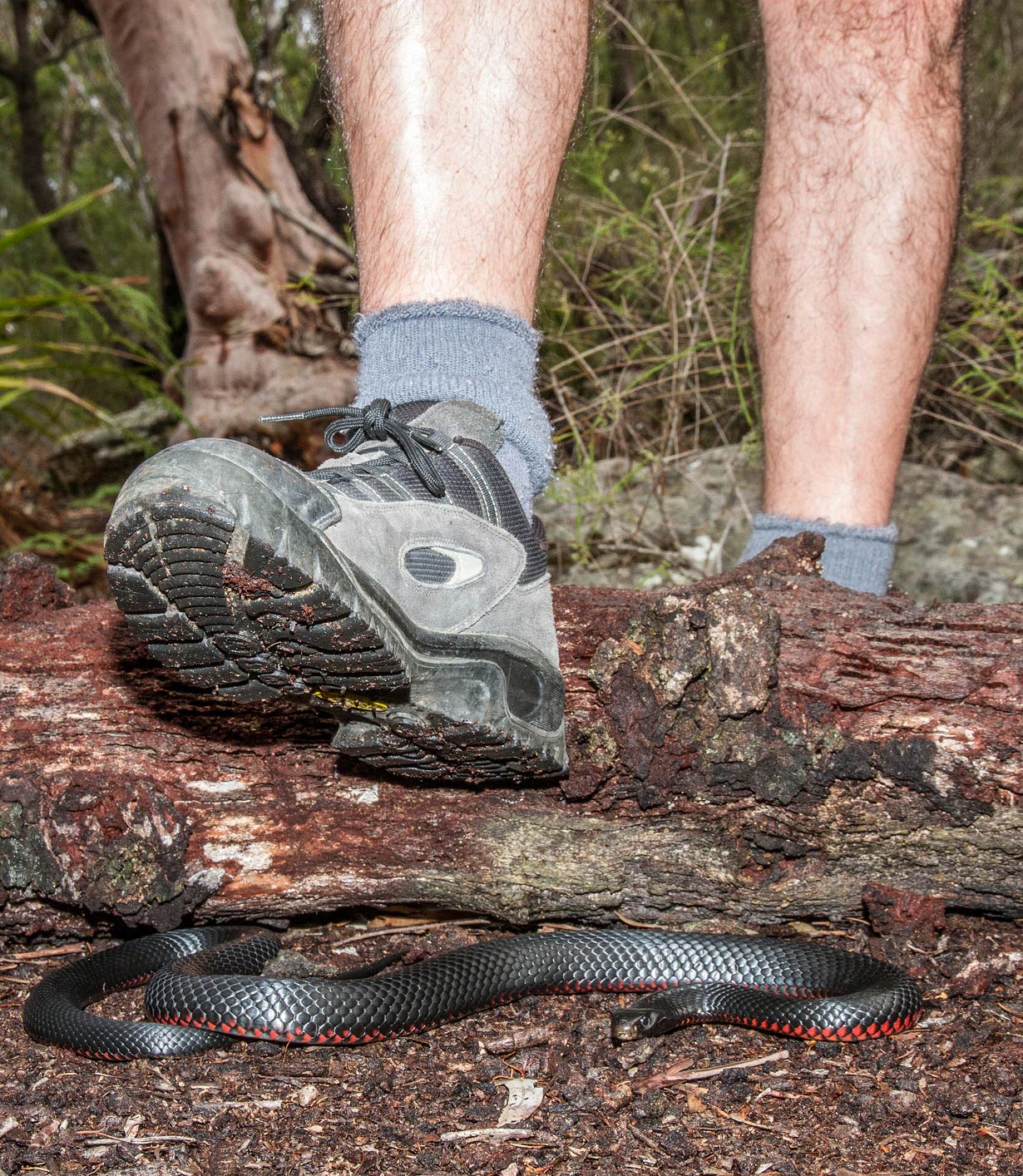
In this study, most of the snake bites to the lower extremity involved the lower leg and below, with only 4% of the bites to the upper leg and knee. More bites involved the lower leg with smaller proportions involving the foot and ankle. A prior study using U.S. hospital ED data found that, of an estimated 5,140 snake bites to the hip or lower extremity, 0.7% involved the hip or thigh, 34.1 involved the knee or lower leg, and 65.2% involved the ankle or foot.2 The body part pattern observed in the present study may reflect the mechanics of snake bites to the lower extremity. With most bites, the snake is likely to be on or near to the ground and more likely to bite the body parts they can reach, ie, the lower leg and below. If most people are wearing shoes when encountering snakes, then they might be relatively protected from bites to the ankle, foot, and toe while the lower leg may be less well-protected. Although some of the records mentioned that the patient was barefoot or wearing sandals, the patient’s clothing was not consistently documented. Future research may examine the impact of a person’s clothing on snake bite risk.
The most commonly reported symptoms–puncture, pain, edema, and abrasion–were consistent with that reported in the literature.1,3,4,9
The estimated number of snake bites to the lower extremity increased during the 25-year period of the study. This increase may be due to an increase in snake bites in the U.S. or an increase in people experiencing snake bites seeking treatment at hospital EDs. Another possibility is that those who submitted records to the NEISS increasingly documented that the injury involved a snake bite in the record Narrative field.
Almost half (49%) of the snake bites were treated during May-July, and over one-third (36%) during August-October. Almost half (48%) of the patients were aged 20–49 years, and 66% were male. This pattern was consistent with the literature, which reported most snake bites to occur in the warmer months of the year and most patients were male and in their 20s to 40s.2,5,10 The increase in snake bites to the lower extremity during warmer months may be due to both people being more likely to engage in outdoor activities and snakes to be active during that time period.
Over half (52%) of the snake bites to the lower extremity occurred at home, with the next most common location being a place of recreation or sports (27%). The highest proportion (43%) of the bites involved sports and recreation (particularly walking, running, and hiking; fishing, swimming, and golfing) followed by yardwork and landscaping (particularly mowing, and trimming and pruning) at 24%. This information may prove useful when formulating strategies to reduce the risk of snake bites to the lower extremity.
While most (63%) of the patients were treated or examined and released from the ED, over one-third (34%) of the patients required further hospital management, suggesting that a portion of the snake bites were severe.
There are ways to prevent snake bites.14 Avoid places where snakes may be found, such as tall grass or brush, rocky areas, fallen logs, bluffs, swamps, marshes, and deep holes in the ground. When moving through tall grass or weeds, poke at the ground in front of you with a long stick to scare away snakes. Watch your step and where you sit when outdoors. Wear loose, long pants and high, thick leather or rubber boots. If you are out at night, shine a flashlight on your path. Never handle a snake, even if you think it is dead.
This study has limitations. The NEISS database only includes product- and activity-related injuries, so it does not include all snake bites treated at U.S. hospital EDs. Cases were identified by searching for all records with “bit,” “sting,” or “stung” in the Narrative text field, then the Narratives of this subset of records were reviewed to determine whether the injury involved a snake bite. Records of snake bite injuries where the terms of interest were not included in the Narrative field would not have been included in the study.
In most cases, the type of snake and whether it was venomous or non-venomous was not mentioned. Whether a snake was venomous or nonvenomous might affect the expected symptoms and management of a snake bite. As a result, this study could not focus on either venomous or nonvenomous snake bites or examine any differences between the two. Furthermore, information on the symptoms resulting from the snake bite were limited, and information on the treatment of the bite was usually not documented.
Only the author selected the records for inclusion in the study. In addition, the study only included those patients treated at hospital EDs. Examination of patients treated elsewhere would provide a more complete understanding of snake bites to the lower extremity.
In conclusion, snake bites to the lower extremity treated at U.S. hospital EDs most often involved the lower leg followed by the foot, ankle, and toe and rarely the upper leg and knee. The bites were seasonal, with the highest proportion occurring in May-July followed by August-October. The bites most often occurred during sports and recreation (particularly walking, running, and hiking; fishing, swimming, and golfing) followed by yardwork and landscaping (particularly mowing and trimming and pruning). This study may provide information useful for developing strategies to prevent snake bites to the lower extremity.
Mathias B. Forrester, BS, is an independent researcher in Austin, Texas. Now retired, he has performed public health research for various universities, government programs, and other organizations for 40 years.
- Centers for Disease Control and Prevention (CDC). Venomous snakes at work. August 28, 2024. Accessed March 10, 2026. https://www.cdc.gov/niosh/outdoor-workers/about/venomous-snakes.html.
-
Jaramillo JD, Hakes NA, Tennakoon L, Spain D, Forrester JD. The “T’s” of snakebite injury in the USA: fact or fiction? Trauma Surg Acute Care Open. 2019;4(1):e000374.
-
Sheikh S, Leffers P. Emergency department management of North American snake envenomations. Emerg Med Pract. 2018;20(9):1-26.
-
Johns Hopkins Medicine. Snake bites. Accessed March 10, 2026. https://www.hopkinsmedicine.org/health/conditions-and-diseases/snake-bites.
-
Seifert SA, Boyer LV, Benson BE, Rogers JJ. AAPCC database characterization of native U.S. venomous snake exposures, 2001–2005. Clin Toxicol (Phila). 2009;47(4):327-335.
-
Miller SW, Osterhoudt KC, Korenoski AS, Patel K, Vaiyapuri S. Exotic snakebites reported to Pennsylvania poison control centers: lessons learned on the demographics, clinical effects, and treatment of these cases. Toxins (Basel).2020;12(12):755.
-
Ryan K, Spungen H, Teshera M, et al. The circumstances surrounding snakebites in the United States: A survey of surreptitious serpent-person skirmishes. Clin Toxicol (Phila). 2023;61(Supplement 2):113.
-
Avila M, Barinas I, Castro Robles E, et al. Deaths involving snakes in the United States. Clin Toxicol (Phila). 2024;62(Supplement 2):109.
-
Battlbox. Can a non-venomous snake bite make you sick? Accessed March 10, 2026. https://www.battlbox.com/blogs/outdoors/can-a-non-venomous-snake-bite-make-you-sick?srsltid=AfmBOorvc_wOaazGYLrjblkbYsb7aT4lZto-XsJw8T2xAyqu14PSZ0Ir.
-
O’Neil ME, Mack KA, Gilchrist J, Wozniak EJ. Snakebite injuries treated in united states emergency departments, 2001–2004. Wilderness Environ Med. 2007;18(4):281-287.
-
Forrester MB. Pickleball-related injuries involving the lower extremity treated in emergency departments. Lower Extremity Review. 2021;13(5):24-30.
-
United States Consumer Product Safety Commission. National Electronic Injury Surveillance System (NEISS). Accessed March 10, 2026. https://www.cpsc.gov/Research–Statistics/NEISS-Injury-Data/Explanation-Of-NEISS-Estimates-Obtained-Through-The-CPSC-Website .
-
United States Consumer Product Safety Commission. NEISS Coding Manual. January 2025. Accessed March 10, 2026. https://www.cpsc.gov/s3fs-public/JANUARY-2025-NEISS-CPSC-only-Coding-Manual-Rev-1.pdf.
-
Information from your family doctor. Snakebite prevention and first aid. Am Fam Physician. 2002;65(7):1377.





Well written and helpful. Going to reference your paper in my talks tot he community.