September 2023

Click on image to download the issue in PDF format
Cover Story
Kickboxing is a popular full-contact sport that allows both punching and kicking from a standing position. Kickboxing may be performed in sports competitions or as a form of exercise. Injuries, including to the lower extremity, may occur in...
By Mathias B. Forrester, BS
Guest Perspective
Patient education is the most commonly used intervention for chronic disease management. Education interventions have variably been shown to have benefits for chronic disease management in general and musculoskeletal pain disorders...
By Thorlene Egerton, Joanne Bolton, Camille E. Short, and Kim L. Bennell
Features
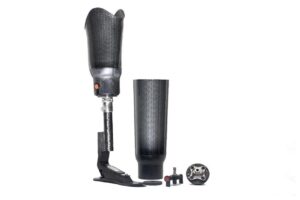
A better understanding of the therapeutic benefits of performing daily activities with passive, quasi-passive, and active ankle-foot prostheses in people with a lower limb amputation can help gauge the impact of...
By Elke Lathouwers, María Alejandra Díaz, Alexandre Maricot, Bruno Tassignon, Claire Cherelle, Pierre Cherelle, Romain Meeusen, and Kevin De Pauw
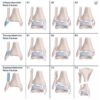
Large epidemiological studies are needed to elucidate the underlying injury mechanisms, the demographics of each fracture group, and the influence of sex and age on the sustained fracture.
By Emilia Möller Rydberg, David Wennergren, Caroline Stigevall, Jan Ekelund, and Michael Möller
In infants and young children, a wide heterogeneity of foot shape is typical. Therefore, children, who are additionally influenced by rapid growth and maturation, are a very special cohort for foot measurements and...
By Juliane Mueller, Monika Richter, Kathrin Schaefer, Jonathan Ganz, Jörg Lohscheller, and Steffen Mueller
The growing use of kinesiology tape requires guidelines for safe and effective application. The popularity of kinesiology tape (KT) across the world is rising as witnessed by its common appearance on athlete’s bodies during the Olympic games or football...
By Adéla Andrýsková and Jung-Hoon Lee
ShortTakes From the Literature
Older adults may gain more health benefits from playing golf than participating in regular or Nordic walking, suggests a recent study published in BMJ Open Sport &Exercise Medicine.
In a study of 701 hip fracture patients (age >65 yrs), researchers from Beijing, China, found that those who underwent surgery within 2 days of admission (Early Surgery Group) had fewer perioperative challenges than those whose surgery was delayed.
As the population ages, sarcopenia becomes a greater challenge and opportunities for its prevention are critical to keeping older adults active and healthy and preventing a major public health burden. A new scoping review examined 13 studies that looked at...
Evidence shows that that nearly 75% of people over age 70 have some type of balance disorder. Given the ongoing growth of the aging population, this represents a public health burden and threat to the healthcare system. Balance assessments play an...
Falls are a leading cause of morbidity and mortality in the aging population yet only a small percentage of older adults report being asked about falls or their risk for falls. The Centers for Disease Control and Prevention initiated the STopping Elderly Accidents...
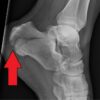
Calcaneal fractures account for 60% of tarsal fractures, and intra-articular fractures account for up to 75% of those. Displaced intra-articular calcaneal fractures are often accompanied by long-term sequelae, permanent disability and other...

Meeting Highlights II from the National Athletic Trainers’ Association
This study aimed to compare the relationship between self-reported ankle disability and neurocognitive hop performance among healthy controls, ankle sprain copers, and individuals with chronic ankle instability (CAI). The researchers hypothesized that...
These researchers analyzed injury and treatment patterns among middle school-aged athletes receiving care from athletic trainers who were members of the Athletic Training Practice-Based Research Network (AT-PBRN). The study identified football, basketball, and...
This study investigated factors that may contribute to the development of persistent pain 6 months after a lateral ankle sprain (LAS). The findings indicated that experiencing pain at the time of returning to activity and being able to bear full weight at the...
This study investigated the effectiveness of care strategies and patient-reported outcome scores in predicting the development of chronic ankle instability (CAI) after an acute lateral ankle sprain (LAS). This study enrolled 51 community participants within 1 week of...
This study examined the joint loads and muscle forces during landing in individuals with chronic ankle instability (CAI) compared to those without CAI. The findings revealed that individuals with CAI had lower ankle joint loads and reduced muscle force contributions...
There is an increased risk for re-injury throughout the first 12 months after an acute lateral ankle sprain (LAS). Prior research has demonstrated that those with ankle sprain history have decreased Health Related Quality of Life (HRQoL).
Lateral ankle sprain (LAS) is a common injury with a high recurrence rate. Potential inequities in care provided may contribute to recurrence. The purpose of this study was to describe LAS classified as ‘recurrent’ in NCAA Division I athletes across...
Industry News & Updates
A team at Technical University of Denmark (DTU) Health Tech led by Associate Professor Alireza Dolatshahi-Pirouz, PhD, have made a leap forward in tissue regeneration by creating a multi-leveled scaffold that encompasses properties of native bone on the...
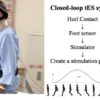
Using a novel neuromodulation approach that incorporates gait-combined closed-loop transcranial electrical stimulation (tES), a team of researchers from Japan demonstrated significant gait improvements in patients with various neurological disorders including...
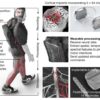
A team of Swiss and French neuroscientists and neurosurgeons reported that they have re-established the communication between the brain and spinal cord with a wireless digital bridge, allowing a paralyzed person to walk again naturally.
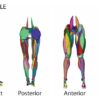
As part of research funded by the National Institutes of Health, the University of Denver Center for Orthopaedic Biomechanics has made available a repository of 3D models of the human lower extremities created from the Visible Human Female and Male imaging datasets.
Art Dyck, the president of Fillauer Motion Control, has retired effective August 31. Dyck has been in this position for 6 years and with the company for 35 years. Jon Winegar has been named regional vice president of Fillauer Motion Control and...
The Last Word
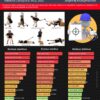
This study aimed to compare and rank gluteal muscle forces in eight hip-focused exercises performed with and without external resistance and describe the underlying fiber lengths, velocities, and muscle activations.
Featured Products