







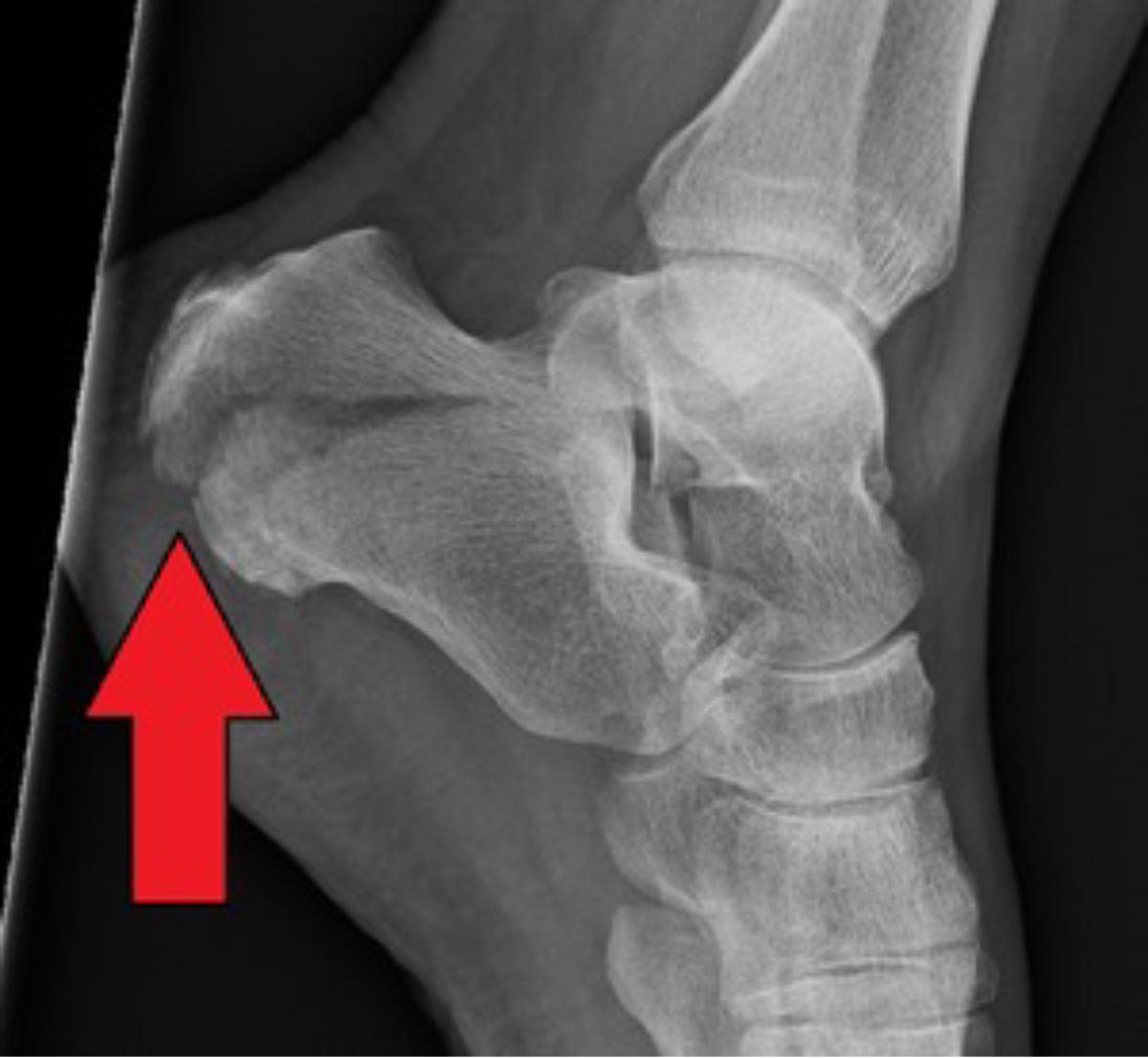
 Calcaneal fractures account for 60% of tarsal fractures, and intra-articular fractures account for up to 75% of those. Displaced intra-articular calcaneal fractures are often accompanied by long-term sequelae, permanent disability and other adverse conditions, particularly wound complications such as dehiscence, heel necrosis, hematoma; and infection, and 6.1% of those with infections subsequently developed deep infection and osteomyelitis. Thus, predicting the prognosis of calcaneal fractures can effectively improve post-op recovery and reduce pain in patients.
The authors of this new study developed and validated a clinical predictive model to predict the risk of postoperative recovery in calcaneal fractures. According to the nomogram, weightbearing time was the most important predictor, followed by age, postoperative infection, gender, and waiting time for surgery. Their findings showed that:
- Weight-bearing exercise within 3 months after operation can improve fracture recovery. They suggest that evidence-based weightbearing rehabilitation exercises should be carried out in the early stage of postoperative recovery customized to individual patients.
- Female and older patients over 60 years were at higher risk for poor fracture recovery due to age-related bone loss.
- Timely treatment of incision site infection could prevent skin flap necrosis which, if not treated in time, can further develop into calcaneal osteomyelitis, or case delayed union or malunion.
- Waiting longer than 14 days between injury and surgery could increase the risk of wound infection.
- Injury mechanism and fracture type were not related to the prognosis score.
The authors did note that the small incision for calcaneal surgery invented by Academician Zhang significantly reduces injury to the bone and soft tissue through accurate minimally invasive screw implantation. However, in their study, there was no significant difference in postoperative recovery of calcaneal fractures treated with small incisions compared with other types of incisions.
The authors write in their conclusion: According to the risk prediction model, the postoperative prognosis of calcaneal fracture can be predicted, which can provide guidance for orthopedic surgeons to make targeted preoperative examinations, surgical plans and rehabilitation training.
Source: Li W, Wang Y, Zhang Z, et al. A risk prediction model for postoperative recovery of closed calcaneal fracture: a retrospective study. J Orthop Surg Res. 2023;18:612. https://doi.org/10.1186/s13018-023-04087-8