Holiday periods are when most fitness routines go off the rails. It’s a time when busy schedules and disrupted routines make many assume their progress will vanish. But it doesn’t have to.
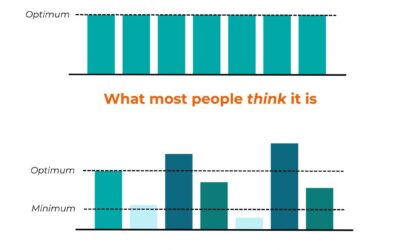
Consistency in Exercise Does Not Mean Perfection
read more

Lower Extremity Review
Holiday periods are when most fitness routines go off the rails. It’s a time when busy schedules and disrupted routines make many assume their progress will vanish. But it doesn’t have to.
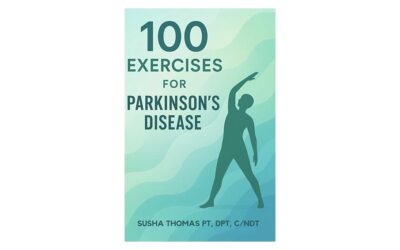
Susha Thomas, PT, DPT, C/NDT, a physical therapist specializing in Parkinson’s and stroke rehabilitation, recently published a book, 100 Exercises for Parkinson’s Disease, a structured collection of illustrated exercises designed for bed, sitting, and standing positions. The book focuses on improving mobility, enhancing balance, and reducing the risk of falls, which remain key concerns for individuals living with Parkinson’s. Each exercise is supported by clea…
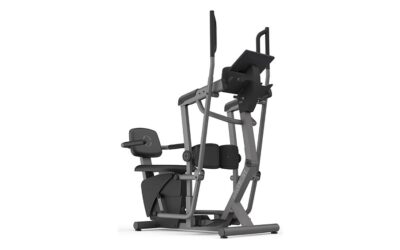
The WalkPort supported walking station is designed to help individuals with significant mobility challenges safely stand and practice walking therapy at home and in clinical settings. It provides consistent full-body support and enables users to focus on proper movement and gait practice while feeling comfortable and supported during each session. WalkPort addresses a significant gap in mobility care: the limited ability for individuals to…

Natural Pain Relief Cream is a botanical formulation designed to support musculoskeletal wellness, chronic pain management strategies, muscle soreness recovery, and joint pain relief and mobility support. The formulation prioritizes botanical pain relief strategies rather than synthetic cooling or heating agents. It combines organic carrier oils with botanical compounds traditionally examined in integrative health literature for roles in inflammation support and…

The Stedi Collection is a new stability-driven footwear platform designed to meet evolving consumer demands for all-day comfort, support, and versatility beyond cushioning alone. Built around the principles of stability, energy return, and adaptive movement, the collection combines biomechanical arch support, responsive EVA cushioning, lightweight construction, and breathable materials to reduce fatigue and enhance natural motion across daily…

The knee can take a great deal of abuse, thanks to the cartilage that cushions it. But if it’s not moved and exercised enough, the knee stiffens and has poor blood flow. The cartilage can degrade or tear, worsening any injury already there. So, people with injured knees have to move in order to heal. The challenge is to know how much exercise or movement is too much. To answer that question, University of Connecticut (UConn) College of Engineering professor…
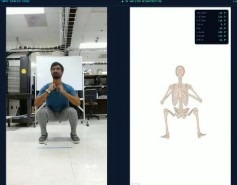
In hopes of preventing exercise-related injuries and extending the expert guidance of coaches to those who exercise without the benefit of coaches or trainers, researchers from Drexel University and Michigan State University have developed a prototype of a program that uses artificial intelligence (AI) and computer vision to analyze video and provide form coaching in real time. The program, BioCoach, integrates biomechanical modeling with…
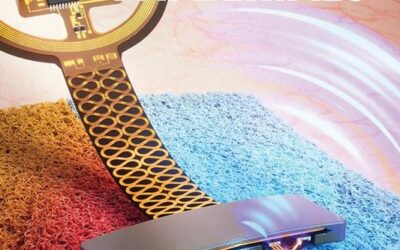
A joint research team from the Korea Advanced Institute of Science and Technology (KAIST) has developed as a wireless, battery-free optoelectronic multi-modal sensor patch that can monitor wound conditions, such as diabetic foot ulcers, in real time. The smart patch developed by the research team combines an optoelectronic sensor, which can simultaneously measure multiple types of biological information, with a functional dressing.
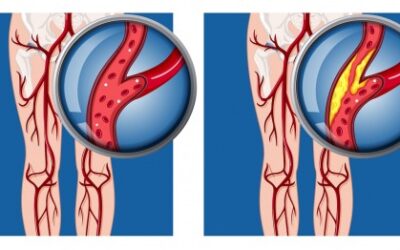
A leading cause of limb amputation, peripheral artery disease (PAD) often goes undetected until patients experience complications, in part because diagnosis requires a visit to a specialized clinic for a time-consuming and cumbersome ankle-brachial index (ABI) test. Recently, a multidisciplinary team of researchers at University of California San Diego reported that a simple technology called photoplethysmography (PPG) coupled with artificial intelligence…

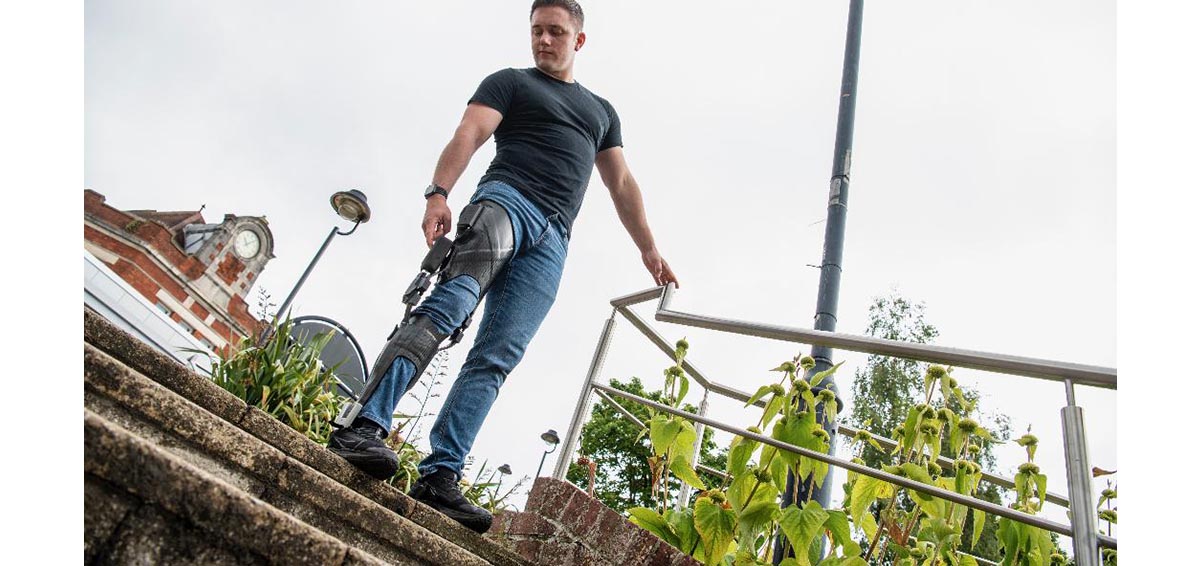
A first-of-its kind study utilizing lower-limb exoskeletons to facilitate therapist-patient interaction during functional tasks could help stroke survivors to regain mobility, independence, and confidence. As part of the study, scientists from Shirley Ryan AbilityLab and Northwestern University introduced a novel intervention they call therapist-exoskeleton-patient interaction (TEPI), in which a therapist and a stroke survivor are each equipped with a lower-limb…

Hanger Numotion will be formed through the combination of Hanger, Inc., a provider of O&P patient care services and solutions, and Numotion, a portfolio company of AEA investors and provider of complex rehabilitation technology (CRT) and mobility products and services in the United States and Canada. Following completion of the transaction, Hanger and Numotion will continue to serve customers under their existing brands and maintain their…
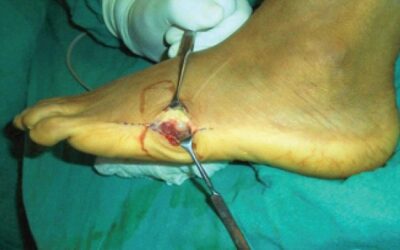
Glomus tumors are benign vascular hamartomas that lie in the reticular layer as an arteriovenous anastomosis in the dermis. A glomus tumor is usually located in the subungual region of the digits. They occur more often in the hand (75%) than elsewhere and are located beneath the fingernail in 25-65% of patients. Clinical and radiological (magnetic resonance imaging [MRI]) usually clinch the diagnosis in the majority of cases.

Hallux rigidus, or osteoarthritis of the first metatarsophalangeal joint (MTPJ), causes pain and functional limitation. No randomized trials have compared surgery with the natural course of the disease. To compare first MTPJ arthrodesis-a widely used surgical intervention-with watchful waiting in reducing walking-related pain in symptomatic hallux rigidus at 12 months after randomization. Adults aged 40 years or older with radiographically confirmed…

Chronic ankle instability (CAI) and chronic low back pain are highly prevalent in musculoskeletal conditions. Emerging evidence suggests that they are interconnected through shared biomechanical, neuromuscular, and neurophysiological mechanisms, where deficits in proprioception, postural control, and load distribution contribute to persistent dysfunction across the kinetic chain.
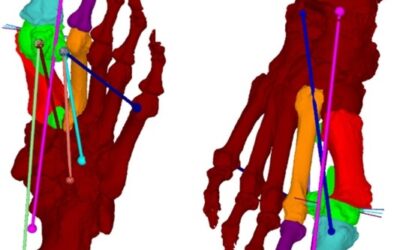
Metatarsal pronation has been reported to be a significant recurrence factor for hallux valgus after corrective osteotomies. The extent of pronation correction with distal metatarsal I osteotomies varies greatly from patient to patient without the reason being known. The objective of this study was to describe the effect of the metatarsal I osteotomy angle on muscular torque, acting on the first metatarsal. The primary hypothesis was that a varying angle for the…
Join
Stay in the loop with the latest news and updates! Subscribe now to receive exclusive content, special offers, and important announcements straight to your inbox. Don’t miss out – join our community today for all the latest updates delivered directly to you.