November 2025
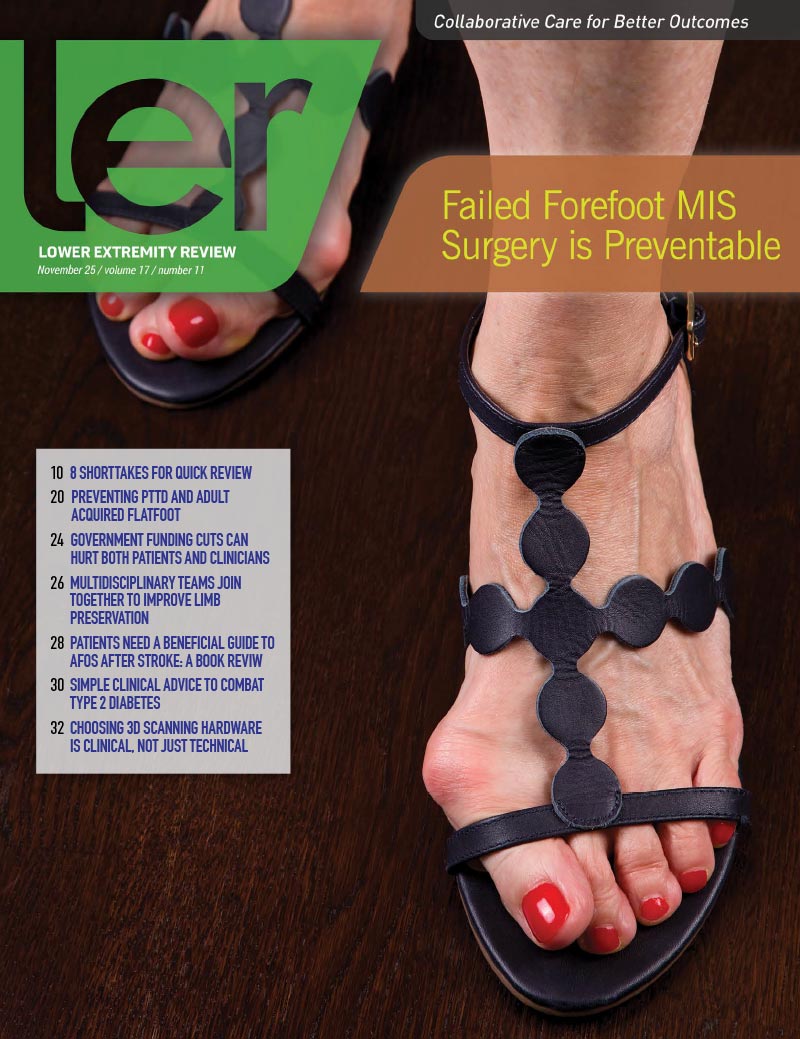
Click on image to download the issue in PDF format
lerEXPO Highlights
Minimally Invasive Surgery (MIS) in foot and ankle continues to evolve, offering new avenues for patient care. This discussion delves into the nuances of MIS, particularly concerning bunion correction and common challenges. For those venturing into or deepening their expertise in MIS, understanding the learning curve is paramount. While historically mastering bunion correction required 60–70 cases in 2017, to 40 cases in 2022, advancements like third-generation bunion correction with 2 screws, stable fixation, and jigs have significantly reduced this learning. It is important to note that these learning curves are not directly correlated to complication.
By Raquel Sugino, DPM, MS, FACFAS
Expert Opinion
Over the course of my career, I have operated at the crossroads of bioengineering and clinical orthotics, a combination that has provided me with a unique perspective on addressing challenges in prosthetics and orthotics. I collaborated with Georgia Institute of Technology to develop the curriculum for the first Master of Science in Prosthetics and Orthotics program.
By Géza F. Kogler, Ph.D, CO
Features
Early assessment and intervention of acquired adult flatfoot, particularly concerning Posterior Tibial Tendon Dysfunction (PTTD) is essential. I’ll be discussing proactive management, emphasizing the importance of early intervention, comprehensive foot assessment, and the strategic application of orthotic devices to prevent the progression of PTTD and improve long-term patient outcomes.
By Dr. James McGuire DPM, LPT, LPed, FAPWHc
Each year, hundreds of thousands of Americans lose a limb due to non-traumatic amputation, most of which could have been prevented. Peripheral artery disease (PAD) and its most severe form, critical limb-threatening ischemia (CLTI), continue to devastate lives, particularly among...
By Dr. Laiq Raja, MD, FACC, FSCAI, Interventional Cardiologist and Endovascular specialist, Founder of The Limb Savers Society 501 c(3) Non-profit organization and the CLIF Conference.
When you’re in the middle of a major medical crisis, there can be a lot of information to process. And what if you’ve never even heard of an ankle foot orthosis (AFO), don’t know what it’s for, how it works or how to use it. I’ve been there. (But as LER Magazine’s editor, I had heard of an AFO.) I recently had a completely unexpected medical emergency that resulted in an extended hospital stay, physical therapy and a physical therapist handing me an AFO and saying, “Try this.”
By January Shoaf, ler Magazine Editor
According to Robert Weil, DPM, a sports podiatrist and expert in injury-free exercise, we should be advocating for a holistic approach to tackling the rise of type 2 diabetes. Often called “Dr. Bob” by his followers, he points out that a common contributor to this health crisis is a sedentary lifestyle, which Dr. Bob addresses through his long-standing work with athletes and the general public. The “new medicine,” as seen through his lens, moves beyond simple prescription and...
By Dr. Robert Weil, DPM and Lawrence Rubin, DPM
ShortTakes From the Literature
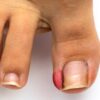
Ingrown toenails, a common and often painful condition, frequently require surgical intervention for effective management. This study aimed to compare the clinical outcomes of partial nail avulsion (PNA) with and without adjunctive phenolization, specifically focusing on recurrence and postoperative wound infection rates.
Custom-made footwear designed specifically for indoor use increases footwear adherence in people with diabetes at high ulcer risk. The design and biomechanical requirements of such footwear are important if they are to safely replace regular custom-made footwear for indoor use. Researchers aimed to compare indoor-specific versus regular custom-made footwear for design characteristics and biomechanical function.
Plantar fasciitis is a very common issue with many treatment options. The purpose of this study was to investigate if patient’s response to previous local steroid injection is predictive of their response to endoscopic plantar fascia release in regard to pain relief, functional recovery, and patient satisfaction. Researchers hypothesized that previous temporary improvement in response to local corticosteroid injection is...
Running is a popular competitive and recreational activity with numerous health benefits, including reduced risk of cardiovascular disease and all-cause mortality, and improved mental health. Despite these benefits, running continues to carry a high risk of injury. The primary objective of this study was to compare plantar pressure (peak forefoot and rearfoot pressure, center of pressure displacement and distance) between maximal...
Tendon properties influence athletic performance, and Achilles tendon (AT) stiffness correlates with an athlete’s jumping performance across sports. This study examined the relationship between AT stiffness and jumping performance in male athletes. Sixty-six males (24.9 ± 4.7 years; 22 basketball players (22.0 ± 4.1 years), and 44 soccer players (26.3 ± 4.4 years) participated.
Venous leg ulcers (VLUs) and diabetic foot ulcers (DFUs) are chronic wounds associated with significant morbidity, high recurrence rates, and poor healing outcomes. Conventional treatments often fail to achieve satisfactory results, leading to prolonged pain, infection risks, and reduced quality of life. Oxygen-ozone therapy (OOT) has emerged as a potential adjunct to conventional wound care, with...
The plantar fascia is composed of fibrous connective tissue that forms a band running from the calcaneal tubercle distally to the toes. One of its main roles is to provide passive support to the medial longitudinal arch on the sole of the foot. This support is compared to a tie-rod tension producer during weight bearing. When loaded excessively during vocational or athletic activities, overuse in the form of...
Gait impairments are among the most common and disabling symptoms of Parkinson’s disease and are especially aggravated in dual-task conditions. Interventions with conventional physical therapy improve gait cadence and speed, cognition, fear of falling, and freezing of gait. However, exergames have attracted interest in the treatment of people with Parkinson’s disease due to the characteristics of the...
Innovations in Biomechanics
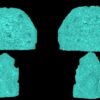
As orthotic capture evolves, the next critical variable is scanning technology. Hardware selection isn’t just technical, it’s clinical. Each modality carries biomechanical implications, and understanding these is essential. In a setting where nuance drives design, hardware must enable precision, not limit it.
By Dr. Dean Hartley (Podiatrist & Adjunct Engineering Fellow–University of Queensland)
Industry News & Updates
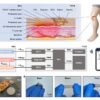
Researchers from Dalian University of Technology, China, have developed a flexible, wearable thermotherapy system. This multilayered device integrates temperature and humidity sensors with a thin gold-based heater on a stretchable polyimide film. Designed for real-time, automatic use, it responds to...
Researchers from Dalian University of Technology, China, have developed a flexible, wearable thermotherapy system. This multilayered device integrates temperature and humidity sensors with a thin gold-based heater on a stretchable polyimide film. Designed for real-time, automatic use, it responds to...
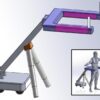
To help address the eldercare challenge, a team of engineers from the Massachusetts Institute of Technology is looking to robotics. They have built and tested the Elderly Bodily Assistance Robot, or E-BAR, a mobile robot designed to physically support the elderly and prevent them from falling as they move around their homes.
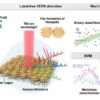
A research team from the Advanced Bio and Healthcare Materials Research Division at the Korea Institute of Materials Science (KIMS), in collaboration with Seoul St. Mary’s Hospital, Korea, have developed a technology that enables the diagnosis of osteoarthritis (OA) and rheumatoid arthritis (RA) within 10 minutes using synovial fluid.
A rehabilitation scientist and his team at The University of Texas at El Paso (UTEP) are exploring an alternative way to alleviate knee pain. In collaboration with Harvard Medical School and Boston University, the team has conducted a pilot trial on a method to treat osteoarthritis (OA)-related knee pain by stimulating the vagus nerve through the ear.
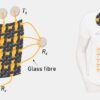
Smart textiles developed by researchers at ETH Zurich, Switzerland, use acoustic waves and glass fibers to help make precise measurements. They are light, breathable, easy to wash, and inexpensive, and offer great potential for medicine, sports and everyday life.
The Last Word
The new global exercise guidelines for healthy longevity in older adults are here. With exercise recommendations to address >14 chronic diseases, adverse outcomes, and geriatric syndromes including: falls, cancer, dementia, type 2 diabetes, depression and anxiety. A key focus is the need for personalized exercise prescription and translating the evidence to practice. “The ultimate goal is enhanced quality of life, regardless of age or initial state of fitness or frailty.”
Featured Products