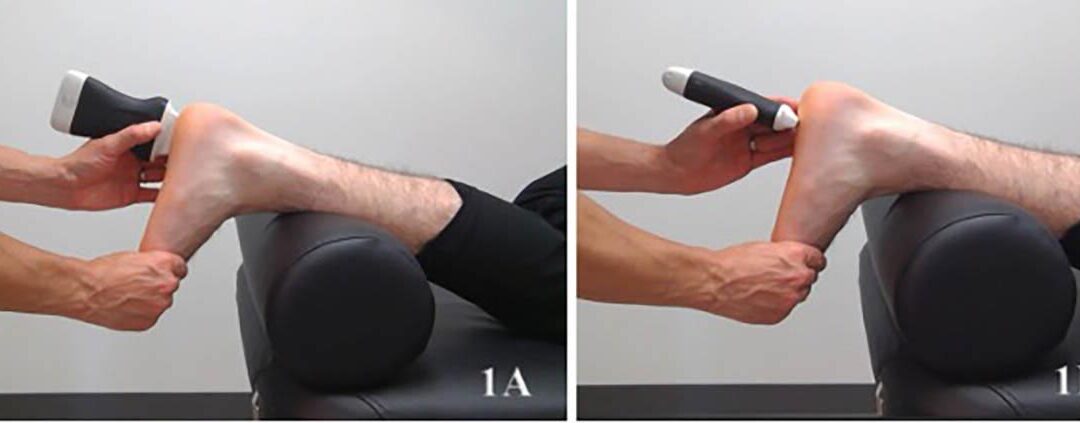








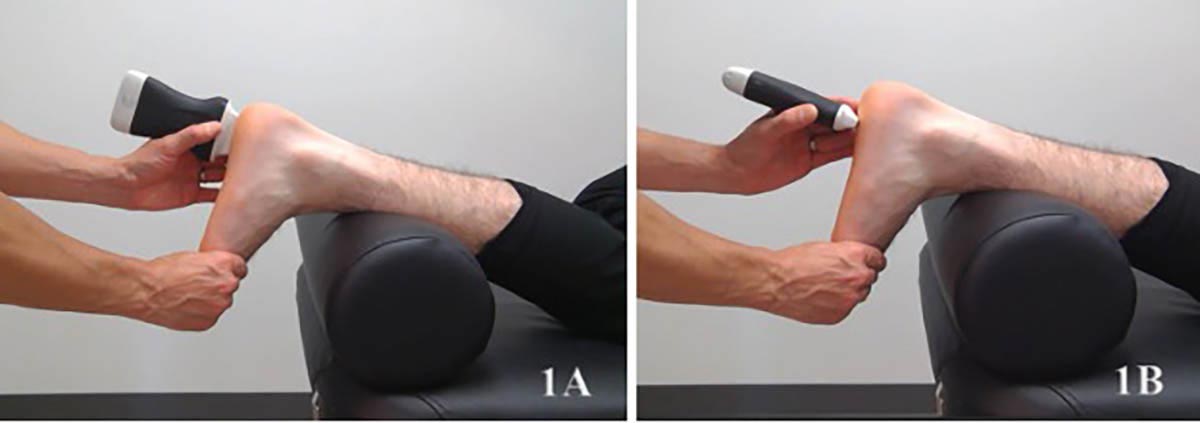
Figure 1. Figure 1A: Transducer Placement on Plantar Fascia in Long Axis (LAX) To obtain a LAX view of the plantar fascia, the transducer is placed longitudinally along the plantar surface of the foot, starting at the medial calcaneal tuberosity and extending distally toward the metatarsal heads. Figure 1B: Transducer Placement on Plantar Fascia in Short Axis (SAX) To obtain a SAX view, maintain the same patient positioning and rotate the transducer perpendicular to the fascia’s fibers, typically just distal to the calcaneal insertion.
The plantar fascia is composed of fibrous connective tissue that forms a band running from the calcaneal tubercle distally to the toes. One of its main roles is to provide passive support to the medial longitudinal arch on the sole of the foot. This support is compared to a tie-rod tension producer during weight bearing. When loaded excessively during vocational or athletic activities, overuse in the form of plantar fasciitis can occur. Accurate diagnosis fascial injury is essential for appropriate treatment planning and optimizing patient outcomes. Diagnostic musculoskeletal (MSK) ultrasound offers a portable, real-time, and cost-effective alternative that is gaining traction in rehabilitation and sports medicine settings. MSK ultrasound has emerged as a valuable, non-invasive imaging modality for evaluating plantar fascia injuries including tissue hypertrophy or structural changes and damage at the calcaneal fascial enthesis. MSK ultrasound is adept at detecting changes in tendon tissue composition and integrity. Furthermore, this manuscript will review the utility of MSK ultrasound in evaluating the plantar fascial injury, including its anatomy, common injury patterns, sonographic techniques, and clinical implications for professional rehabilitation. By integrating MSK ultrasound into clinical practice, providers can improve the accuracy of diagnosis, enhance diagnostic confidence, monitor healing progression, and guide rehabilitation strategies to optimal patient outcomes.
Source: Manske R, Wolfe C, Page P, Voight M. Diagnostic musculoskeletal ultrasound in the evaluation of the plantar fascia. Int J Sports Phys Ther. 2025 1;20(7):1091-1096. doi: 10.26603/001c.141177