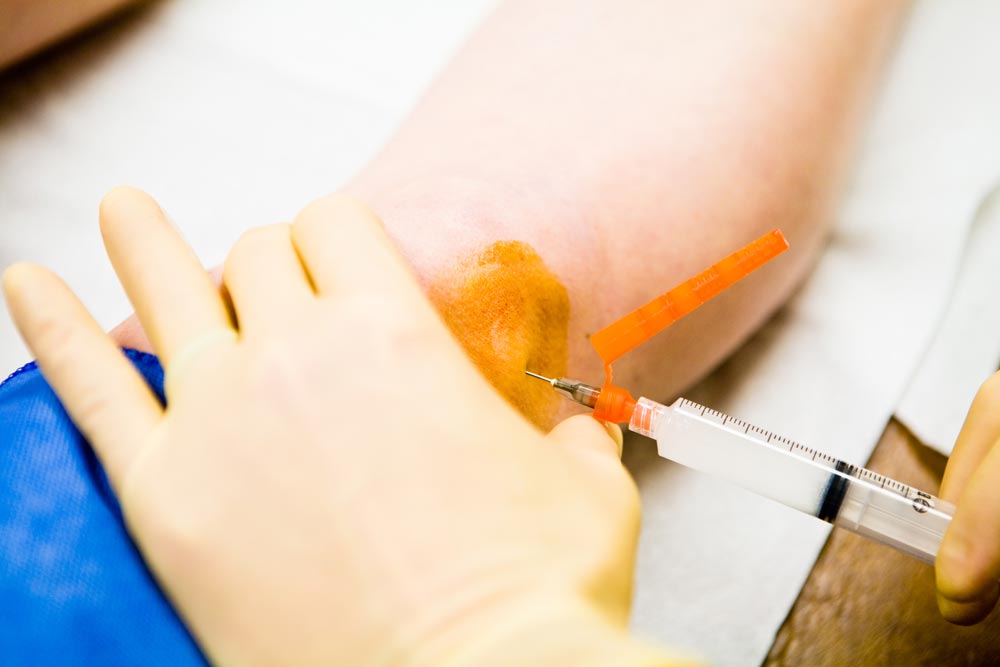
 The combination of exercise therapy ad corticosteroid injection is more effective than exercise therapy alone in patients with long-standing Achilles tendinopathy, according to a new study from Denmark.
In this randomized controlled trial of 100 patients with long-standing ultrasound-verified Achilles tendinopathy (range 20 – 26 months), researchers divided the participants into 2 groups. Assessment of pain and function were conducted at baseline and at 1, 2, 3, 6, 12, and 24 months. After an initial clinical examination, the control group received 1mL of lipid emulsion and 1mL of lidocaine (10mg/mL) (placebo injection), and the intervention group received 1mL of methylprednisolone acetate (40mg/mL) and 1mL of lidocaine (10mg/mL) (corticosteroid injection). Up to 3 injections were offered, at least 4 weeks apart. Exercise therapy was based on previous trials using a 3-month heavy slow resistance program consisting of 3 different heel-rise exercises done every second day (3x wk), with the number of repetitions decreasing as the load increased.
The primary outcome was the Victorian Institute of Sports Assessment–Achilles (VISA-A) score (range, 1-100, with 100 representing no symptoms) at 6 months. Secondary outcomes included pain measured using a 100-mm Visual Analog Scale for morning pain and pain during exercise (with higher scores indicating worse pain), global assessment (Likert scale), and tendon thickness.
At baseline, participants in both groups had similar VISA-A scores of 46 (SD, 18). At 6 months, the group that received the corticosteroid injection had a 17.7-point (P < .001) larger improvement in VISA-A score compared with the control group. No severe adverse events were observed in either group, and there was no deterioration in the 2-year long-term follow-up.
Among the secondary objectives, ultrasound-measured thickness of the Achilles tendon improved significantly more in the group that received the corticosteroid injection. Mean difference between groups was 1.9mm at 1 month (P < .001), 2.2 mm at 2 months (P < .001), 2.2 mm at 3 months (P < .001), and 1.0 mm at 6 months (P < .02).
Having recorded both statistically and clinically relevant improvements in the group that received the combination of exercise therapy and the corticosteroid injection, the study authors concluded that the effects are visible at both short-term and long-term follow-up and should be incorporated into the management of long-standing Achilles tendinopathy.
Source: Johannsen F, Olesen JL, Øhlenschläger TF, et al. Effect of ultrasonography-guided corticosteroid injection vs placebo added to exercise therapy for Achilles tendinopathy: a randomized clinical trial. JAMA Netw Open. 2022;5(7):e2219661. doi: 10.1001/jamanetworkopen.2022.19661.