








 By Dr. Dean Hartley (Podiatrist & Adjunct Engineering Fellow–University of Queensland)
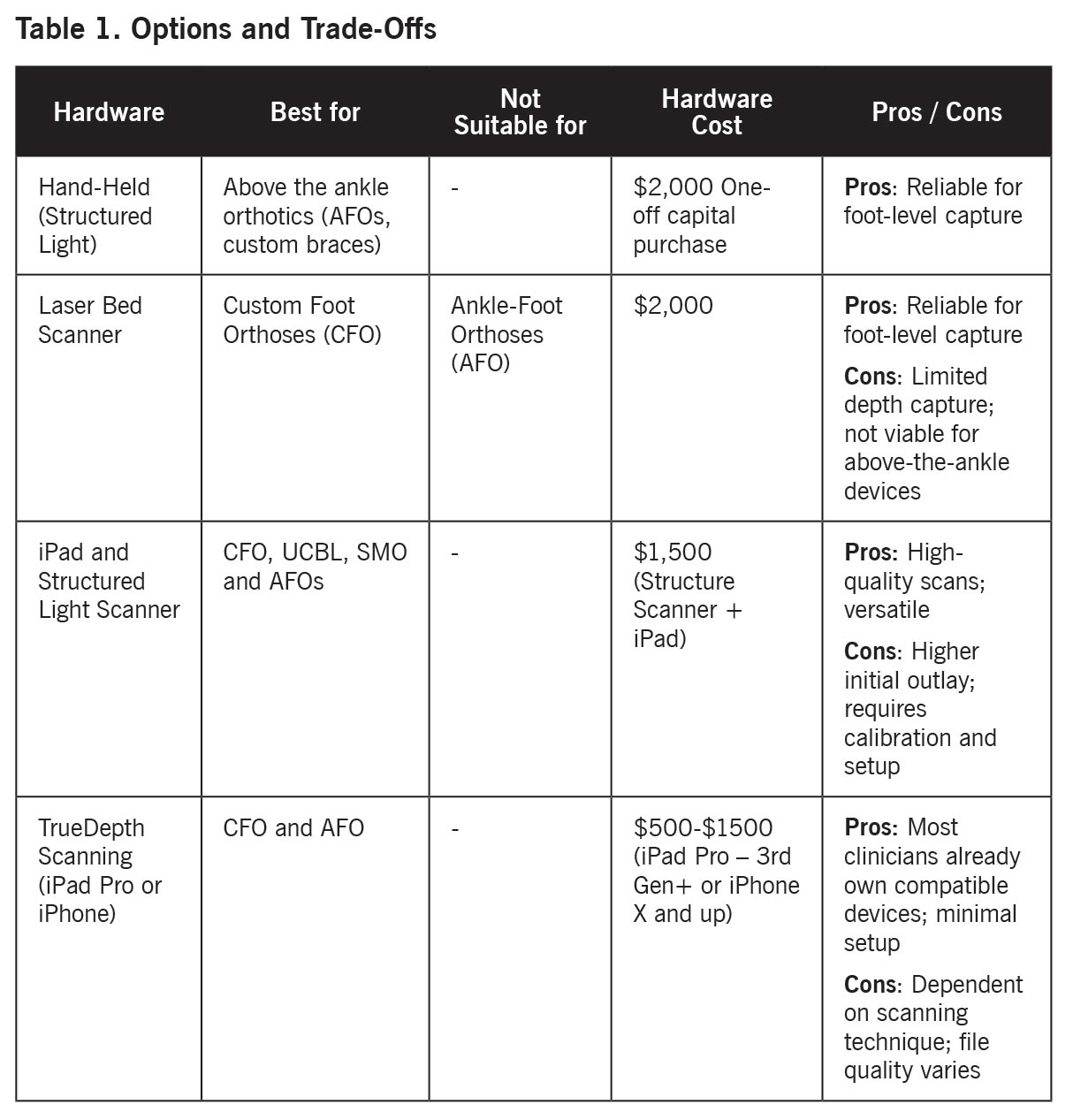
As orthotic capture evolves, the next critical variable is scanning technology. Hardware selection isn’t just technical, it’s clinical. Each modality carries biomechanical implications, and understanding these is essential. In a setting where nuance drives design, hardware must enable precision, not limit it.
The Hardware Landscape: Options and Trade-Offs
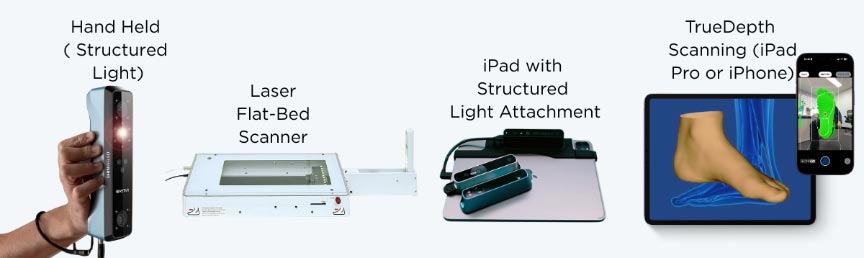
Here’s a breakdown of the most commonly used systems (see Table 1).
Accuracy: What the Research Tells Us
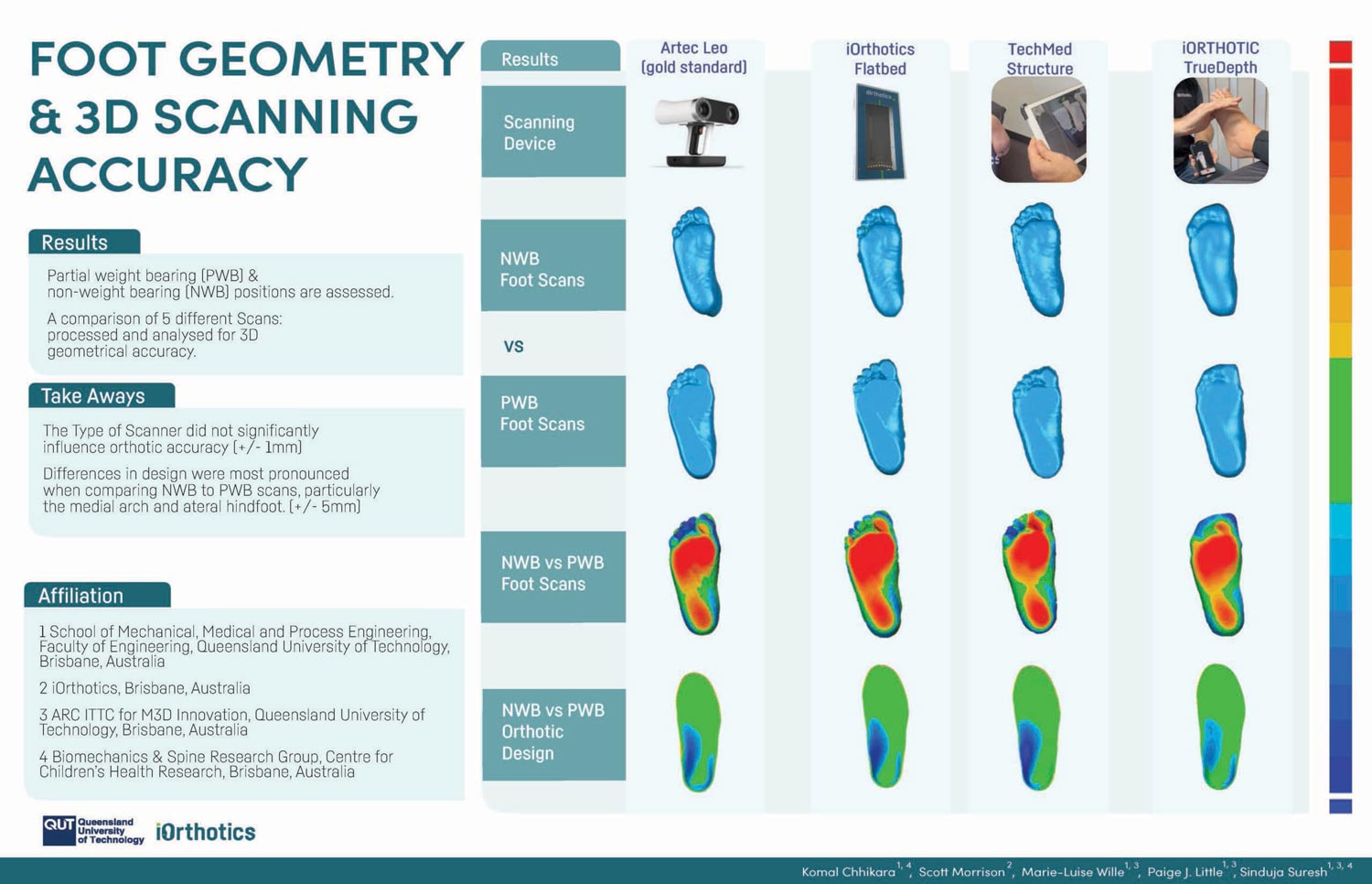
In a recently published study, our team with Queensland University of Technology, set out to benchmark the accuracy of leading 3D scanning technologies against clinical standards, clarifying their role in best-practice orthotic design.
The implications of this research are both practical and insightful. Our findings indicate that high-cost scanning hardware does not inherently translate to more accurate orthotic devices. Without rigorous training in scanning technique, even the most advanced systems can fall short.
 Several Key Findings Emerged:
- No significant differences were found between hardware platforms in terms of scan accuracy and final design output.
- Clinician technique was the most critical variable influencing the quality and usability of the final design file.
- The amount of load placed through the scan was the primary factor contributing to design variability.
Building on the theme of democratized access, economic analysis underscores the practicality of 3D scanning in clinical workflows. Comparative evaluations revealed that digital capture methods can reduce procedural costs by up to 80% and time requirements by nearly 85% when compared to traditional plaster casting. These findings highlight not only the efficiency of modern scanning technologies but also their potential to streamline operations and improve accessibility–particularly for clinics operating under resource constraints.2
Taken together, the accuracy and economic data present a compelling case: 3D scanning is not just a technological upgrade—it’s a strategic enabler. When paired with sound clinical technique, even modestly resourced practices can deliver high-quality orthotic outcomes with speed, consistency, and cost-effectiveness. This marks a shift in the orthotic landscape, where precision is no longer gated by budget, but unlocked through clinical excellence.
 In our final article in this series, we shift focus from hardware to technique–arguably the most critical factor in digital orthotic success. From scan positioning to weight-bearing protocols, we’ll explore why mastering scanning technique is the new gold standard in clinical practice.
Dean Hartley is a Podiatrist and healthcare innovator with over a decade of experience in clinical practice, orthotic manufacturing, and allied health leadership. He co-founded Balance Podiatry, iOrthotics globally, and Healthia Limited, a publicly listed allied health organization. As Director, he leads iOrthotics Australia, The Orthotic Factory (Adelaide), iOrthotics USA and Performance Labs (New Jersey), driving advancement in orthotic manufacturing through 3D printing, digital workflows, and scanning technologies.
Dr. Hartley collaborates with leading universities and industry partners, holds an Adjunct Fellowship at The University of Queensland, and co-established the Healthia R & D Hub, advising on tech-enabled healthcare and private sector research.
- Chhikara K, Suresh S, Morrison S, Hartley D, et al. Does scanner choice matter for the design of foot orthosis? Sensors (Basel). 2025 Jan 31;25(3):869. doi: 10.3390/s25030869.
- Payne C. Cost benefit comparison of plaster casts and optical scans of the foot for the manufacture of foot orthoses. Australasian Journal of Podiatric Medicine. 2007;41(2):29-31. https://www.podscan.com.au/images/downloads/Plaster_Cast_Vs_Scaning_Cost_Benefit.pdf