
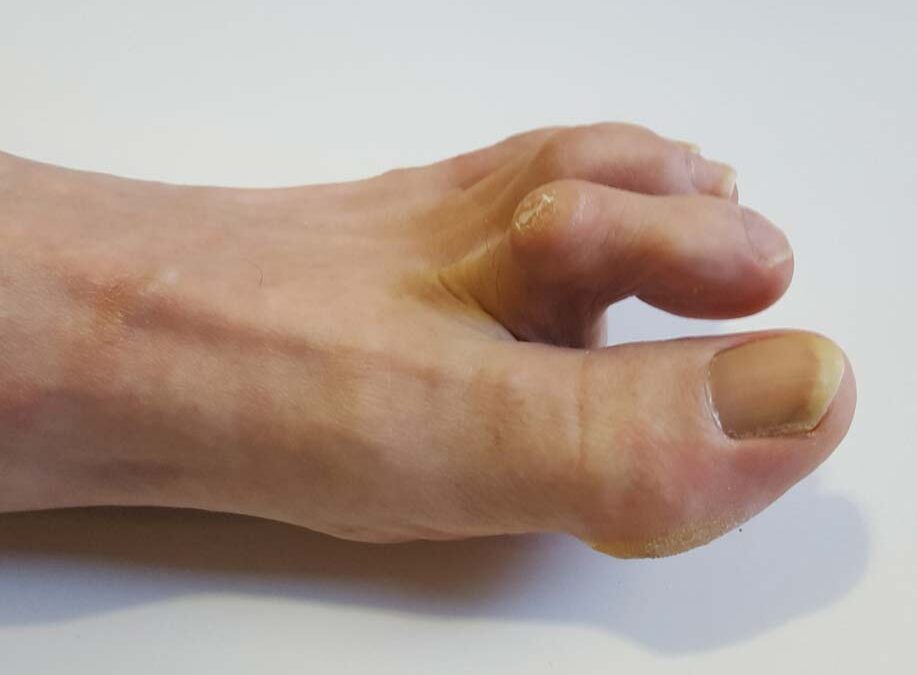








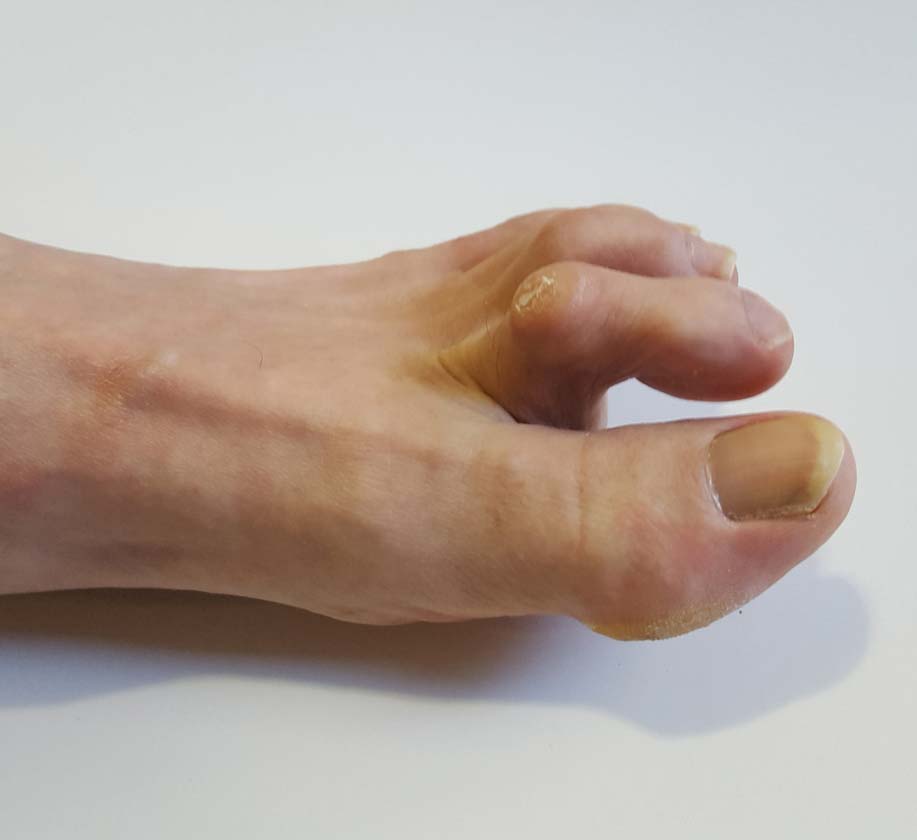
 Hammertoes are one of not the most common deformities that afflicts the diabetic foot and leads to increased risk of diabetic foot ulcers. Flexor tendon tenotomy treatment of the diabetic hammertoe has gained increased interest and is now recommended in international guidelines as a treatment of hammertoes to prevent diabetic foot ulcers. There is however no published data on the long-term outcomes following tenotomy treatment. The objectives of this study were to describe the demographics and long-term outcomes following tenotomy treatment of individuals with diabetes who had flexor tendon tenotomies of hammertoes. The follow-up study was performed at Steno Diabetes Center Copenhagen between January 1, 2020, and June 31, 2020. Participants had 1 visit where foot examination was performed by an orthopedic surgeon. Of the original 38 operated participants, 21 (55.3%) had died during the follow-up period, 1 (2.6%) had moved away, and 1 (2.6%) had the incorrect procedure performed originally. At follow-up (mean 149.7 months (±17)), age of the remaining 15 participants (86.7% male) was 66.6 years (±11.4), diabetes duration was 32.2 years (±13.3), all had neuropathy and 14 (93.3%) had palpable foot pulses. The 15 included participants had 22 toes tenotomized in the original study, of which 5 toes (22.7%) in 4 participants (26.7%) had recurrent hammertoe deformities. Of the 15 participants, 14 (93.3%) had incurred at least 1 ulcer during the observation period, and 8 (53.3%) had incurred an amputation. This study reports an undescribed risk of recurrence of deformities after tenotomies and supports that this population is at high risk of new ulcers and amputations.
Source: Andersen JA, Rasmussen A, Frimodt-Møller M, Kirketerp-Møller K, Rossing P. Long term outcomes after flexor tendon tenotomy of the diabetic foot. Clin Med Insights Endocrinol diabetes. 2025 24;18:11795514251314787. doi: 10.1177/11795514251314787.






This paper has a devastating conclusion regarding the benefit of flexor tenotomy in the diabetic foot, with over half of patients dying and of those surviving over 90% having re-ulceration and half undergoing amputation. I reviewed this article and the original paper it was related to. My only conclusion is this data does not represent the results we have seen utilizing this procedure in the US. Surgical techniques are similar, though those in Denmark underwent hospitalization after procedure for 2-3 days, while in the US this is often an out-patient procedure. My suggestion is their conclusion that mortality, recurrence of hammertoe, and re-ulceration are potential complications, but not to the level noted in this paper.