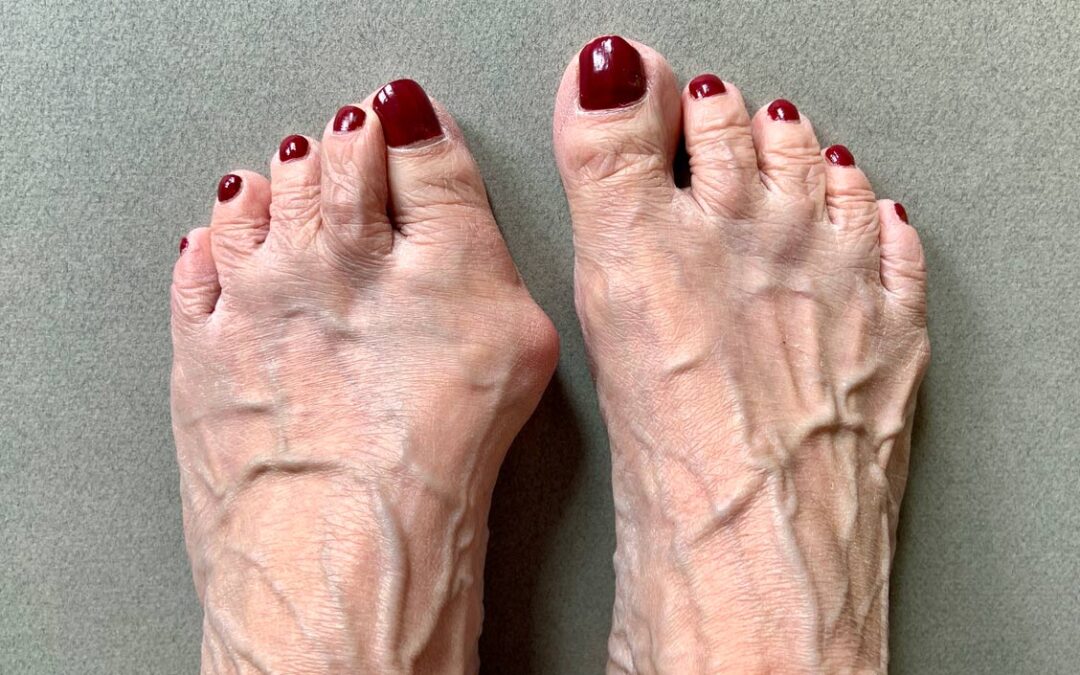








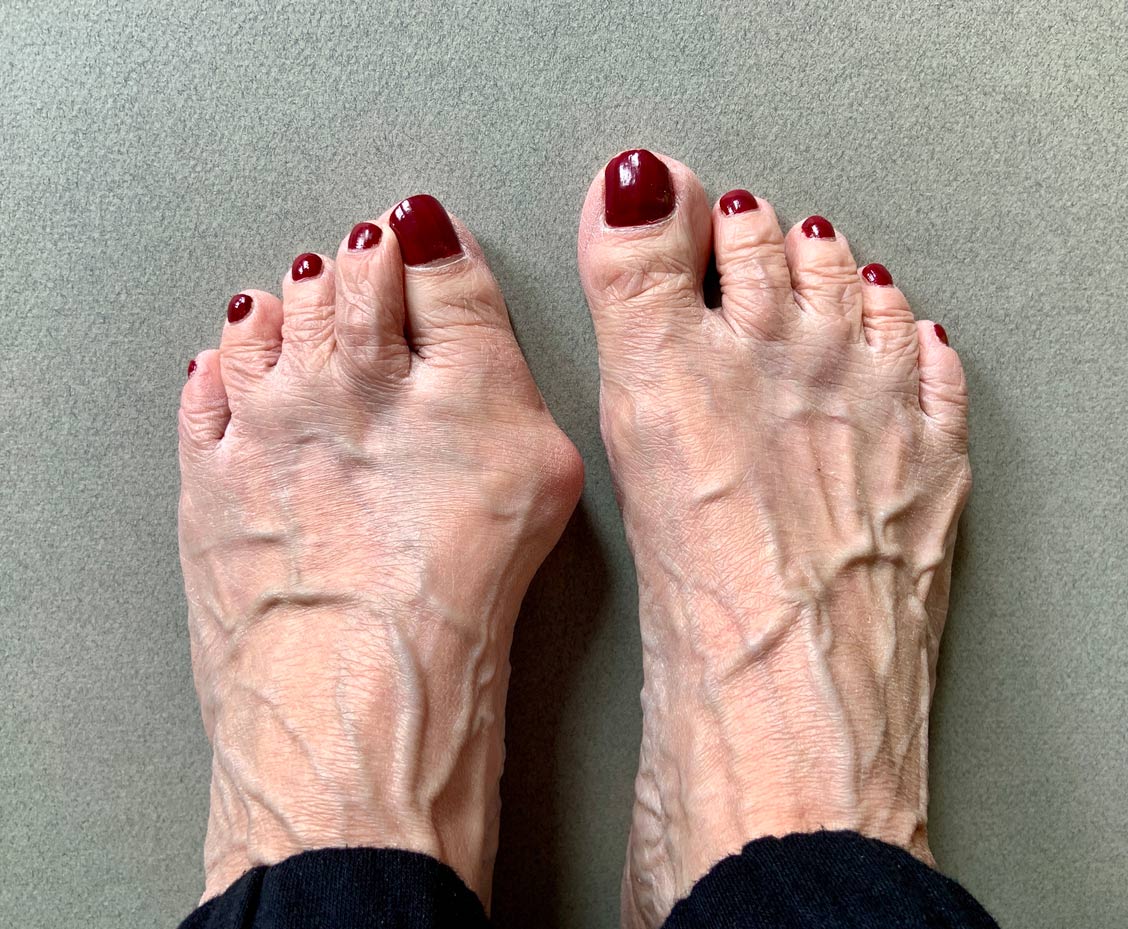
 A new study from China looked at changes in neuromuscular control in elderly adults with hallux valgus to better understand the increased risk of falls in this population. The researchers assessed gait using non-negative matrix factorization (NNMF) for electromyography (EMG) and joint motion to compare muscle and kinematic synergies across 3 groups: young controls (YC), elderly controls (EC), and elderly hallux valgus (HVE). They found that the EC group demonstrated the additional activation of calf muscle groups accompanied by decreased ankle motion and increased hip abduction. Compared to the EC group, the HVE group required more thigh flexor muscle groups to compensate for the lack of function of the ankle movements during gait and showed decreased hip abduction but increased knee flexion. During gait, the center of plantar pressure in the HVE group were significantly larger than YC and EC groups (P < 0.05).
They concluded that elderly individuals with hallux valgus exhibit under-activated calf muscles around foot joints, and despite compensations from thigh muscles, they maintain an imbalance and increased risk of falls. Such information should help clinicians to evaluate HVE control strategies and provide personalized treatment based on these vulnerabilities to reduce the risk of falls.
Source: Liu Y, Chen J, Liu R, et al. High risk of falling in elderly with hallux valgus evaluated by muscle and kinematic synergistic analysis. Gait Posture. 2025;118:33-38. doi: 10.1016/j.gaitpost.2025.01.025.