








 By Laura Fonda Hochnadel
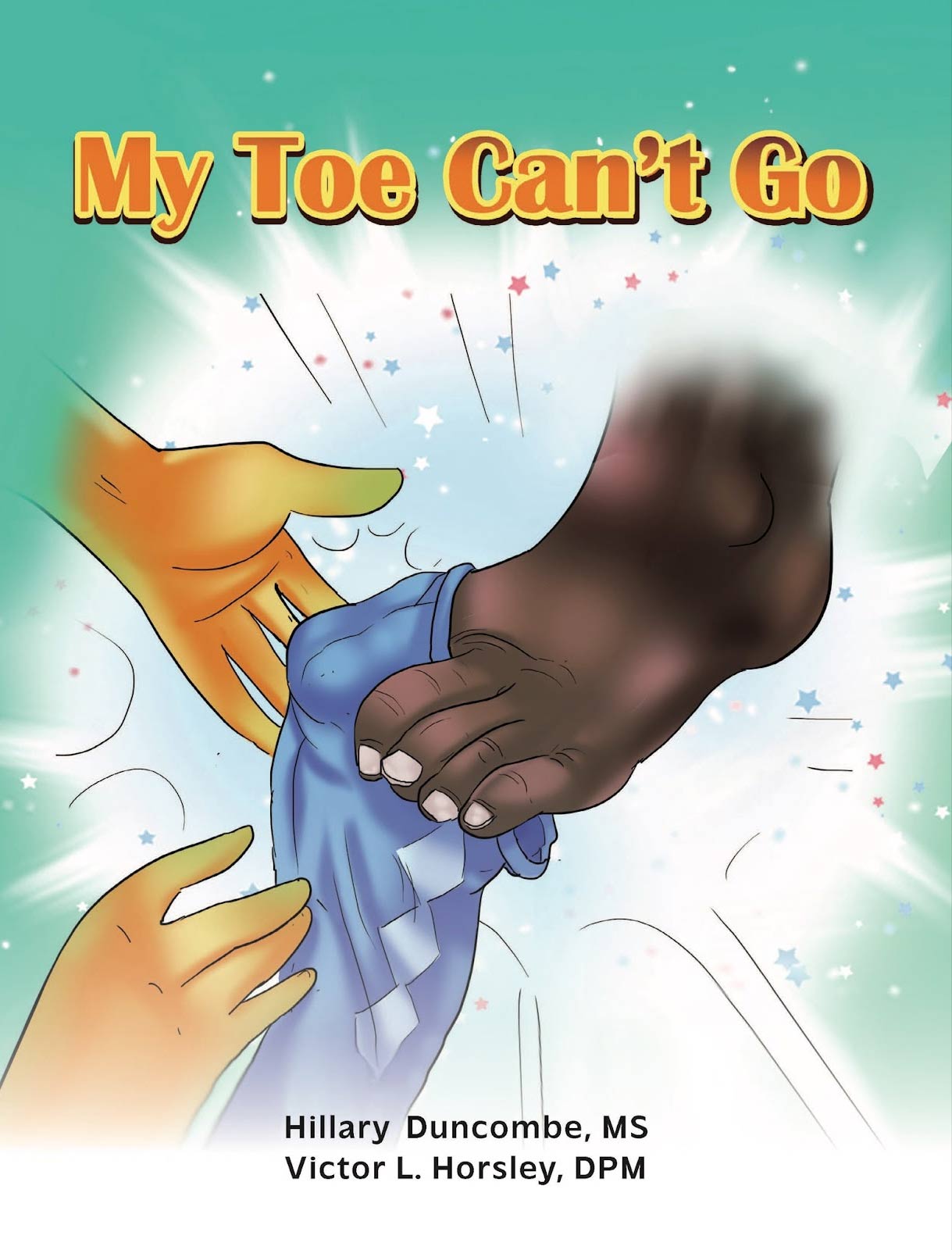
My Toe Can’t Go was born from heartbreak and urgency, said children’s author Hillary Duncombe, MS. “Watching my sister suffer the devastating effects of type 2 diabetes mellitus (T2DM) and polyneuropathy—leading to a series of amputations—was unbearable.” Within a month, her sister lost her toes, midfoot, and finally her leg before succumbing to the disease. Before she died, her young daughter would tearfully ask, “Why is this happening to my mummy?”
Internationally, every 20 seconds a limb is lost due to T2DM complications. For many families, diabetes isn’t just a medical condition—it’s a devastating reality. Duncombe knew no child should endure such pain. “I couldn’t stand the thought of other families experiencing the same trauma,” she said. Through sleepless nights of prayer, frantic writing, and tears, My Toe Can’t Go emerged.
Designed for children age 7–12, a pivotal time for developing lifelong health habits, the book turns familiar, vibrant fruits and vegetables into characters that inspire. “It hit me like a lightning bolt—the same foods that meant life and health in my childhood could now teach a new generation,” said Duncombe. “Growing up in The Bahamas, freshly grown fruits and vegetables weren’t just food—they were culture, laughter, and a form of love, always present at our table, complementing every meal with freshness and vitality.”
She wanted these staples of health to become lasting representations for children and families—a reminder that everyday food choices shape our well-being. By weaving these characters into a story with engaging activities and recipes, My Toe Can’t Go becomes a powerful tool for families to embrace healthier habits together. “The STEM [science, technology, engineering, and mathematics]-compliant approach ensures this resource integrates seamlessly into classrooms and daily life, sparking meaningful conversations and actions that lead to real change,” said Duncombe.
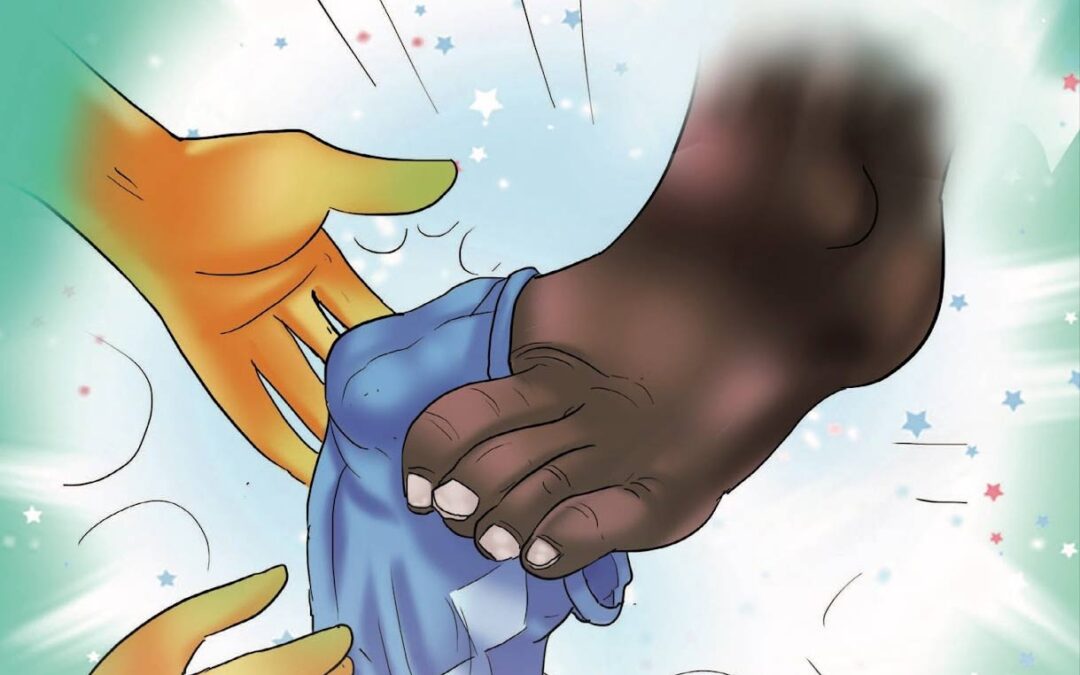
The story follows GrammyBurger, a warm yet cautionary figure whose swollen, shiny red toe feels no pain—a classic symptom of polyneuropathy. Duncombe explains, “Her story helps young readers grasp the reality of polyneuropathy and amputation in a way that is eye-opening but not fearful or overwhelming,” she continued. “By focusing on an adult, the narrative highlights what’s at stake while empowering children to take preventive action for themselves and their families. Children are natural change agents. When they understand why health matters, they spark conversations that lead to better choices.” My Toe Can’t Go plants the seeds of early awareness, equipping the next generation with the knowledge and tools to take control of their health.
Duncombe co-authored My Toe Can’t Go with Victor L. Horsley, DPM, whose mission is to cut amputation rates by 50% in 5 years. “We met at a health conference where he spoke about polyneuropathy and its link to type 2 diabetes–related amputations—it struck a deep chord with me,” she recalled. “It felt like an answer to my prayers. Our shared passion for prevention made collaboration inevitable.” Horsley ensured the book’s medical content wasn’t just static facts but a dynamic, engaging resource, making complex health information accessible and actionable for children.
Together, Duncombe and Horsley created more than just a book—they built a lifesaving resource that is both medically sound and accessible, giving families and educators the tools to make a real impact. Duncombe envisions My Toe Can’t Go as a cornerstone in classrooms, equipping children with STEM-aligned, life-saving knowledge about T2DM and polyneuropathy. But its impact doesn’t stop there. She sees it as a vital resource for families and communities, fostering meaningful conversations and inspiring real, lasting change. Beyond schools and homes, she is committed to integrating My Toe Can’t Go into healthcare organizations across the U.S. and the Caribbean, ensuring amputation prevention becomes a fundamental standard in health education. “This isn’t just about awareness,” she says. “It’s about action—giving the next generation the knowledge to rewrite their health story before it’s too late.”
According to Duncombe, Caribbean LEAP (Lower Extremity Amputation Prevention) is at the heart of My Toe Can’t Go, aligning with its mission to combat polyneuropathy and reduce amputations caused by T2DM. By featuring Caribbean LEAP on the back cover, Duncombe and Horsley emphasize their commitment to spreading awareness and driving real change. “Ninety percent of donations go directly to supporting educational systems, libraries, and community centers, while the remaining 10% covers essential administrative and fundraising costs as its vision continues to empower communities,” Duncombe explained. As a dynamic and evolving initiative, Caribbean LEAP is expanding its reach, updating its website to provide critical information and further engage communities.
For information on how to purchase the book, visit CaribbeanLEAP.
Laura Fonda Hochadel is Associate Editor at Lower Extremity Review.






This document is very informative and well organized.
Love this article and the fact that is book deals with reality in an engaging creative way….. Now I can be more mindful in ensuring that “My Toe Can’t Go”!
This is very encouraging and gives hope
This article captures exactly why My Toe Can’t Go is far more than a children’s book — it’s a gateway to transforming how we approach diabetes prevention across generations. As someone actively working to scale this initiative globally, I’ve seen firsthand how this STEM-aligned resource resonates not only with children, but also with ministries of health, educators, and civic leaders across Africa, the Caribbean, and beyond.
We are at a tipping point — with over 250 million school-aged children in Africa alone, the opportunity to embed early prevention into national health and education systems has never been more urgent or more achievable. I commend Hillary Duncombe and Dr. Horsley for this visionary collaboration, and I invite institutions, funders, and partners worldwide to join us in making this life-saving resource a standard across classrooms and communities.
The work starts with awareness — but it must end with access.
— Courtney Ashley Vaughan
Global Strategist | Founder, WAR-D (War on Diabetes) Initiative ©