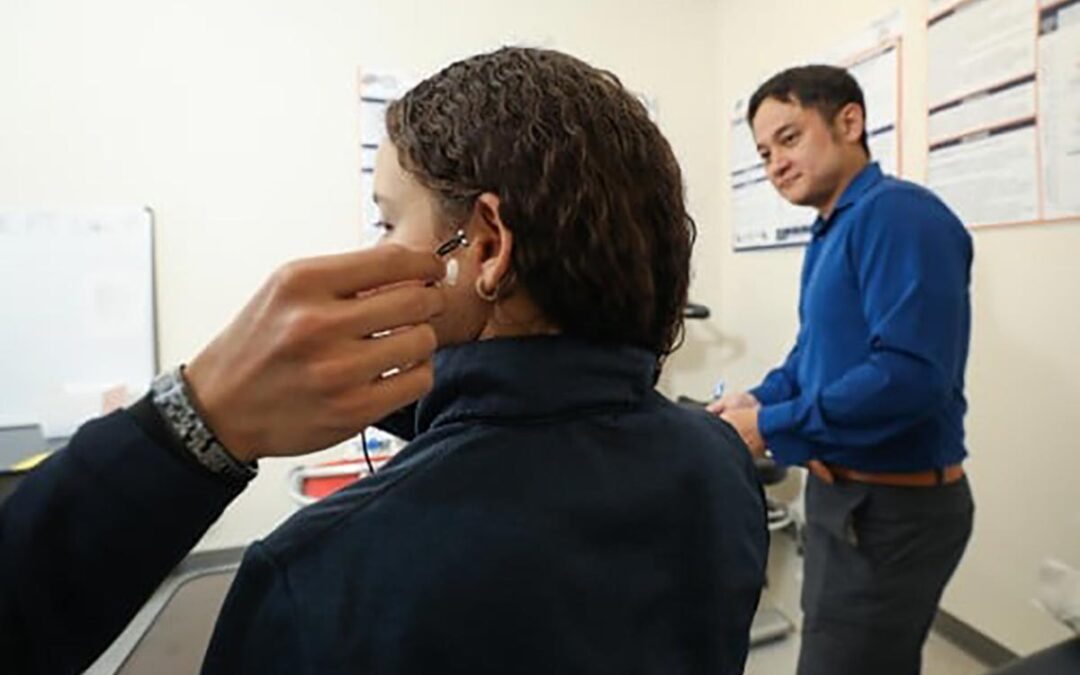








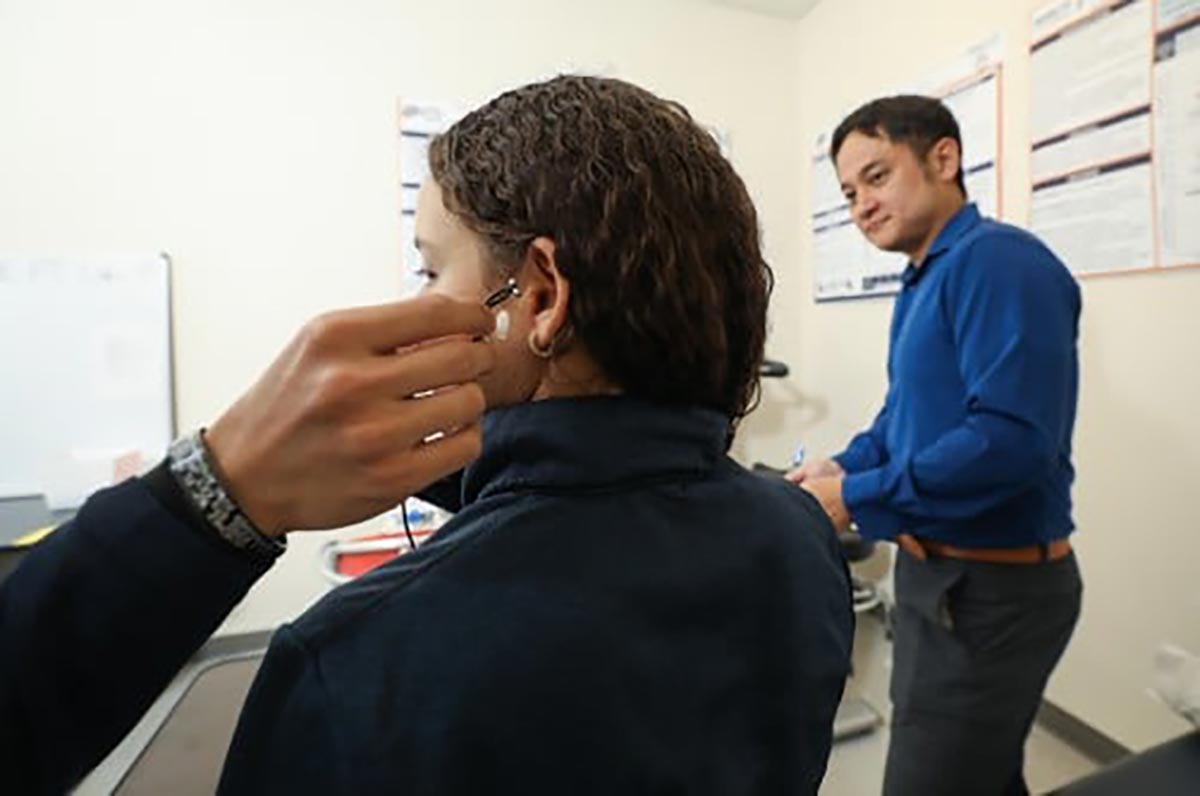
tVNS is already approved by the US Food and Drug Administration to treat some conditions, such as epilepsy and depression, but this clinical trial is the first of its kind in the United States to evaluate the therapy’s impact on knee pain. Image courtesy of UTEP
A rehabilitation scientist and his team at The University of Texas at El Paso (UTEP) are exploring an alternative way to alleviate knee pain. In collaboration with Harvard Medical School and Boston University, the team has conducted a pilot trial on a method to treat osteoarthritis (OA)-related knee pain by stimulating the vagus nerve through the ear.
One component of the central pain mechanisms is the vagus nerve, said Kosaku Aoyagi, PT, PhD, an assistant professor of physical therapy and movement sciences in the UTEP College of Health Sciences. The nerve plays an important role in the parasympathetic nervous system, which controls the body’s rest and digest function, and is countered by the sympathetic nervous system, which manages the body’s response to stress and danger. “The current evidence suggests that individuals with OA knee pain have an imbalance of sympathetic versus parasympathetic activity in the body, which can cause pain. By stimulating the vagus nerve, we hypothesized that our treatment may rectify this imbalance,” he said.
Aoyagi’s pilot study tested a treatment called transcutaneous auricular vagus nerve stimulation (tVNS) on 30 individuals with knee pain. Each study participant was treated with a tVNS device for 60 minutes. The device works by resting on the ear and sending a pulse to the auricular (ear) branch of the vagus nerve. Overall, 11 out of 30 participants with knee OA felt a noticeable difference in their pain levels after receiving the treatment.