February 2026
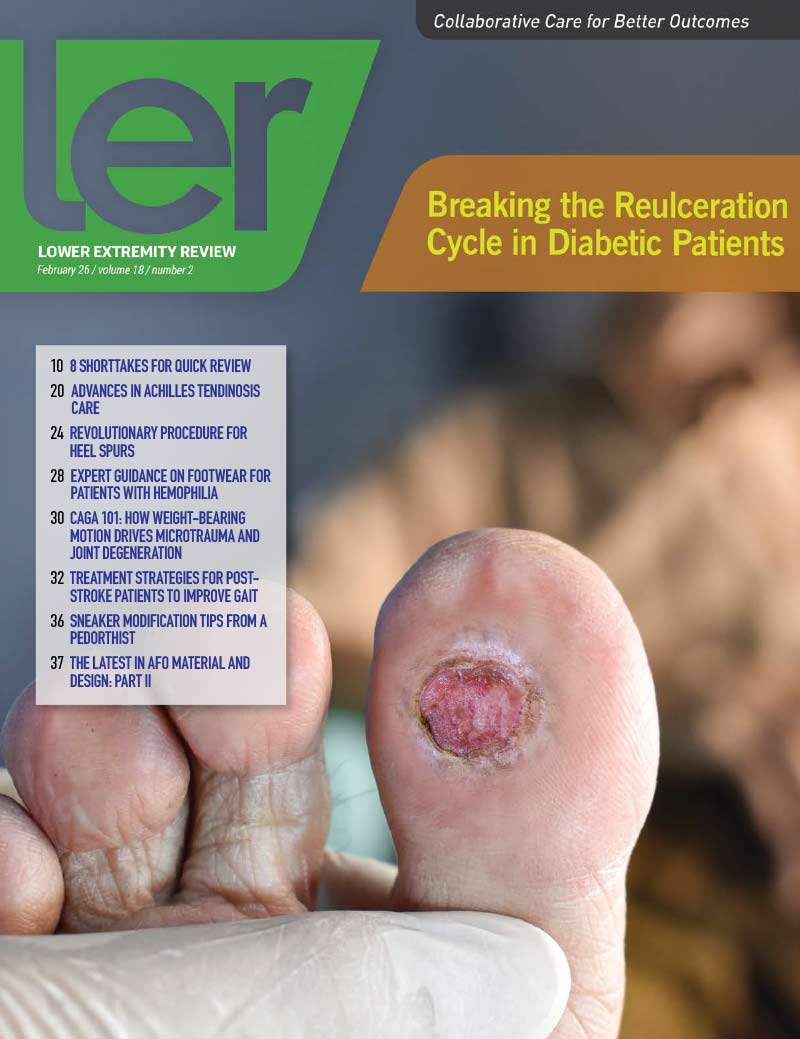
Click on image to download the issue in PDF format
Cover Story
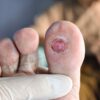
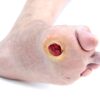
I used to think that my job ended when the wound closed. Document the healing, schedule a routine follow-up, and move on to the next case. But after over 2 decades managing diabetic foot wounds at high volume, I’ve learned that the months immediately following epithelialization are (counterintuitively) when my patients need me most.
The “frequent flyers” in my practice are diabetic patients who cycle in and out: ulcer, healing, discharge, recurrence, ulcer again. Some have already lost part of a foot to amputation. Others carry multiple comorbidities–vascular disease, renal insufficiency, and poor glycemic control. These are the patients who have the deck stacked against them. Their decline follows a predictable path. Without a rigorous, closed-loop post-healing protocol, these patients almost always reulcerate. Studies show that reulceration rates hover around 40% at 1 year and up to 65% at 5 years 1. Hospitalization for cellulitis or abscess becomes routine. Amputation often feels inevitable.
By Mikel D. Daniels, DPM, MBA, President and Chief Medical Officer, WeTreatFeet Podiatry
Features
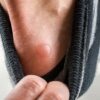
For someone with hemophilia, foot blisters can be a significant concern because their blood clotting disorder makes it difficult for even small injuries to stop bleeding, potentially leading to larger, more painful blood blisters on the feet. Foot blisters of the skin can be caused by friction from poorly fitting socks and shoes and be compounded with excessive activity.
By Teresa Alpert
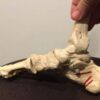
Our linear mechanical degradation equation, outlined in our last installment, highlighted the challenges to the kinetic chain during weightbearing and locomotion. It displays the all too real journey from imbalances and soft tissue disturbances with their causes and conditions to the more erosive destruction of cartilage and bony interaction that is the result of wear and tear, which is called, diagnostically, degenerative joint disease.
By Jay Segel, DPM; Sally Crawford, MS
Modern athletic shoes, with their increased stack heights and very soft midsoles, tend to collapse quickly. Compounding the problem, true shoes designed specifically for pronators, extreme pronators, supinators, or extreme supinators are essentially no longer available on the market. As a result, many patients lack adequate frontal-plane control from footwear alone.
By Jeffrey S. Rich
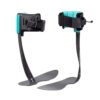
Advances in ankle-foot orthoses (AFOs) are revolutionizing how podiatrists, physical therapists and O&P clinicians support lower-limb mobility and rehabilitation. In this 3-part series, we explore the latest evidence, cutting-edge materials, and innovative design strategies that are shaping the future of AFOs. This short series offers a look at how today’s breakthroughs are improving function, comfort and compliancy in the lower extremity world.
By Keith Loria
ShortTakes From the Literature
Diabetic Foot Ulcers (DFU) are a serious complication of diabetes and often lead to hospitalizations. This study sought to assess the incidence, risk factors and length of stay for hospitalizations, with and without amputations. Among 4709 people with DFU in Queensland (median age, 63 years, 3275 men, type 2 diabetes, DFU-related hospitalizations were recorded for 977 people : 669 without amputations...
Lateral ankle sprains (LAS) result in chronic ankle instability (CAI), causing ongoing instability. Although peroneal muscle weakness is documented in CAI, surface electromyography shows similar activation patterns between CAI and healthy individuals, suggesting structural rather than neural deficits. Ultrasound imaging (USI) uniquely enables noninvasive assessment of muscle morphology and quality through...
Foot orthotics, a device which can modify the mechanical interaction between foot and the external environment, are commonly prescribed for individuals with pes planus foot postures. The purpose of this study was to investigate the role of foot orthotics on controlling dynamic stability when females with pes planus foot posture experience a modified foot placement orientation during walking.
Posterior tibialis tendon dysfunction is a chronic musculoskeletal disorder characterized by a progressive flatfoot deformity which negatively impacts health-related quality of life. Custom foot orthoses modify walking biomechanics in individuals with posterior tibialis tendon dysfunction, but no studies have investigated their effects on stair climbing biomechanics in this population.
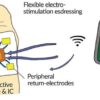
Diabetic foot ulcer (DFU) is one of the most severe complications of diabetes; its healing is typically protracted and marked by a high rate of recurrence. In recent years, electrical-stimulation (ES) therapy has emerged as a novel adjunct to conventional approaches such as debridement, negative-pressure wound therapy, and moist dressings. By applying an exogenous electric field that mimics the skin’s endogenous wound...
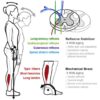
Falls are a leading cause of injury-related hospitalization, morbidity, and mortality in older adults, with impaired postural control serving as a key predictor of fall risk. The triceps surae, and particularly the soleus, plays a central role in maintaining upright stance by generating continuous plantarflexion moments that stabilize the body’s center of mass. This summarizes evidence for the neuromechanical contributions of the...
Percutaneous electrolysis (PE) is a minimally invasive procedure that utilizes galvanic current delivered through a needle. PE is increasingly employed for musculoskeletal disorders, despite the scarcity of scientific evidence supporting its use. The aim of this systematic review is to synthesize the existing evidence and explore the applications of PE in rehabilitation. In line with Preferred Reporting Items for...
Mitochondrial trifunctional protein deficiency (MTPD) is an inherited disorder of fatty acid β-oxidation caused by mutations in HADHA or HADHB genes. It typically presents with cardiomyopathy or hepatic failure in early childhood; however, it may rarely present in adulthood with the neuromyopathic form. Researchers describe a patient with MTPD with isolated neuropathy mimicking Charcot-Marie-Tooth disease (CMT) as the first and only presenting symptom.
lerEXPO Highlights
For millions of people, chronic heel pain is a relentless and frustrating battle. Conditions like insertional Achilles tendinopathy and Haglund’s deformity make every step a painful reminder of a problem that refuses to go away. For decades, the standard surgical solution has been an open procedure involving a large incision, cutting away the problematic bone spur, debridement and repair of the tendon and a long recovery.
By Tyler Gonzalez MD MBA FAAOS
Chronic mid-substance Achilles tendinosis is a common and challenging condition encountered by foot and ankle specialists. Unlike acute Achilles rupture, this disorder develops insidiously from repetitive microtrauma and progressive degeneration. Patients frequently report vague posterior ankle pain or a minor “tweak” that evolves into chronic dysfunction. Because successful management depends on accurate diagnosis and...
By Mark J. Mendeszoon, DPM
A Foot Forward for Optimum Health

“A Foot Forward for Optimum Health” is a column designed to enlighten the old guard in a new way about lower extremity impairment as it pertains to foot drop. The intent is to challenge evidence-based research and practice so that it addresses real world issues shaped by social determinants of health. For every common issue is an uncommon response that will provide insight to improve health outcomes by putting one foot forward at a time–efficiently and effectively.
The somatosensory system is responsible for processing information from the skin and the musculoskeletal system to determine body position and movement. Particularly for the lower extremity when impaired by stroke, somatosensory loss is detrimental to walking which is considered as the highest level of function to be achieved post-stroke.1-4 Somatosensory information is associated with vertical perception and the subsequent ability to balance oneself and therefore...
By Dr. Jennifaye V. Brown
Industry News & Updates
A research team led by Professor Dr. Dietmar Fischer, professor of pharmacology at the University of Cologne’s Faculty of Medicine, and director of the Center for Pharmacology at University Hospital Cologne, both in Germany, has identified a central mechanism that explains limited regeneration in diabetes. Building on this, the researchers have developed a promising therapeutic approach that can be used to increase...
A study from the College of Engineering and Computer Science and the Sensing Institute (I-SENSE) at Florida Atlantic University (FAU), Boca Raton, reveals that foot-mounted wearable sensors and a 3D depth camera can accurately measure how people walk–even in busy clinical environments–offering a powerful and more accessible alternative to traditional gait assessment tools.
Fulgent Genetics Inc., El Monte, California, a technology-based company with a laboratory services business and a therapeutic development business, announced that it has entered into a definitive agreement to acquire selected assets of Bako Diagnostics, Alpharetta, Georgia, and to acquire StrataDx, Lexington, Massachusetts. The proposed acquisition will add new anatomic pathology services...
A team of researchers led by Jess Snedeker, PhD, a professor of orthopedic biomechanics at ETH Zurich and Balgrist University Hospital in Zurich, both in Switzerland, and by Katrien De Bock, PhD, professor of exercise and health at ETH Zurich, has reached a new milestone in their studies of tendinopathy. In the HIF1 protein, they have identified a central molecular driver of tendon problems of this kind. A part of HIF1 acts..
The Centers for Medicare & Medicaid Services (CMS) recently published updates in the Federal Register regarding Healthcare Common Procedure Coding System (HCPCS) codes on the Master List that will require prior authorization effective April 13, 2026. The following are the codes on this list that pertain to lower-limb orthoses...
George Mason University, Fairfax, Virginia, researcher Quentin Sanders is part of a collaborative research team working to make high-performance prosthetic limbs more affordable, accessible, and better tailored to the needs of active children. Sanders, along with Jonathon Schofield, an associate professor at the University of California, Davis, and Garrett Melenka, an associate professor at York University, Toronto, Canada, received...
The Last Word
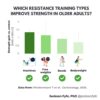
Despite what many people think, the science says otherwise. Recent data shows older adults can get stronger using almost any resistance training approach - as long as the fundamentals are in place. A 2025 network meta-analysis pulled together data from 102 studies involving 4,754 adults around age 70. It compared different resistance training modalities and found something surprising.
Featured Products