August 2025

Click on image to download the issue in PDF format
Cover Story
Approximately 9,000 high school athletes are treated for heat-related illnesses every year in the United States. Back-to-school means back-to-sports for many students around the country. With the return of sports, health and safety guidelines must be in place. The National Athletic Trainers’ Association recommends 6 strategies for Exertional Heat Stroke (EHS) preparedness including: 1) hydration access; 2) emergency response plan enacted for school athletics; 3) policy with instructions for initiating emergency medical reservices response; 4) trained athletic training staff for recognition and treatment of EHS; 5) immersion tub filled with ice water before start of practice; 6) monitor wet-bulb globe temperature.
By Ciara L. Taylor, EdD, LAT, ATC
Related ShortTakes
Among American sports, football has the highest incidence of exertional heat stroke (EHS), despite decades of prevention strategies. Based on recent reports, 100% of high school and college EHS football fatalities occur during conditioning sessions. Linemen are the at-risk population, constituting 97% of football EHS deaths.
A study focusing on high school football players in Georgia revealed that player position, particularly linemen, is a more significant predictor of exertional heat illnesses (EHIs) such as heat exhaustion than BMI. The research found that linemen are over twice as likely to experience heat-related issues compared to backs and specialists...
A recently published study from Australia sought to determine whether children (aged 10–16) are at greater risk of hyperthermia and dehydration than adults (aged 18–40) during exercise in hot conditions and to assess how well an adult sweat-rate calculator estimates children’s sweat rates.
Features
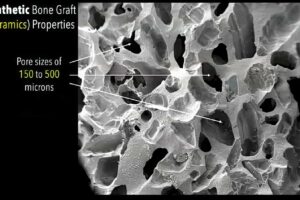
Orthobiologics is the science of harnessing and concentrating substances (substrates) that occur naturally in the body. It is theorized that in higher concentrations, biologics may help to enhance (or) improve the healing process. Orthobiologics and bone substitutes represent groundbreaking advancements in regenerative medicine.
By Asim Raja, DPM, FACFAS
Millions of families in the United States (US) own dogs, and with these dogs comes an assortment of dog items (gates, beds, toys, etc.). Tens of thousands of falls associated with dogs are treated at US hospital emergency departments (EDs) each year, a portion of which involve dog items. The objective of this study is to describe dog-item-related...
By Mathias B. Forrester, BS
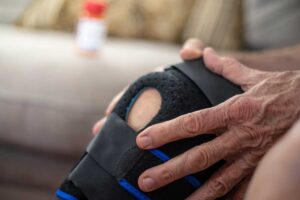
Assessing the clinical efficacy of different therapeutic options for KOA will aid clinicians in treating patients. While clinicians recognize the positive role of physical therapy in improving symptoms and functionality in knee osteoarthritis (KOA) patients, these methods may differ in mechanisms of action, applicability, and efficacy variances.
By Xiao Chen, Yuanhe Fan, Hongliang Tu, and Yuan Luo
ShortTakes From the Literature
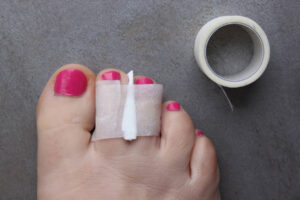
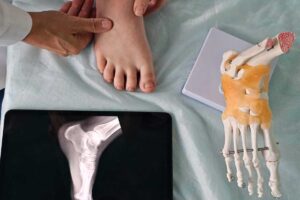
Fractures of the toes are among the most frequently diagnosed lower extremity fractures. In sports, toe fractures may present after diverse mechanisms of injury, varying severity, and varying implications for management. This study aimed to discern trends in toe fractures presenting to US emergency departments (EDs) particularly in association with sports and recreational activities.
Chronic lateral ankle sprains are common injuries that are largely sequelae of inversion injuries of the ankle. These injuries are amenable to surgical intervention, namely, Broström-Gould reconstruction. Arthroscopic Broström-Gould surgery is a minimally invasive technique for treating chronic lateral ankle instability that offers several advantages over traditional open procedures...
We summarized the findings of studies 56 studies, reporting 438 measures of investigating the association between association between proprioception and proprioceptive ability and physical function physical function were included. in people with stroke, Parkinson's disease and multiple sclerosis.
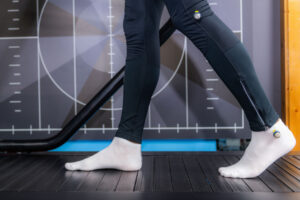
Stiff-knee gait (SKG) affects 25–75% of individuals with post-stroke gait impairment and is typically defined as reduced swing phase knee flexion. Different studies use various measures to identify stiff-knee gait, such as peak swing knee flexion angle, timing of peak knee flexion, knee range of motion, and ankle push-off acceleration, leading to inconsistent results.
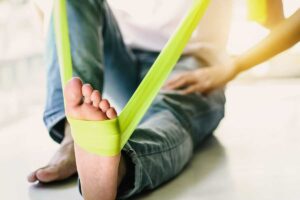
Foot and ankle muscle strengthening exercises are common interventions for many musculoskeletal conditions associated with pain and limited function in the lower limb. While there is evidence to support a multitude of strengthening exercises, they have been criticized for not adhering to best practice and for being poorly reported. The aims of this scoping review were to describe...
Although surgical alignment of the rear-foot might be sufficient to achieve acceptable correction of pronation-distortion deformity, concomitant correction of the medial arch might improve functional results. This study represents the authors’ experience with combined hind-foot alignment and medial arch reconstruction by in-situ naviculocuneiform arthrodesis for treatment of flexible flatfoot in children.
This study, by researchers from Shanghai, China, investigates the biomechanical and muscular impacts of firefighting boots (EFF) compared to standard or training footwear (FTS) during walking and related activities. The research highlights that EFF boots, characterized by their stiffness and design, restrict ankle and toe joint range of motion, leading to increased...
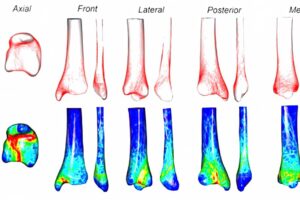
In this study, the morphological characteristics of Pilon fractures were clarified in detail by 3D mapping. This provides a basis for the diagnosis, classification, selection of treatment methods, internal fixation design, and statistical analysis of fracture lines of Pilon fractures.
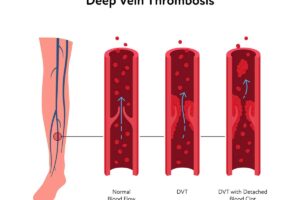
Deep venous thrombosis (DVT) and poor long-term patient outcomes frequently occur in patients with Achilles tendon rupture (ATR). Biomarkers for DVT and their possible relationship to long-term healing outcomes remain unexplored. To identify DVT biomarkers from proteomic profiles during the inflammatory and proliferative healing stages and...
Industry News & Updates
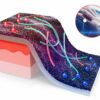
Researchers from Pennsylvania State University (Penn State) and China’s Hebei University of Technology aimed to accurately measure temperature and strain signals without crosstalk by using laser-induced graphene (LIG), a two-dimensional material. In doing so, they discovered that this material also has...
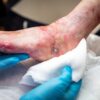
To reduce the likelihood of consequences caused by impaired blood flow, scientists from Lithuania have developed an ultrasonic foot stimulation device that can non-invasively improve blood circulation in the lower limbs, with the aim of preventing diabetic foot. This innovative device was created through a collaborative effort of...
Researchers from the National University of Singapore (NUS) have developed 2 microneedle technologies that have shown efficacy in accelerating diabetic wound healing in preclinical models by preserving the functions of proteins called growth factors, and removing undesirable inflammatory compounds.
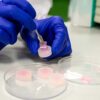
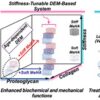
Through creating a treatment adaptable to the different needs of patients—using a new 3D-printed hydrogel made from cow meniscus—researchers in the Perelman School of Medicine at the University of Pennsylvania (Penn) believe they may have unlocked a better fix no matter where an injury occurs in a meniscus.
Diego Guarin, PhD, an assistant professor of applied physiology and kinesiology in the University of Florida’s College of Health and Human Performance has developed an open-source computer program that uses artificial intelligence (AI) to analyze videos of patients with Parkinson’s disease and other movement disorders, thereby...
The Last Word
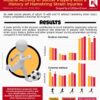
A lower activity in the muscles contributing to trunk instability (especially external oblique muscle and gluteus maximus) was observed in players with hamstring strain injury history, before and after ground impact during accelerated sprinting, compared to the healthy group.
Featured Products