









 By Ciara L. Taylor, EdD, LAT, ATC
Approximately 9,000 high school athletes are treated for heat-related illnesses every year in the United States.1
 Back-to-school means back-to-sports for many students around the country. With the return of sports, health and safety guidelines must be in place. The National Athletic Trainers’ Association recommends 6 strategies for Exertional Heat Stroke (EHS) preparedness including: 1) hydration access; 2) emergency response plan enacted for school athletics; 3) policy with instructions for initiating emergency medical reservices response; 4) trained athletic training staff for recognition and treatment of EHS; 5) immersion tub filled with ice water before start of practice; 6) monitor wet-bulb globe temperature.2
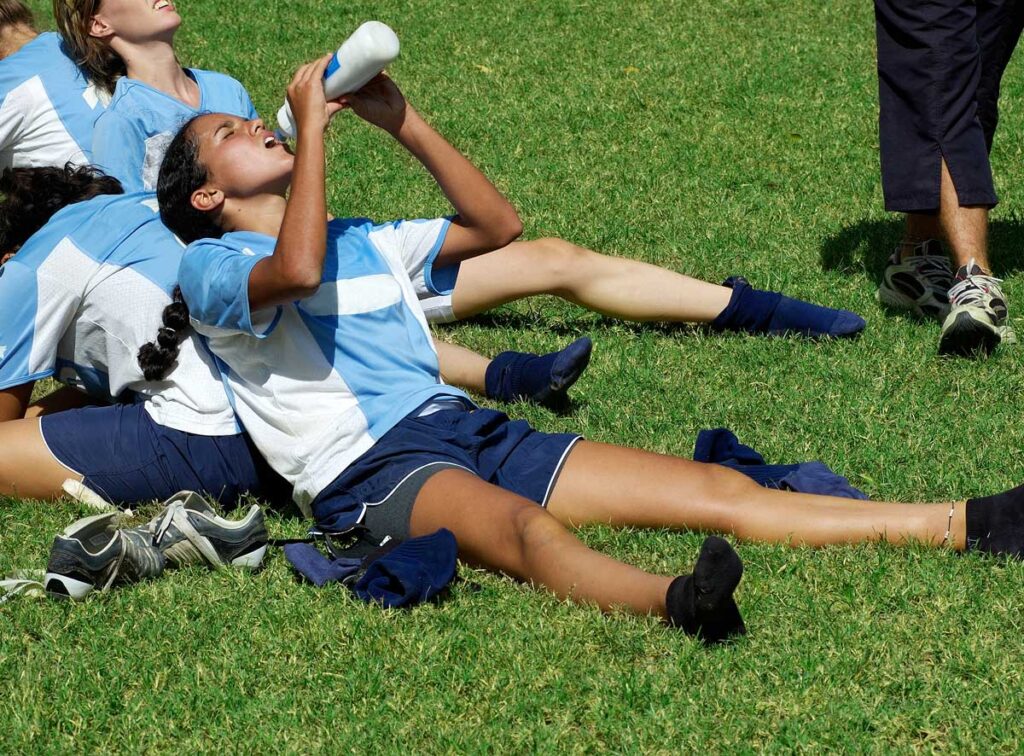
Hot temperatures can make outdoor activity challenging. Proper hydration and nutrition are essential to beat the heat. Water and sports drinks are vital for fluid replacement due to sweat loss. Sports drinks contain essential electrolytes, such as sodium and potassium, to aid in hydration. Young athletes should drink at least half their body weight in ounces per day. For example, an athlete that weighs 160 pounds should drink at least 80 ounces of water daily. Urine color that is light yellow like lemonade, not apple juice, is a key sign of hydration. Proper hydration must be implemented before, during, and post activity.
There should be mindful considerations made regarding weather, time of day, length of activity, equipment, clothing, and rest breaks. Heat index and/or wet-bulb globe must be monitored and tracked. Heat index is air temperature and humidity. Wet-bulb globe factors include ambient temperature, humidity, wind speed, sun angle, and cloud cover. There are instruments and applications available to track the wet-bulb globe temperature. Exertional heat illness is one of the leading causes of death for athletes, yet it is 100 percent preventable!
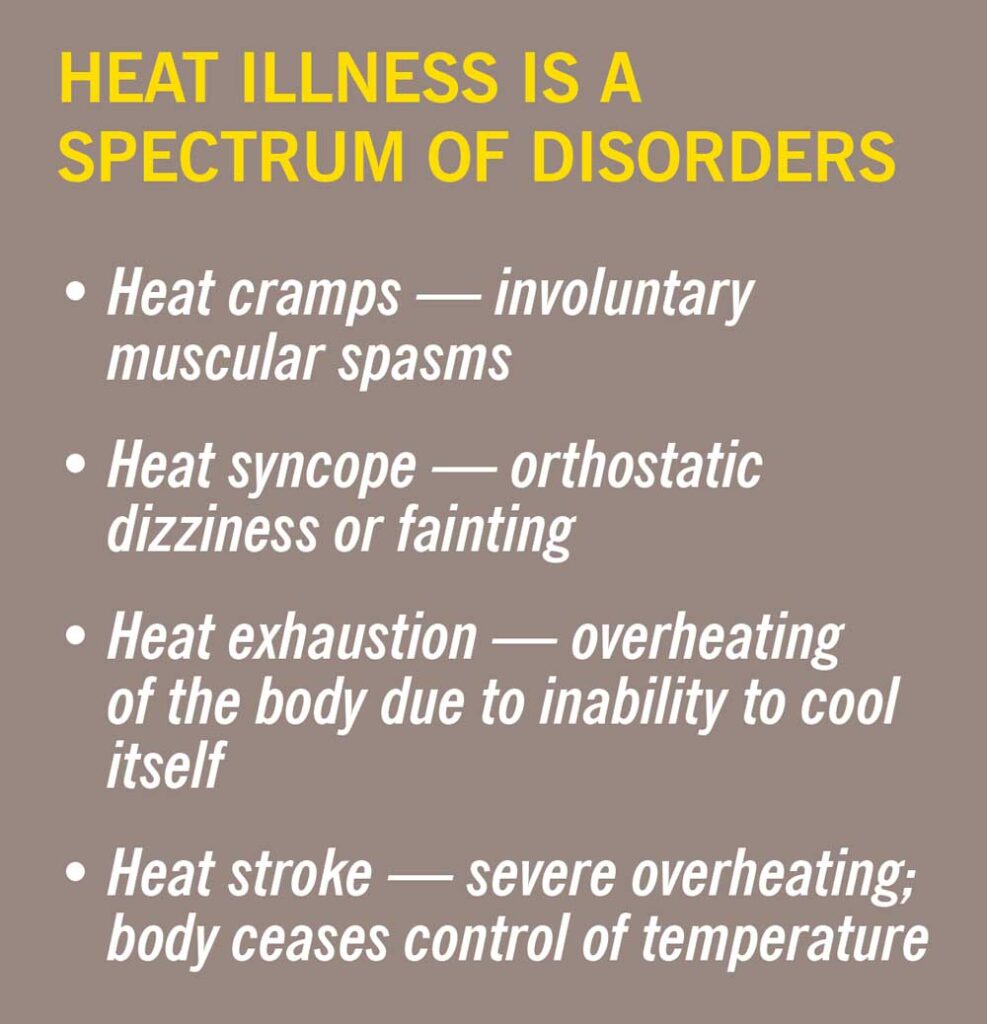 Heat illness is a spectrum of disorders that are caused by increased body temperature (see box). It can derive from environmental conditions and/or exertion. Heat illness includes conditions such as heat cramps, heat syncope, heat exhaustion and heat stroke. Signs and symptoms of exertional heat illness are headache, dizziness, confusion, disorientation, excessive sweating, fatigue, chills, nausea, vomiting, increased heart rate, rapid breathing, low blood pressure, and/or seizures. A core body temperature greater than 105 is extremely dangerous and can cause life-threatening complications.
To combat heat illness, cold water immersion is required. The rule of thumb is cool first, transport second. Cold tubs, kiddie pools, tarps or body bags are the most effective way to rapidly cool young athletes. Core body temperature should be monitored and should reach below 102 degrees before transporting to a local hospital. If a rectal thermometer is not available, an athlete should be cooled for a minimum of 30 minutes.
5 Tips to Help Beat the Heat
- Collaborate with athletic trainers to ensure best practices for health and safety
- Establish venue-specific emergency action plans
- Communicate with local emergency medical services prior to the start of the season to review and practice Emergency Action Plans
- Have cold water immersion available (water and ice) daily
- Educate coaches, parents, and athletes on proper hydration and nutrition.
Ciara L. Taylor, EdD, LAT, ATC, is Secondary School Athletic Trainers’ Committee Chair for the National Athletic Trainers’ Association (NATA).
Resources
- National Athletic Trainers Association: Beat the Heat: Dehydration and Heat Illnesses Handout: https://www.nata.org/sites/default/files/2025-08/hydration_heat_illness_handout.pdf
- US Centers for Disease Control and Prevention. Heat Health: Heat and Athletes: https://www.cdc.gov/heat-health/risk-factors/heat-and-athletes.html
- National Athletic Trainers Association: AT Your Own Risk https://www.atyourownrisk.org/
- National Federation of State High School Athletic Associations: Wet Bulb Globe Temperature (WBGT)- Why Should Your School Be Using It? https://nfhs.org/stories/wet-bulb-globe-temperature-wbgt-why-should-your-school-be-using-it
Related ShortTakes
- Preventing Exertional Heat Stroke in Football: New Paradigm Focuses on Line Positions
- Football Line Position Increases Heat Risk Compared to BMI
- Children Sweat Just Like Adults
- Heat and Teenage Athletes. U.S. Environmental Protection Agency. Available at https://www.epa.gov/children/heat-and-teenage-athletes. Accessed Aug. 13, 2025.
- Kerr ZY, Scarneo-Miller SE, Yeargin SW, et al. Exertional Heat-Stroke Preparedness in High School Football by Region and State Mandate Presence. J Athletic Training. 2019;54(9):921–928. doi: 10.4085/1062-6050-581-18.