







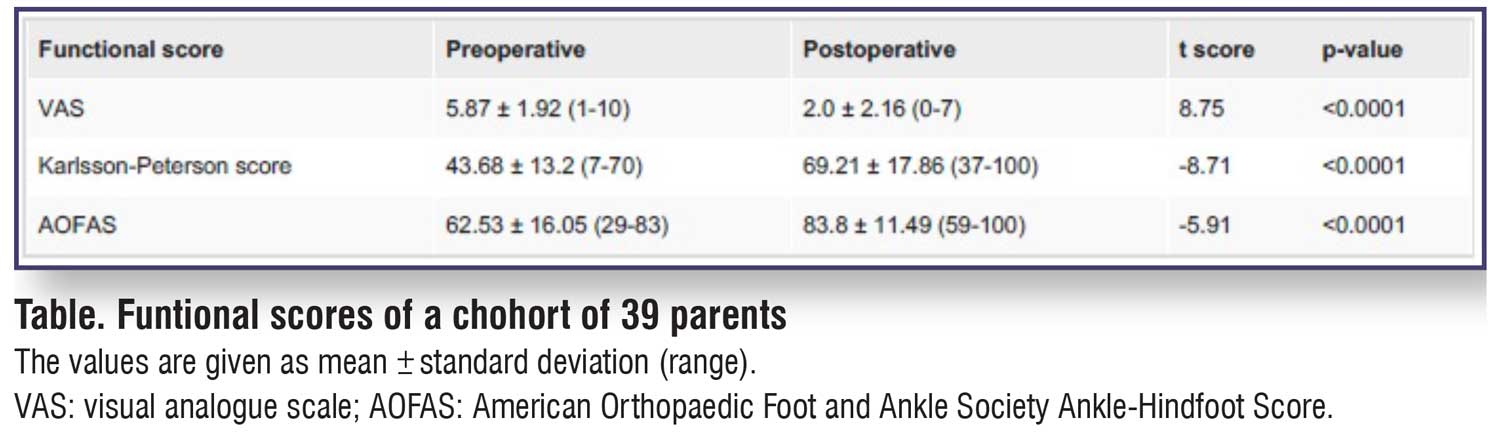
 Chronic lateral ankle sprains are common injuries that are largely sequelae of inversion injuries of the ankle. These injuries are amenable to surgical intervention, namely, Broström-Gould reconstruction. Arthroscopic Broström-Gould surgery is a minimally invasive technique for treating chronic lateral ankle instability that offers several advantages over traditional open procedures, including better early pain relief, improved functional outcomes, and the ability to address concomitant ankle pathologies in a single session. It has a lower risk of wound complications but requires careful technique to avoid neurovascular injuries, particularly to the superficial peroneal nerve. Early postoperative weight bearing and rehabilitation protocols facilitate quicker recovery and return to sports, with long-term outcomes comparable to open surgery; however, further research is needed to confirm its durability and long-term effects such as osteoarthritis. A study involving 39 patients demonstrated significant improvements in pain and ankle function scores up to one year post-surgery, with no reported complications or recurrent instability, supporting its efficacy as a minimally invasive treatment option.
Early rehabilitation after arthroscopic Broström-Gould surgery typically involves immediate weight bearing and a full range of motion with an ankle brace, which is removed at six weeks postoperatively. This approach facilitates quicker functional recovery, wound healing, and stability assessment, contributing to improved outcomes as evidenced by significant improvements in functional scores (Table).
Source: Mohamad H, Koh D, Socklingam R, et al. Clinical Outcomes After Arthroscopic Broström-Gould Procedure for Chronic Lateral Ankle Instability. Cureus. 2025;17(3): e81025. DOI 10.7759/cureus.81025