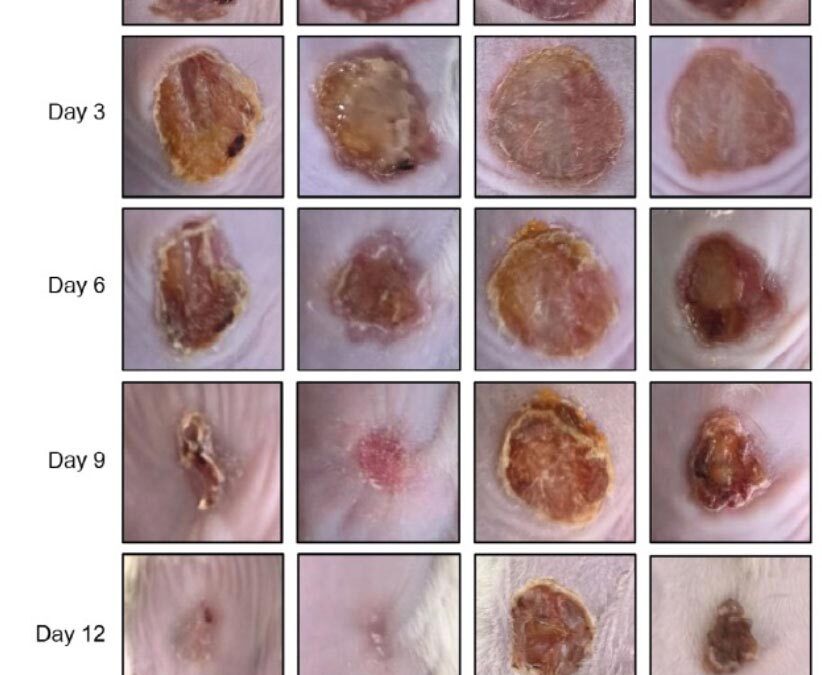








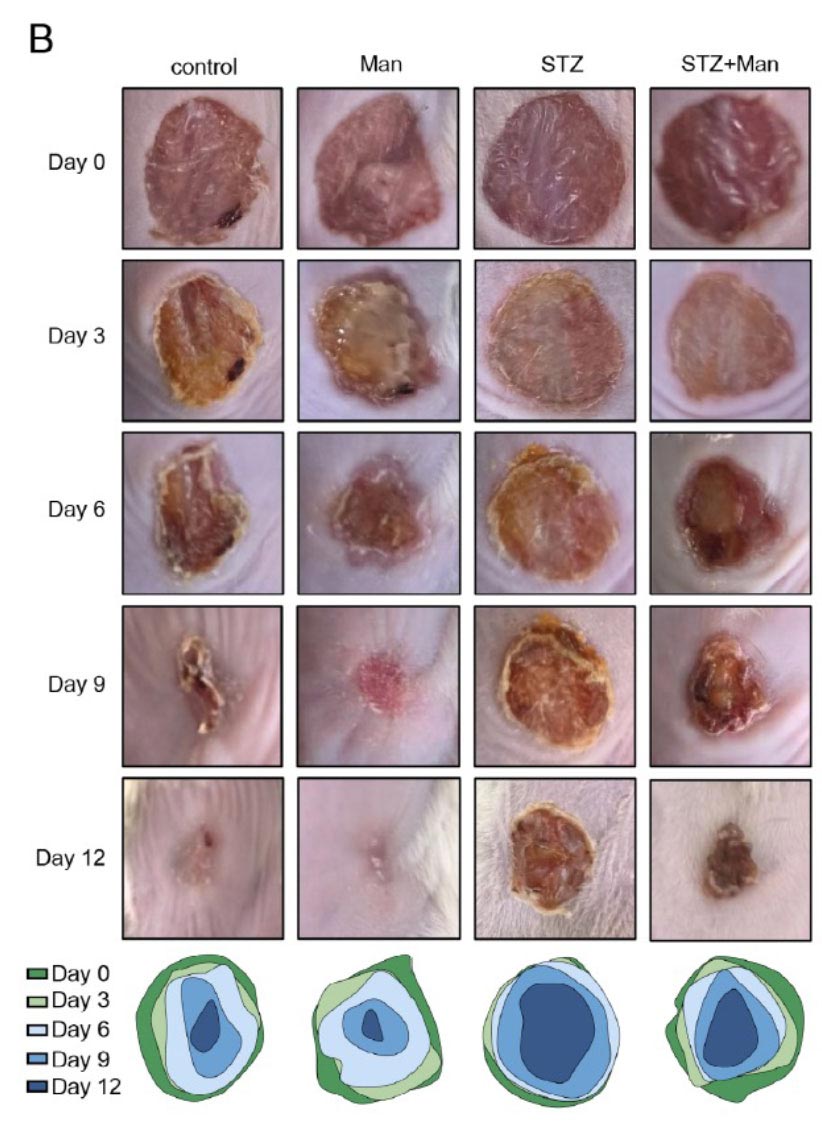
Figure. D-mannose promoted diabetic wound healing in STZ-induced mice. Balb/c mice (n=5) received STZ injection and wound punch onto dorsal skin to establish diabetic wound healing, along with or without D-mannose topical application. (B) Representative photomicrographs of wounds on mice skin and traces of wound closure.
Diabetic chronic foot ulcers pose a significant therapeutic challenge around the world, resulting in adverse effects and complications in patients. D-mannose is enriched in citrus peel and exerts beneficial effects among various diseases, especially against inflammation-related disorders.
These authors examined the potential effect of D-mannose during the wound healing process in streptozotocin (STZ)-induced diabetic mice in vivo and by culturing keratinocytes under high glucose condition in vitro. The skin lesion healing was recorded in photos and evaluated by histochemical staining. What’s more, the advanced glycation end products (AGEs) concentration in blood and mice skin was quantified. Apoptotic cells were assessed by flow cytometry and Western blotting. Inflammatory cytokines and cellular differential gene expression levels were measured by real-time PCR. The expression of the AMPK/Nrf2/HO-1 signaling-related molecules was determined by Western blotting.
Their results found that topical supplementation of D-mannose remarkably improved skin wound healing in diabetic mice. Furthermore, both in vivo and in vitro experiments demonstrated that D-mannose reduced the AGEs generation. Mechanistically, D-mannose inhibited AGEs, then upregulated AMPK/Nrf2/HO-1 signaling in the context of high glucose to maintain keratinocyte normal functions, which positively influenced macrophage and fibroblast to accelerate diabetic wound healing. Noteworthily, these protective effects of D-mannose were abolished by the pretreatment with inhibitors of AGEs or AMPK.
The authors note that this is the first study exploring the protective role of D-mannose on diabetic wound healing via topical supplementation. Their findings show that D-mannose protects keratinocytes from high glucose stimulation via inhibition of AGEs formation as well as orchestrates inflammatory microenvironment in diabetic wounded skin, suggesting its supplementation as a potential therapy to promote refractory wound healing in diabetic patients.
Source: Luo J, Wu T, Zhang J, et al. D-mannose promotes diabetic wound healing through inhibiting advanced glycation end products formation in keratinocytes. Mol Med. 2025;31(1):15. doi: 10.1186/s10020-025-01070-3. Use is per the CC BY International License.