








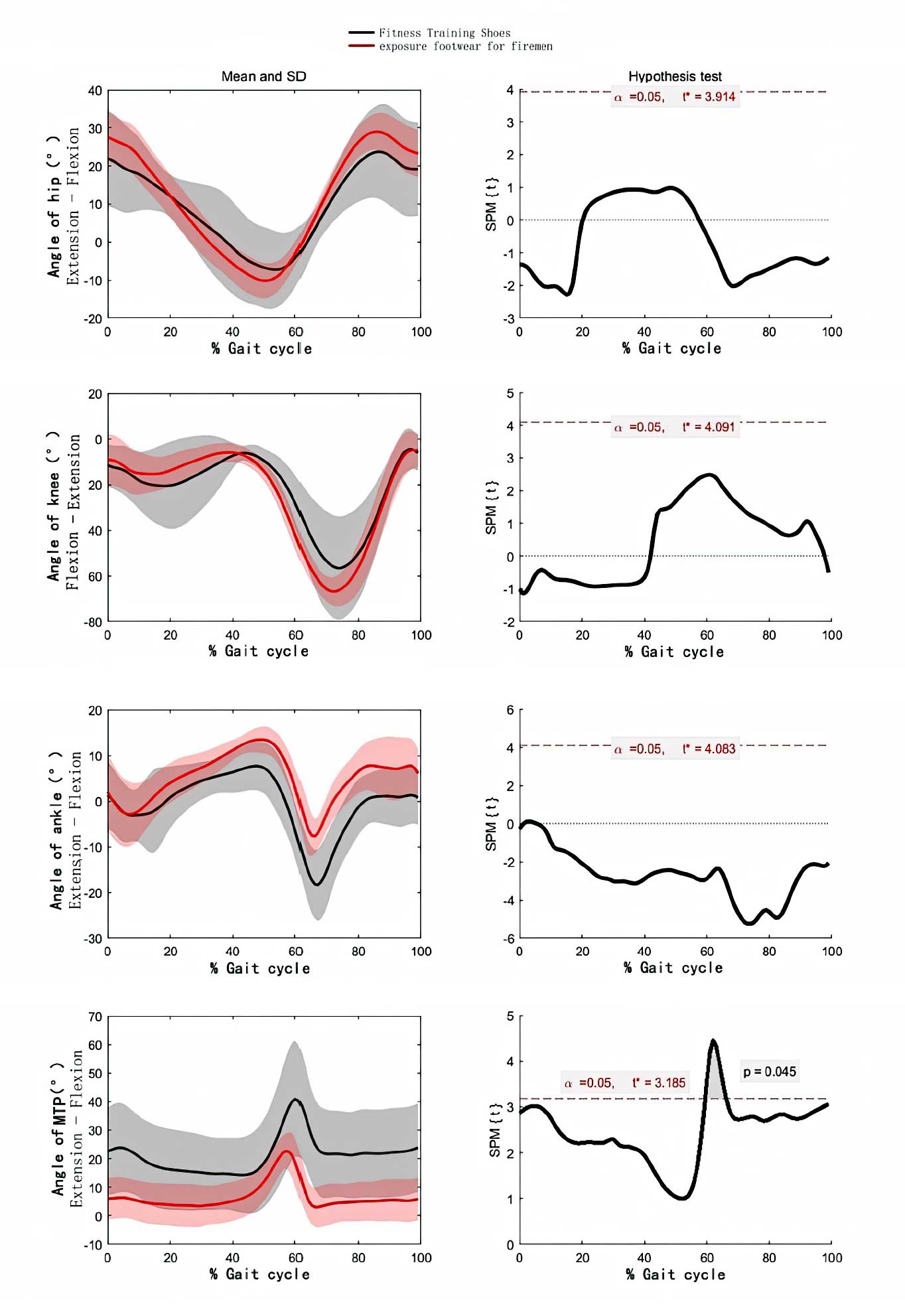
Figure. The sagittal plane angular profiles of hip, knee, ankle, and MTP joints during the gait cycle for participants wearing different footwear on the left side. Positive and negative values indicate the direction: positive values represent hip flexion, knee extension, and ankle and MTP joint dorsiflexion, while negative values represent hip extension, knee flexion, and ankle and MTP joint plantarflexion. The corresponding SPMID statiscs results are presented on the right side.
This study, by researchers from Shanghai, China, investigates the biomechanical and muscular impacts of firefighting boots (EFF) compared to standard or training footwear (FTS) during walking and related activities. The research highlights that EFF boots, characterized by their stiffness and design, restrict ankle and toe joint range of motion, leading to increased muscle activation in muscles such as the rectus femoris and tibialis anterior. These biomechanical alterations result in higher joint moments and energy demands, which may elevate the risk of musculoskeletal injuries, fatigue, and osteoarthritis over time. The findings emphasize the need for improved boot designs with lighter, more flexible materials and suggest targeted strength training to mitigate injury risks among firefighters.
Source: Duan J, Xie C, Hong Y, Zhang S. Effects of using exposure footwear for firemen and fitness training shoes on lower limb biomechanics during walking. Sci Rep. 2024;14(1):28881. doi: 10.1038/s41598-024-77407-5. Use is per CC BY.