April 2024

Click on image to download the issue in PDF format
Cover Story
Background: Millions of people in the United States (US) have lawn mowers. Consequently, thousands of people visit US hospital emergency departments (EDs) each year for lawn mower-related injuries. The intent of this study was to characterize lawn mower-related injuries treated at US hospital EDs.
By Mathias B. Forrester, BS
A 2018 study from Johns Hopkins Surgery looking at 8 years of data found an average of 6,400 lawn mower injuries per year with an average cost of $37,000 per patient. In an unusually comprehensive analysis of nationwide data, researchers from Johns Hopkins Medicine concluded that the rate of lawn mower injuries persists at close to 6,400 a year, most of them...
Background: Riding lawn mower injuries are the most common cause of major limb loss in young U.S. children. Our study objective was to investigate the circumstances surrounding pediatric riding lawn mower injuries and to identify potential contributing risk factors and behaviors leading to these events.
By Charles A. Jennissen, Treyton D. Krupp, J. Priyanka Vakkalanka, and Pamela J. Hoogerwerf
Guest Perspective
April is National Pickleball Month! And why shouldn’t it be? The sport has exploded in popularity over the past decade or so—up more than 51% since August 2022 and 223% in 3 years! According to the 2023 Association of Pickleball Professionals Pickleball Participation Research, there are 48.3 million adult players in the United States...
By Robert Weil, DPM
Features
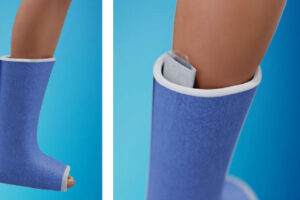
In the words of Plato, “Necessity is the mother of invention”. This is the story of the CastPack™, a novel and innovative cold therapy device designed to alleviate the suffering caused by the placement of casts. In 2020, like many middle-aged weekend warrior athletes, I jumped into a competitive pick-up game of basketball, without warming up or stretching.
By Joseph Hamad
To maximize the AFO’s effect on walking energy cost reduction, the AFO’s bending stiffness needs to be individually optimized. The stiffness of a dorsal leaf ankle foot orthosis (AFO) that minimizes walking energy cost in people with plantarflexor weakness varies between individuals. Using predictive simulations, the authors of this article studied the...
By NFJ Waterval, MSC; MM van der Krogt, Dr; K Veerkamp, T Geijtenbeek, PhD; J Harlaar, Dr, IR; F Nollet, MD, PhD; and MA Brehm, PhD
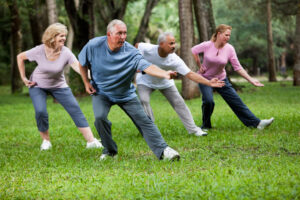
Tai Chi is an evidence-based fall prevention training for older adults, yet its effective movements remain unclear. Practicing Tai Chi (TC)—exercise that consists of a series of slow movements performed in semi-squat positions with an emphasis on coordination of whole-body movement and mind—is an effective way to prevent falls in older adults.
By Min Mao, PhDc; Vicki S. Mercer, PT, PhD; Fuzhong Li, PhD; Michael T. Gross, PT, PhD, FAPTA; Troy Blackburn, PhD, ATC; and Bing Yu, PhD
ShortTakes From the Literature
This study provides the first insights into fast and slow muscle fiber transcriptome dynamics with lifelong endurance exercise. The fast fibers were more responsive to exercise with divergent transcriptome signatures among young exercisers (growth and metabolic), lifelong exercisers (metabolic), and old healthy nonexercisers (stress).
Investigators from Shaanxi Normal University in China studied the impact of increasing backpack load on the gait of adolescents during stair descent. Sixteen healthy male students (age = 12.9 ± 0.6 years) were required to descend the stairs in 4 loaded conditions. The kinematic, kinetic, and EMG data were collected synchronously and gait parameters, especially indicators of balance control, were analyzed.
Ankle osteoarthritis severely impacts patients’ mental and physical quality of life. Besides total ankle replacement and ankle arthrodesis, ankle distraction has been shown to be a promising alternative. The primary aim of this systematic literature review and meta-analysis was to determine the annual revision rates (ARRs) after ankle distraction.
Competitive athletes are always looking for an extra edge to help improve performance. According to a new study by Concordia researchers published in the journal Physical Activity and Nutrition, they can find one in the common cranberry. Cranberries have the highest polyphenol and antioxidant capacity among fruits and vegetables and may protect against exercise-induced free radical production, consequently improving performance.
Researchers from the Department of Orthopaedics at the Nemours Children’s Hospital Delaware (Wilmington, DE) wanted to understand the change in dynamic foot posture in children with cerebral palsy. They were able to track 33 children (54 limbs) who completed 16.9 evaluations from an initial age of 2.9 (±0.7) yrs to 18.6 (±1.7) yrs. They found that early valgus foot...

Meeting Highlights
February 12–16, San Francisco, California
In adolescent athletes who underwent anterior cruciate ligament reconstruction (ACLR), the younger the athlete at the time of primary ACLR and an earlier return to sport (RTS) were significantly associated with an increased rate of secondary ACL injuries, according to a new study presented at the 2024 Annual Meeting of the American Academy of Orthopaedic Surgeons...
Pickleball has become one of the fastest-growing sports in America, and with its increased popularity, the number of associated injuries has also risen. A new study presented at the 2024 Annual Meeting of the American Academy of Orthopaedic Surgeons (AAOS), “Trends in Pickleball- Related Fractures in the United States: An Analysis of the 2002-2022 National Electronic Injury...
According to new data presented at the 2024 Annual Meeting of the American Academy of Orthopaedic Surgeons (AAOS), sports injuries in seniors have increased significantly from 55,684 in 2012 to 93,221 in 2021 in the United States with significant differences in the types of activities and injuries. The study, “Orthopaedic Sports Injuries in an Aging Population...
As the use of robotic assistance in total knee arthroplasty (TKA) has grown, there has been limited research looking at whether it improved the risk of revision. New data showed that revision rates were similar in conventional and robotic-assisted cementless TKA at 2 years post-operatively. Presented at the 2024 Annual Meeting of the American Academy of Orthopaedic Surgeons (AAOS), the study...
With the growing popularity of large language model (LLM) chatbots, a type of artificial intelligence (AI) used by ChatGPT, Google Bard ,and BingAI, it is important to outline the accuracy of musculoskeletal health information they provide. Three new studies presented at the 2024 Annual Meeting of the American Academy of Orthopaedic Surgeons ( AAOS ) analyzed the validity of the information chatbots gave...
Industry News & Updates
Orthotic-friendly footwear brand, Revere, Palm Beach Gardens, Florida, announced a significant step in its growth journey through a new partnership with footwear accessory brand veteran, Josh Higgins. Alongside his new capacity with Revere, Higgins will remain dedicated to his primary role as president of performance OS1st, Hickory, North Carolina, a brand in performance socks and compression bracing.
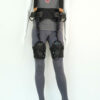
Dr. Lee Jongwon of the Intelligent Robotics Research Center at the Korea Institute of Science and Technology (KIST) has developed a wearable robot, MOONWALK-Omni, which means “to actively support leg strength in any direction (omni-direction) to help walk like walking on the moon.” Further, he has announced that a senior citizen wearing it successfully completed a wearable robot challenge to climb to the top of Mount Yeongbong (604 meters above sea level) in Korea.
Engineers at the Massachusetts Institute of Technology have developed a new model that predicts how certain shoe properties will affect a runner’s performance. The model represents a runner as a center of mass, with a hip that can rotate and a leg that can stretch. The leg is connected to a box-like shoe, with springiness and shock absorption that can be tuned, both vertically and horizontally.
A team of researchers from the Harvard John A. Paulson School of Engineering and Applied Sciences (SEAS) and the Boston University Sargent College of Health & Rehabilitation Sciences have used a soft, wearable robot to help a person living with Parkinson’s disease (PD) walk without freezing. The robotic garment, worn around the hips and thighs, gives a gentle push to...
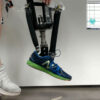
Robotic prosthetic ankles that are controlled by nerve impulses allow individuals with lower limb amputations to move more “naturally,” improving their stability, according to researchers from North Carolina State University (NC State) and the University of North Carolina (UNC) at Chapel Hill. “This work focused on ‘postural control,’ which is surprisingly complicated,” said Helen Huang, PhD, the Jackson Family Distinguished Professor in the Joint Department of Biomedical Engineering at NC State and UNC.
The Last Word
The purpose of this study was to determine the differences between road (ROAD) vs. trail (TRAIL) elite runners in terms of force-velocity profile (FVP), running biomechanics, lower-limb maximal isometric strength, cost of running (Cr), and training. Seventeen male elite athletes (10 TRAIL and 7 ROAD) participated in this study.
Featured Products