








 By Robert Weil, DPM
April is National Pickleball Month! And why shouldn’t it be? The sport has exploded in popularity over the past decade or so—up more than 51% since August 2022 and 223% in 3 years!1 According to the 2023 Association of Pickleball Professionals Pickleball Participation Research,2 there are 48.3 million adult players in the United States—making it the fastest growing sport for the third year in a row! The report also noted that 19% of Americans have played pickleball at least once in the last 12 months—that’s nearly 1/5th of the population.
The explosive growth in the sport, which by all accounts promotes both competitiveness and socialization, has been driven by surprising demographic changes in the player base, and a perhaps not so surprising response to the end of the isolation from the COVID-19 pandemic. While many think of pickleball as a game for seniors, that age group is no longer the primary cohort. Indeed, the 2023 State of Pickleball: Participation & Infrastructure Report1 found that the average age of today’s pickleball participants is 35. While the 25-34-yr age group has the most participants, the 18-24 and 65+ age groups are now tied for the second highest participation rates. Clinical translation: Everybody is playing pickleball!
The allure of this low-impact sport, especially for seniors, is obvious: there isn’t a lot of running, but there is a lot of competition. Pickleball is PHYSICAL! Think tennis and racquetball – lots of quick movements, starts and stops, multiple directions. Given the sport’s explosive growth, today’s clinicians can expect clients of all ages to report playing. Here are some principal factors to pay attention to: patient history, shoes and equipment concerns, and injury prevention and common lower extremity injuries.
1. Patient’s Medical history. Whenever patients report starting a new activity, it’s important to get or update their history. Key to starting this kind of racquet sport is physical joint and muscle history, body type, and most important, foot mechanics. Does the client have flat, hyper-pronated or high arch feet? Is the client bow-legged or knocked kneed? Are there problems with arthritis? Because pickleball is physical and multi-directional, the history of the foot, ankle, knees, hips, and back is key! And of course, the upper extremity is important, too. This history helps identify existing and potential weak links in the kinetic chain and provides an opportunity to talk about how to prevent injuries (Hint: stretching, keep reading).
2. Shoes, Socks, and Paddles. Like all sports and physical activities, proper shoes are key. Proper fitting of shoes is also of major importance. It surprises many that almost 50% of individuals do not have correctly fitting shoes, especially in width. There are plenty of “pickleball shoes” on the market today (unlike 3 years ago!), but clients need to make sure the heel is snugly secure in the shoe and that it provides overall lateral stability due to the types of movements the sport requires.
Socks are key too. The innovations that have rocked athletic clothing overall are indeed reaching all the way down the leg to socks and it’s to patients’ benefit. Arch support, motion & friction control, odor control, compression for the foot and lower leg are now all common place in the internet/social media marketplace and clinicians would be advised to familiarize themselves with the countless offerings as a means of helping patients with their footcare needs. You don’t have to know them all, but having a couple to recommend can go a long way to prevent problems. (More on sock innovations to come in an upcoming issue!)
To avoid upper extremity issues, players should pay attention to the paddle they are using and make certain the weight, the grip, and the overall size are correct for their musculoskeletal needs and their style of play.
3. Injury Prevention: Start with Stretching
Like most racquet sports, pickleball uses the whole body, so warming up all the body parts first is a good idea. Our friends at Silver Sneakers3 recommend thinking about the lower back, hip, knee, ankle and shoulders when warming up for pickleball. They encourage a 5-minute pre-game workout that includes:
a) Modified Bird Dog for the lower back
b) Walking Lunge for hips and knees
c) Step Out-and-In with Calf Raises for lower legs and ankles or Staggered Stance Heel Raises
d) Trunk Twists for spine and upper back
e) Side Lunges for inner thighs and hips
f) Resistance Band Pull-Aparts for shoulders
4. Injury Prevention: Brace for It! Common injuries across age group include sprains/strains, fractures, and contusions, with ankle sprains and knee injuries leading the way. Players should be advised to wear proper bracing for these areas if there is a history of problems.
Overuse injuries can be a problem as well. These are often related to what I call “the terrible 2s” – 2 much – 2 aggressive – 2 often. These are warning signs to back off and allow proper recovery. Plantar fasciitis, Achilles, lower leg, shin and knee tendinitis are all conditions caused, aggravated, and perpetuated by multiple direction, start and stop sports like pickleball – particularly when foot mechanics are faulty. Often my famous “Intelligent Rest” recommendations make good sense – trying to play through injuries or mask them with over-the-counter pain meds is not smart! Injury concerns of these types need to be identified and treated promptly, especially in older players.

Conclusion
- Be aware that pickleball is physical – players should be in fairly good physical condition before they start. I stressed this in 2021 on these very pages4 BEFORE the medical and physical therapy community knew how to spell p-i-c-k-l-e-b-a-l-l!
- Advise players to pay attention to and identify previous joint or muscle problems. Strengthening all lower extremity – core, hips, knees, and ankles – makes big sense. If needed, physical therapists or athletic trainers can provide guidance.
- Encourage players to pay attention to proper shoes and proper fitting of said shoes.
- Lastly, but more importantly, encourage players to have fun and enjoy the physical activity this new trend offers.
Robert A. Weil is a sports podiatrist in private practice in Lisle, Illinois. He hosts “The Sports Doctor,” a live weekly radio show on bbsradio.com. His book, #HeySportsParents written with Sharkie Zartman, is available on Amazon.com. Dr. Weil was inducted into the prestigious National Fitness Hall of Fame in April 2019. This article updates one written by Dr. Weil in our May 2021 issue.
 So What Is Pickleball?
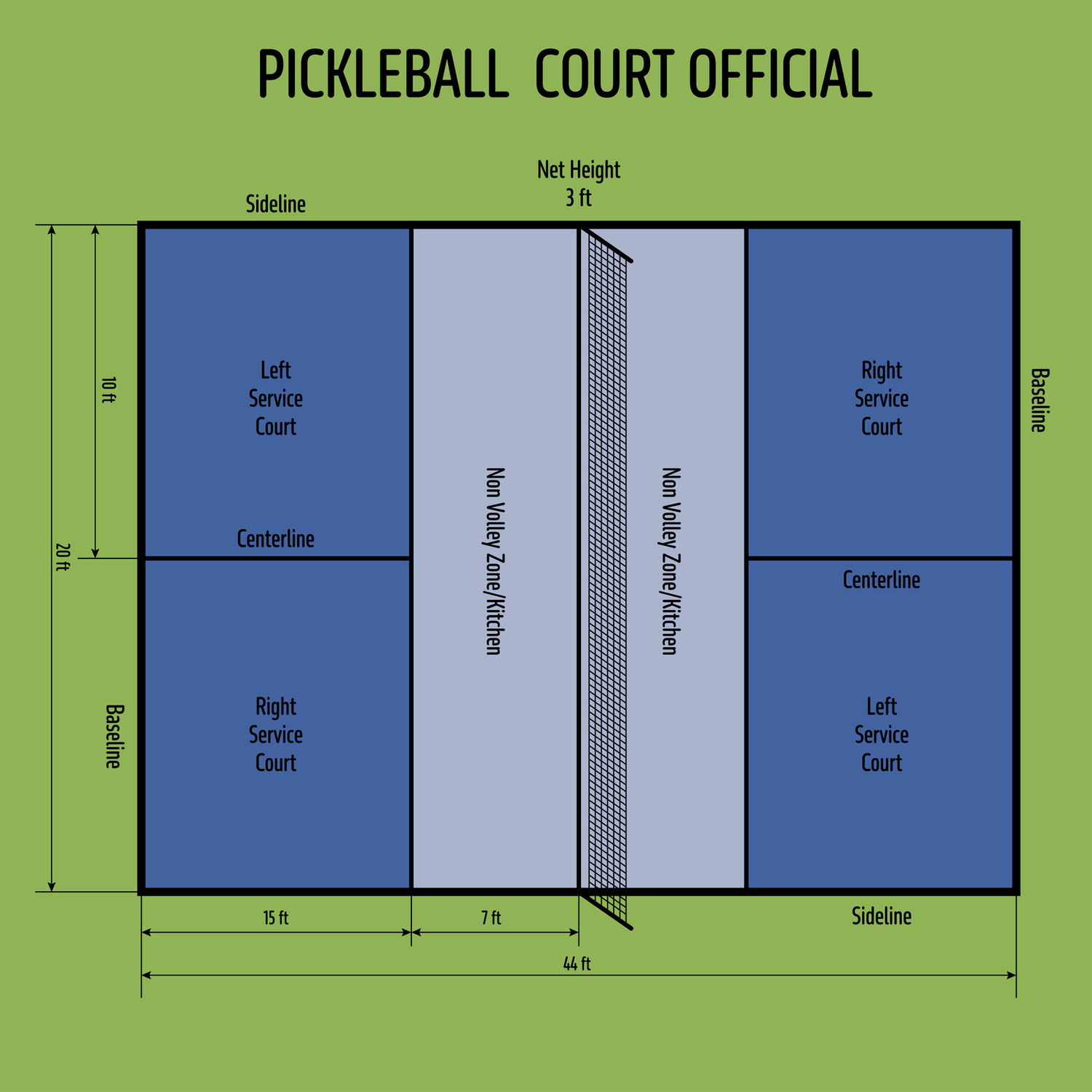
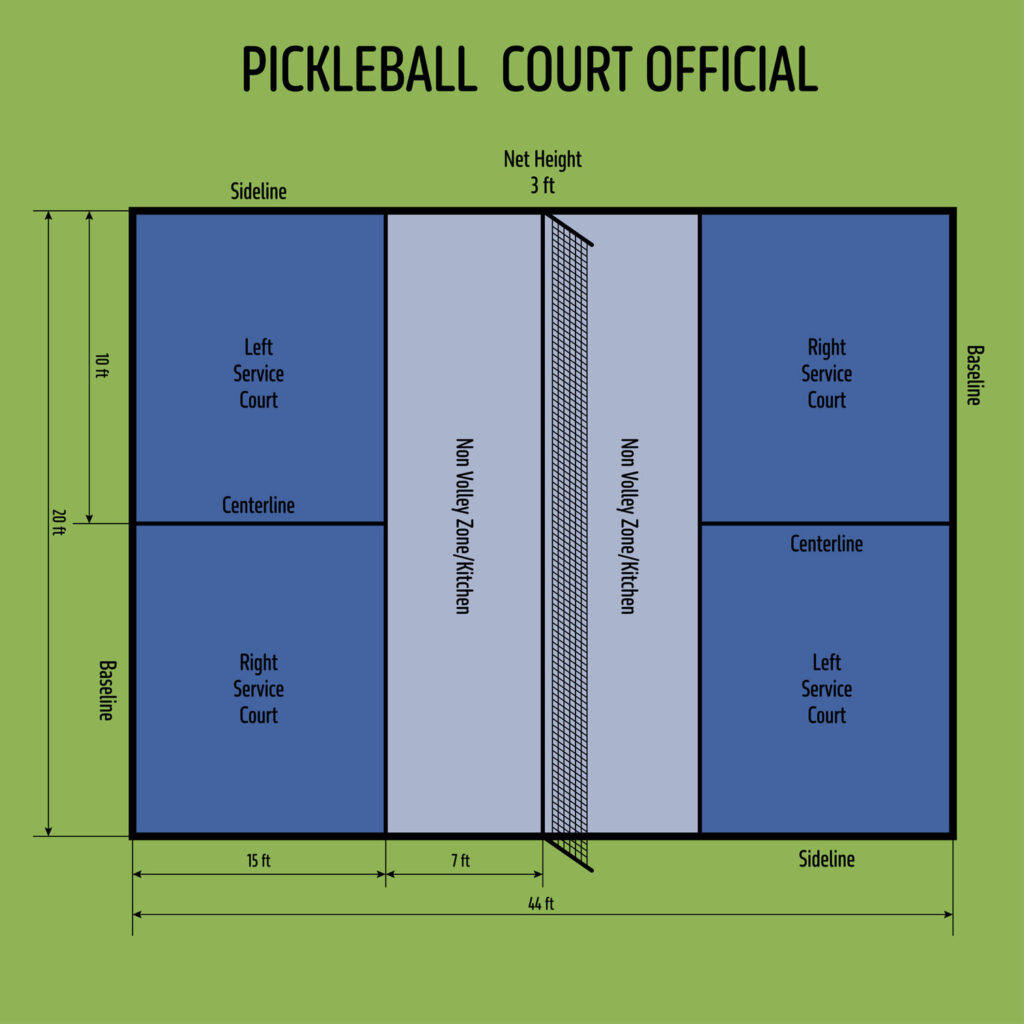
For the unfamiliar, it’s a mash-up of tennis, badminton, and table tennis played on a badminton-size court (Figure) with a ping-pong type paddle, a whiffle ball, and a net. For an interesting history, including the origins of the name, and discussion of the rules, read “Pickleball: injury considerations in an increasingly popular sport” by Nicholas Greiner.5
- Sport & Fitness Industry Association. SFIA’s Topline Participation Report Shows Strong Positive Trends Across All Sports and Fitness Categories. Published Feb. 27, 2024. Available at https://sfia.org/resources/sfias-topline-participation-report-shows-strong-positive-trends-across-multiple-sports-and-fitness-categories-2/. Accessed April 10, 2024.
- Association of Pickleball Professionals. 2023 AAP Pickleball Participation Research. Published March 2023. Available at https://assets-global.website-files.com/642c2ebf6376c444976a3f95/648b7da1f7224a74177f1223_2023_APP_Pickleball_Participation_Report_-_March_2023.pdf. Accessed April 10, 2024.
- Leibrock A. 6 Best Exercises to Do Right Before You Play Pickleball. Published Aug. 15, 2022. Available at https://www.silversneakers.com/blog/6-best-exercises-do-before-pickleball/ Accessed April 10, 2024.
- Weil R. The Challenges with Pickleball: A Clinician’s Perspective. Lower Extremity Review. 2021;13(5)33.
- Greiner N. Pickleball: Injury Considerations in an Increasingly Popular Sport. Mo Med. 2019 Nov-Dec;116(6):488-491.