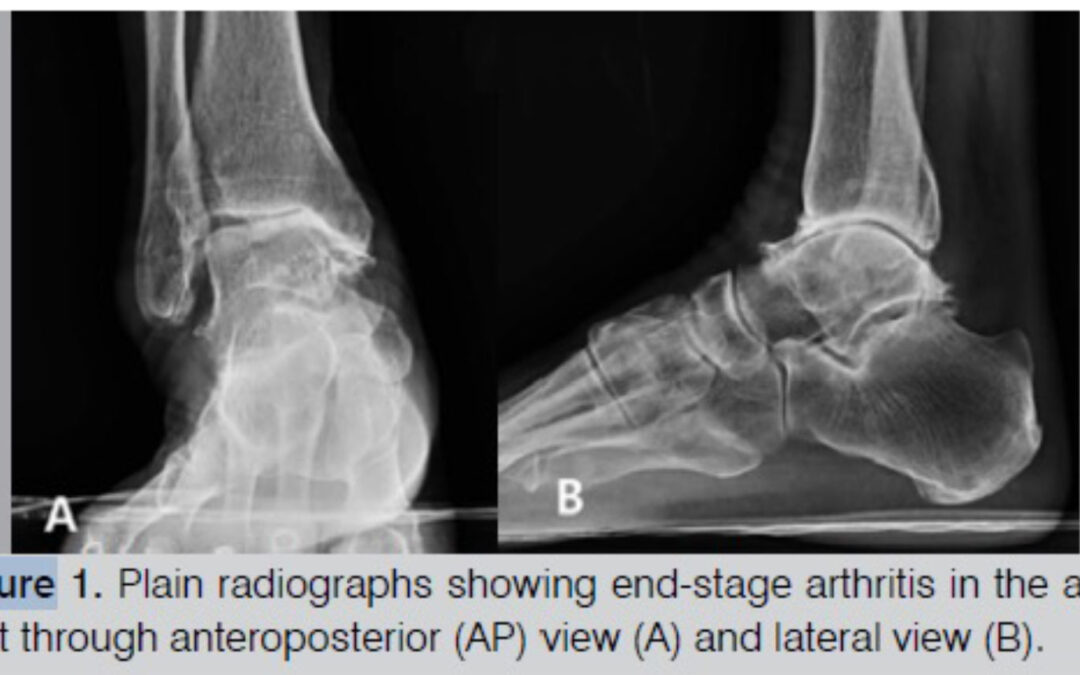








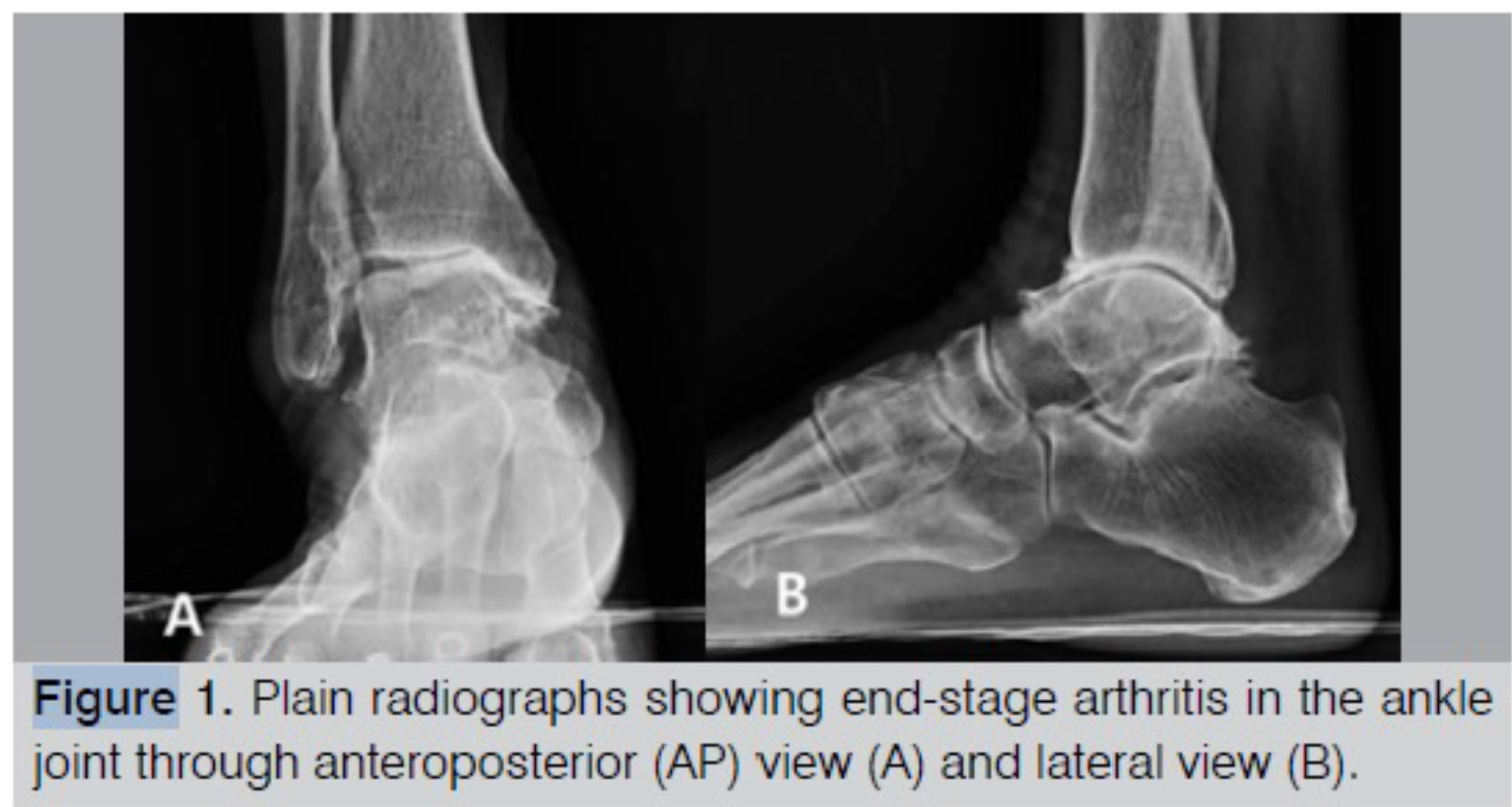
Image reprinted from Kim JB, Lee BJ, Jung D, Jeong U, An CH. Comparing outcomes of the ankle arthrodesis by using two different materials via a transfibular approach. Acta Ortop Bras. [online]. 2020;28(2):55-9. Use is per Creative Commons License 4.0.
Ankle osteoarthritis severely impacts patients’ mental and physical quality of life. Besides total ankle replacement and ankle arthrodesis, ankle distraction has been shown to be a promising alternative. The primary aim of this systematic literature review and meta-analysis was to determine the annual revision rates (ARRs) after ankle distraction. The secondary aim was to obtain an overview of patient-reported outcome measures and functional outcomes.
Researchers from the Netherlands conducted a literature search up to November 2023. Methodological quality was assessed using the methodological index for non-randomized studies criteria. Primary outcome was the ARR which was log-transformed and pooled using a random effects model. Secondary outcomes were pooled using a simplified pooling technique and included the American Orthopaedic Foot & Ankle Society Ankle-Hindfoot Scale (AOFAS), range of motion (ROM) and post-operative complications.
The literature search resulted in 287 articles, of which 10 studies, comprising 602 patients, were included. The patients had a pooled mean age of 47 years (range of means: 40–68) and a mean follow-up of 35 months (range of means: 24–48). The overall methodological quality was moderate to fair. The pooled ARR after ankle distraction was 4% (95% confidence interval [CI], 3%–7%). Pooling of AOFAS showed mean 26-point improvement (from 54 to 80). Additionally, ROM dorsiflexion improved at 5°, and the plantarflexion remained at 31°. The overall complication rate was 41% (95% CI, 35%–48%), of which 77% (95% CI, 67%–85%) were pin-tract infections.
The authors concluded that ankle distraction results in an ARR of 4% (95% CI, 3%–7%) with clinically relevant improved AOFAS scores. The overall complication rate is 41% and is mainly attributable to treatable pin-tract infections (77% of recorded complications).