January 2025
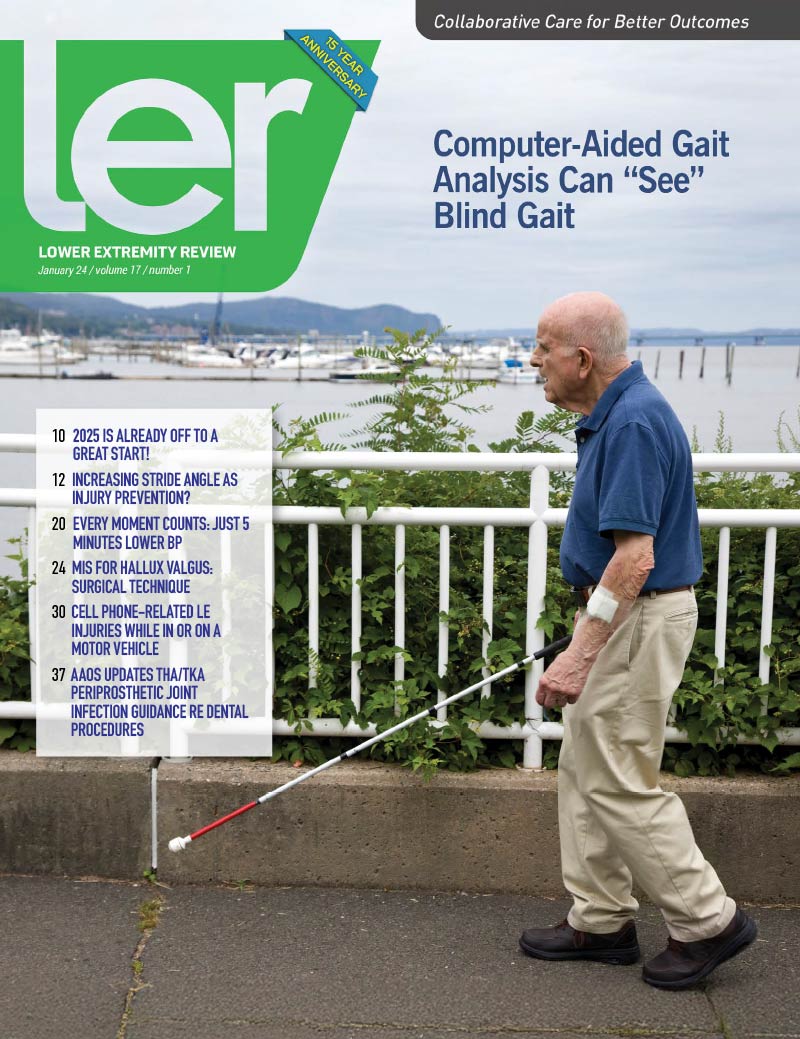
Click on image to download the issue in PDF format
Cover Story
Imagine for a moment, you were cast into a world of uncertainty by the loss of sight. Your relationship with all you know is forever changed. We have “tells” to these challenges and learn ways of adapting to our new circumstances. We do things slower, with less confidence, and rely on our other senses. We listen for auditory cues, but perhaps the sense we lean on...
By Jay Segel, DPM; Sally Crawford, MS; Ronald Sherman, DPM, MBA
Publisher Memo | Guest Perspective
First off, I am pleased to announce the appointment of Bradley P. Abicht, DPM, FACFAS, as the new Medical Director of lerEXPO. With extensive experience in podiatric foot and ankle surgery, Brad brings a wealth of expertise and a patient-centered approach to this arm of the Lower Extremity Review organization.
By Rich Dubin, Publisher
The stride angle is a more useful metric than stride length. For example, the stride angle is what creates stride length. The stride angle is the maximum opening between the upper legs while running or pitching. Our 6-month research project found that for every degree a runner increases his stride angle, he can increase the stride length 2%. This runner (Figure 1) increased his stride length 60%.
By Bob Prichard
Features
In free-living environments, more time spent in exercise-like activities has the strongest association with blood pressure (BP), and even small changes to daily movement patterns can elicit clinically meaningful improvements. Multinational researchers from the ProPASS Consortium (Prospective Physical Activity, Sitting and Sleep) used data from thigh-worn accelerometers and BP measurements of...
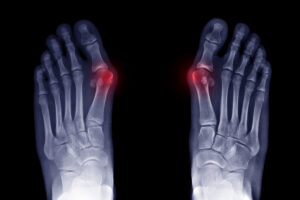
Hallux valgus (HV) is a common forefoot problem with a reported prevalence of 23% in adults age 18–65 years and 35.7% in adults aged over 65 years. More than a hundred procedures were described to treat HV deformity. Traditionally, surgical treatment of HV included open osteotomies and soft tissue procedures. In recent years, minimally invasive surgery...
By Erdi Özdemir, MD, and Michael Aynardi, MD
Background: In 2023, 97% of United States (US) adults reported that they owned a cell phone. Use of cell phones while driving may result in crashes and injuries. This study characterized cell phone-related lower extremity injuries while in or on a motor vehicle that were treated at US hospital emergency departments (EDs).
By Mathias B. Forrester, BS
ShortTakes From the Literature
A team of researchers from China, Singapore, and New Zealand built a computer model to examine the role of ankle motion in anterior cruciate ligament (ACL) injury as related to single leg landing. Single-leg landing is an essential skill in sports such as basketball, soccer, and volleyball.
New University of British Columbia research analyzing actual pedestrian interactions with vehicles on busy streets concludes that distracted pedestrians face higher safety risks compared with undistracted road users. Previous studies have speculated that distracted pedestrians, such as those texting and talking on the phone, are at higher risk of being hit by a car due to...
This marathoner's performance has declined since his record-breaking marathon in 2018 primarily due to a reduction in VO,max. His max HR changed minimally, but his peak O2 pulse decreased, suggesting that his maximal stroke volume and/or arteriovenous 02 difference decreased. These changes likely reflect primarily age-related effects.
Recent research has found that strengthening hip joint stability can considerably affect foot mechanics. The purpose of this study was to determine the effect of short foot exercises (SFEs), combined exercises (CEs), and SFEs with isometric hip abduction (IHA) on navicular drop (ND), static parameters (SP), and postural sway in women with flat foot (FF).
A small study of 25 boys (age 10-12y) with flexible flat foot (FF) sought to understand the impact of intrinsic- versus extrinsic-first corrective exercises on on muscle morphometry and navicular drop (ND). The boys underwent a 12-week exercise program that shifted focus midway. The results were significant. Leading with intrinsic exercises led to sustained improvement throughout the...
Metal hypersensitivity (MH) is a controversial topic with limited evidence. It is more commonly observed in failed arthroplasties. The most common metal involved in MH is nickel. Orthopaedic implants contain nickel because of its ability to provide increased strength and durability. MH is a type IV hypersensitive reaction.
In a study that looked at the data on more than 18,000 patients, researchers found that patients who have a self-reported nickel allergy can be advised that, on average, their clinical outcome scores will improve similarly to patients who do not have a self-reported nickel allergy, and revision rates will be similar.
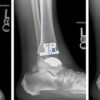
In this longer-term follow-up of a limited cohort (48 patients/50 ankles, average age at index surgery: 64 years), Salto Talaris fixed-bearing total ankle arthroplasty demonstrated good long-term survival (Kaplan-Meier estimated survivorship was 84.2%) with relatively low rates of revision or other complications. Patient-reported outcome and range of motion measures revealed good stability.
Osteoarthritis of the first metatarsophalangeal joint (MTPJ) is a common forefoot problem affecting patients in later years. It leads to pain, gait problems, and difficulty with activities of daily living. Treatment is controversial and varies according to patient symptoms and surgeon preference. Arthrodesis remains the gold standard but it has its own complications.
AAOS Update
The American Academy of Orthopaedic Surgeons(AAOS) issued an updated Clinical Practice Guideline (CPG) for the Prevention of Total Hip and Knee Arthroplasty Periprosthetic Joint Infection (PJI) in Patients Undergoing Dental Procedures, which replaces the previous guideline from 2012. The CPG supports patients who are scheduled for or have...
Industry News & Updates
Inotec AMD, Cambridge, UK, whose product NATROX® O2 is a topical oxygen therapy (cTOT) for advanced wound care, recently announced the successful close of a $33 million Series C financing round. The funding, led by existing investors, Amadeus Capital Partners, Meltwind, Puhua Capital, and the Wealth Club, marks a major milestone in the company’s mission to heal every chronic wound and improve patients’ lives on a global scale.
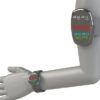
A multidisciplinary team of California Institute of Technology (Caltech) researchers has figured out a method to noninvasively and continually measure blood pressure anywhere on the body with next to no disruption to the patient. A device based on the new technique holds the promise to enable better vital-sign monitoring at home, in hospitals, and possibly even in remote locations where resources are limited.
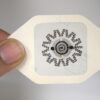
Researchers at North Carolina State University (NC State) and Columbia University have developed an inexpensive bandage that uses an electric field to promote healing in chronic wounds. In animal testing, wounds that were treated with these electric bandages healed 30% faster than wounds treated with conventional bandages.
Researchers have developed a new shoe insole technology that helps reduce the risk of diabetic foot ulcers (DFUs), a dangerous open sore that can lead to hospitalization and leg, foot, or toe amputations. “The goal of this innovative insole technology is to mitigate the risk of diabetic foot ulcers by addressing 1 of their most significant causes: skin and soft tissue breakdown due to repetitive stress on..
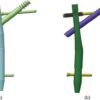
A research team from various universities and health institutes in China have announced a new innovation as a potential panacea for unstable intertrochanteric femur fractures in the elderly: the Proximal Femur Bionic Nail (PFBN). With the aging population, intertrochanteric femur fractures have become a critical public health concern, prompting a surge in research focused on trauma orthopedics.
Northwestern University scientists have developed a new bioactive material that successfully regenerated high-quality cartilage in the knee joints of a large-animal model. Although it looks like a rubbery goo, the material is actually a complex network of molecular components, which work together to mimic cartilage’s natural environment in the body.
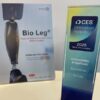
BionicM, Tokyo, Japan, announced that its powered prosthetic knee, Bio Leg®, was named a 2025 Best of Innovation in Accessibility & AgeTech by the CES Innovation Awards® 2025 program. The prosthesis offers a new walking experience through its power-assist feature, which sets it apart from traditional prosthetic devices. In May 2024, it received U. medical insurance coverage approval.
The Last Word
Eleven male middle-distance runners were tested on an instrumented treadmill to characterize the contributions of functional muscle groups to running at six wide-ranging speeds (10-30 km/h). These results reinforce the importance of the plantar flexors for running at ≤18 km/h, as they made the largest contribution of any muscle group, not just during stance, but also...
Featured Products