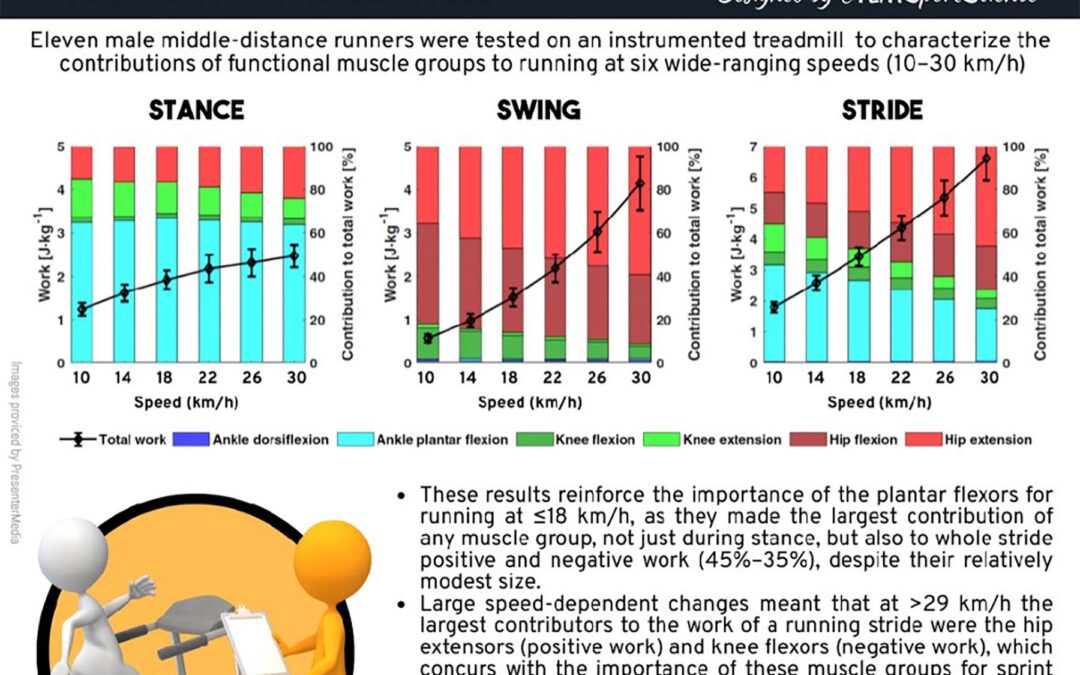








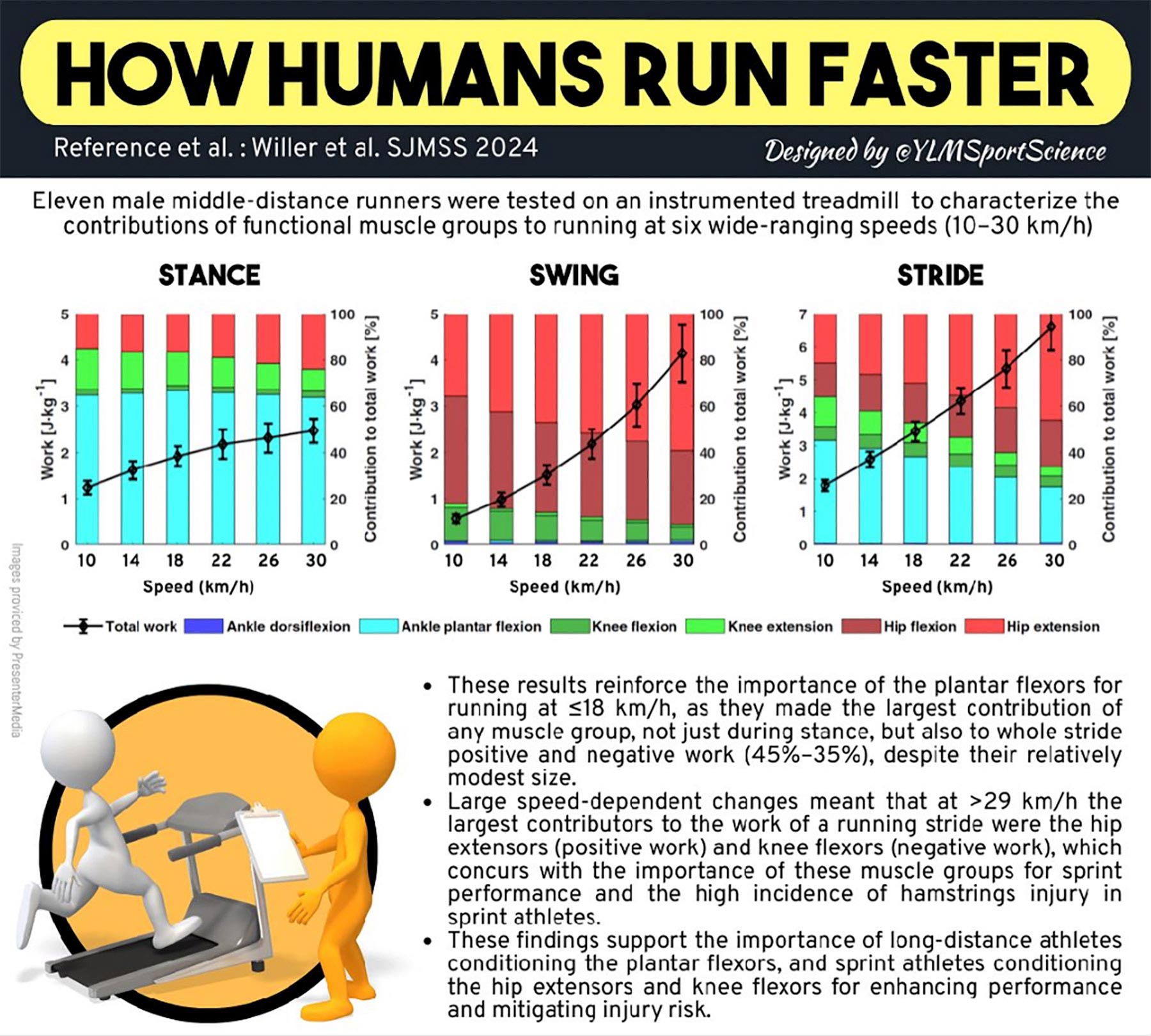
Eleven male middle-distance runners were tested on an instrumented treadmill to characterize the contributions of functional muscle groups to running at six wide-ranging speeds (10-30 km/h).
- These results reinforce the importance of the plantar flexors for running at ≤18 km/h, as they made the largest contribution of any muscle group, not just during stance, but also to whole stride positive and negative work (45%-35%), despite their relatively modest size.
- Large speed-dependent changes meant that at >29 km/h the largest contributors to the work of a running stride were the hip extensors (positive work) and knee flexors (negative work), which concurs with the importance of these muscle groups for sprint performance and the high incidence of hamstrings injury in sprint athletes.
- These findings support the importance of long-distance athletes conditioning the plantar flexors, and sprint athletes conditioning the hip extensors and knee flexors for enhancing performance and mitigating injury risk.