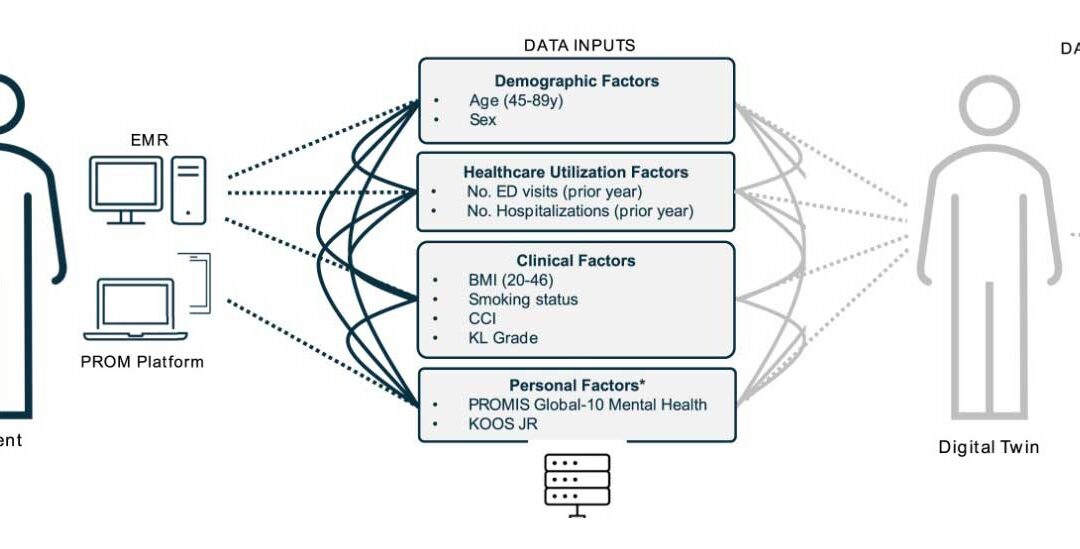









Schematic of the AI-enabled Decision Aid.
An artificial intelligence (AI)–powered tool helped patients make more confident, personalized decisions about knee replacement surgery–and led to better outcomes months later–according to a new study from researchers at Dell Medical School at The University of Texas at Austin.
The study found that patients who used the tool reported higher decision quality, less regret, and better knee function compared to those who received educational materials alone. The tool uses AI to create a “digital twin”–a virtual simulation that predicts surgical risks and benefits for each patient based on their own health data–and helps clarify treatment preferences through a guided, personalized process.
The randomized clinical trial enrolled more than 200 people with advanced knee osteoarthritis. Patients who used the AI tool had better treatment alignment with their personal goals and were more likely to reach meaningful improvements in knee health within 6 to 9 months after their consultation. Patients who used the AI tool were also more likely to choose a treatment that aligned with their personal goals–whether surgical or non-surgical–and experienced greater improvement in knee-specific health over time. The results suggest that integrating AI-powered tools into routine care could help patients and clinicians make more informed, personalized decisions, especially for conditions like osteoarthritis where outcomes can vary widely.