








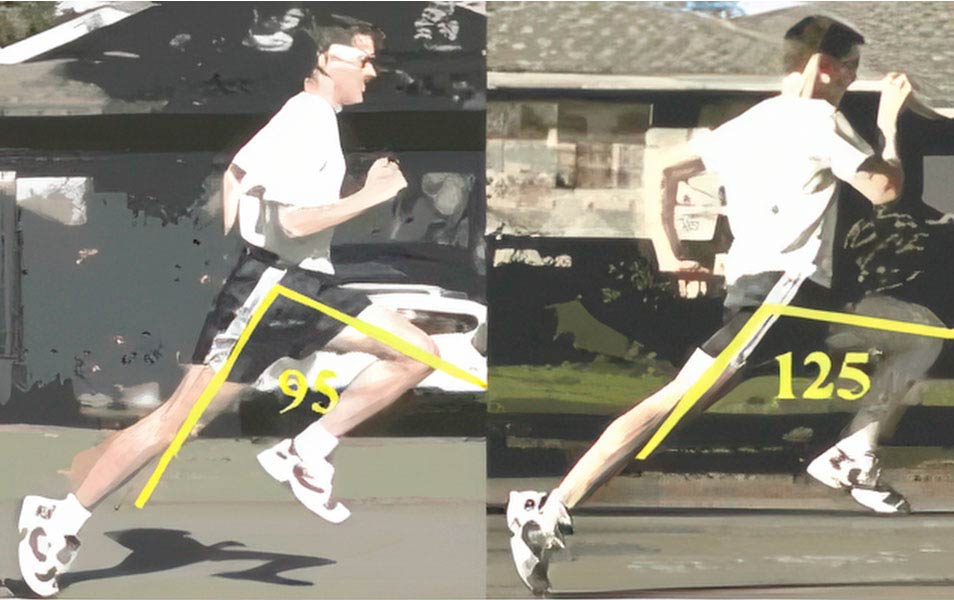
Figure 1: Increasing stride angle increases stride length.
By Bob Prichard
The stride angle is a more useful metric than stride length.
For example, the stride angle is what creates stride length.
The stride angle is the maximum opening between the upper legs while running or pitching.
Our 6-month research project found that for every degree a runner increases his stride angle, he can increase the stride length 2%. This runner (Figure 1) increased his stride length 60%.
Major League Baseball (MLB) pitchers require elbow surgery 1-6 years after joining an MLB team. In the last century, before weight training was introduced, pitchers lasted 11-23 years before any elbow problems. Figure 2 shows the stride angles of current and pre-weights pitchers. The pre-weights pitchers were also more skillfull with sub-2 ERA’s, while current stiff pitchers have much higher ERA’s.
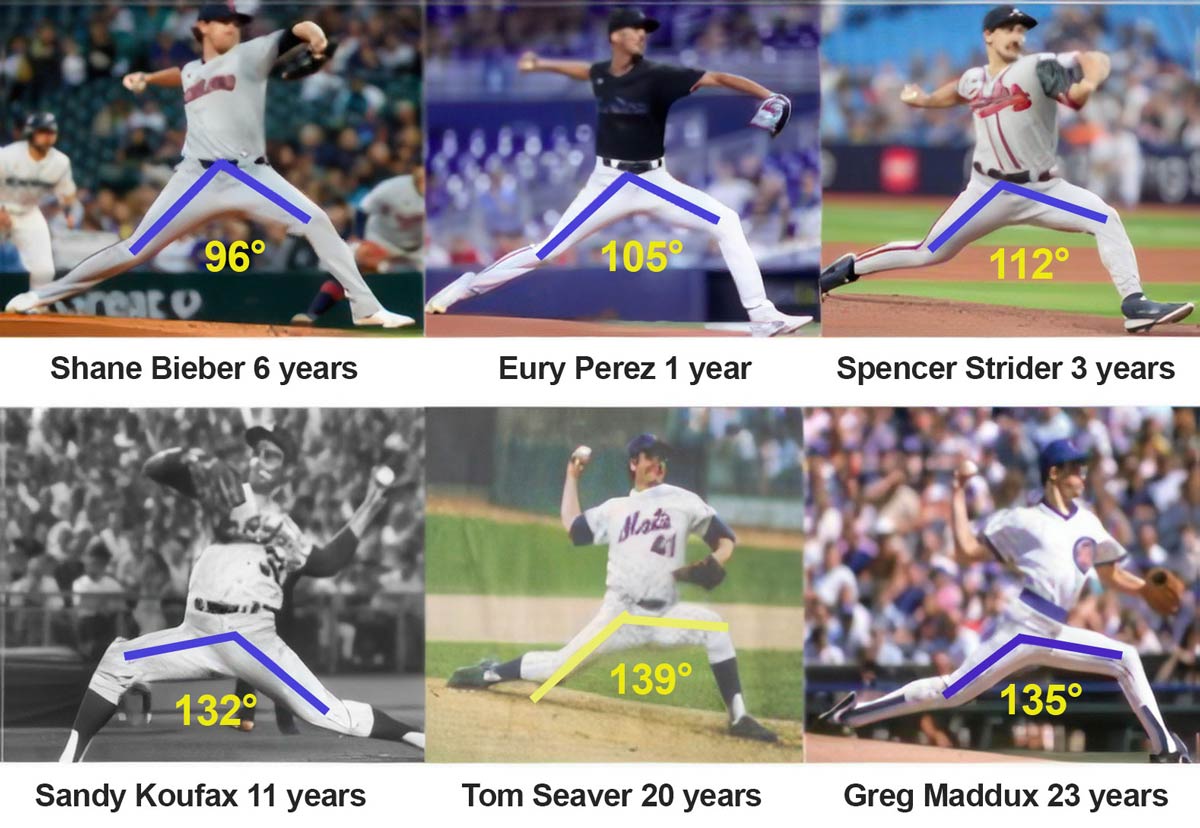
Figure 2: Stride angles of current and former pitchers
Weights also degrade sprint speed as shown by the number of stolen bases. Figure 3 shows an American (left) who started lifting weights when young compared to a much faster Japanese player who did not liftweights because Japanese baseball players do not lift. The Japanese stride length is 56% longer than the stiff American weightlifter. You can clearly see the difference in the muscle mass of their upper legs.
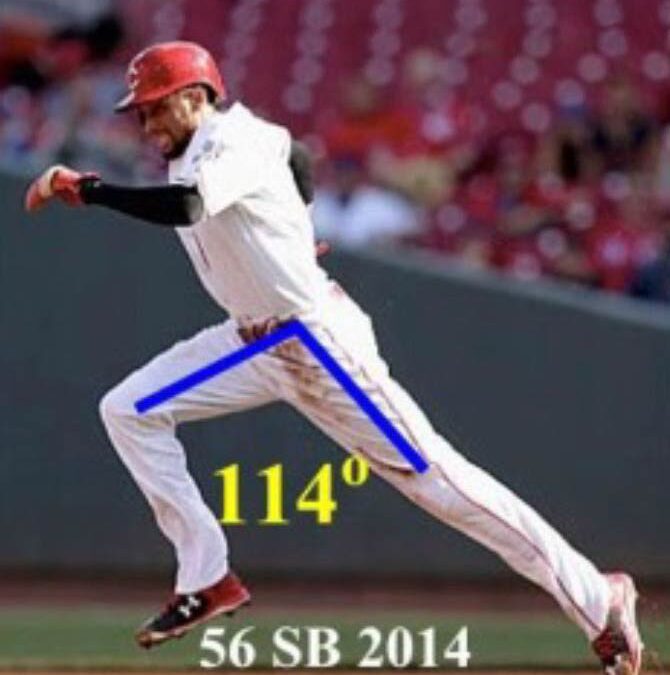
Billy Hamilton stole 56 bases in one season and decided to lift weights. Four years later (Figure 4), he stole 32 bases and declined year by year to 2.
Notice the difference in size of his hips and upper legs.
Measuring stride length just measures the result of the stride angle.
Measuring the stride angle measures the cause of the stride length.
Microfiber Reduction
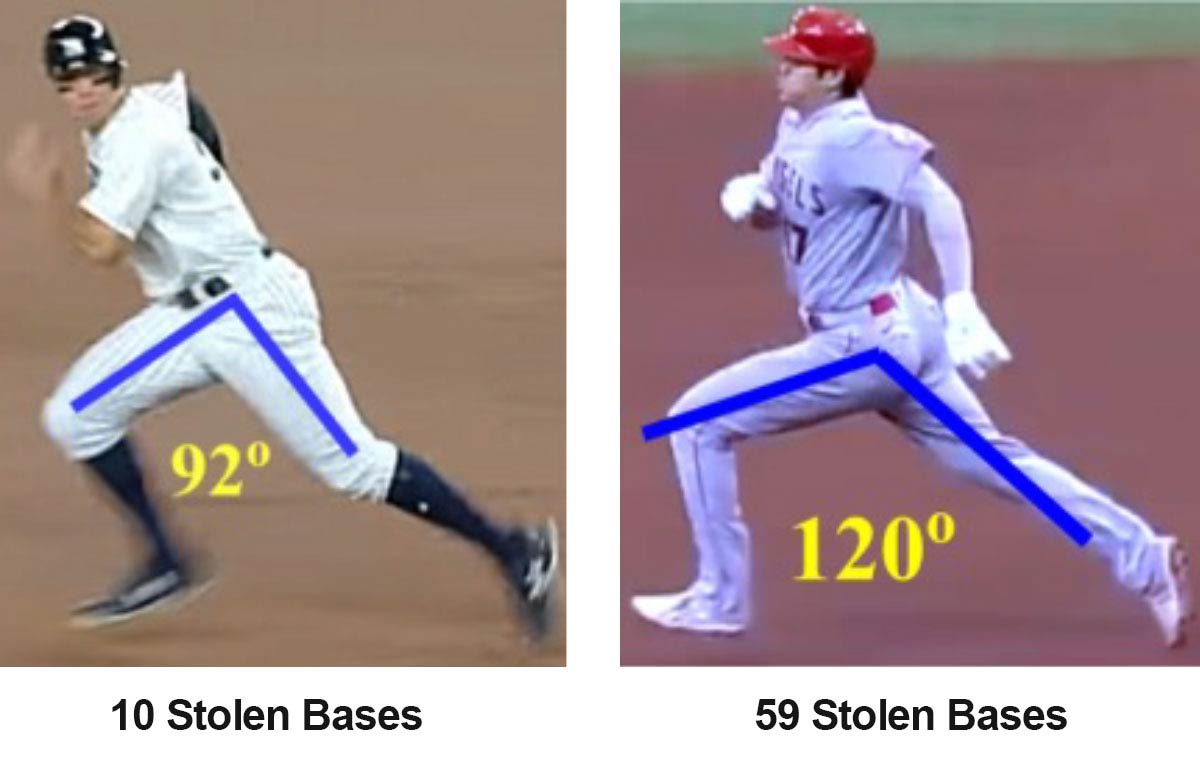
Figure 3: Lifting weights degrades number of stolen bases.
We increase the stride angle by releasing microfibers (mild scar tissue) in the connective tissue between the muscles. Weights increase microfibers when they tear thousands of the 20–50,000 tiny muscle fibers that make up each major muscle. The body creates scar tissue within the muscle (autopsies have found that 30% of weightlifters ‘muscle mass’ is scar tissue) and between the muscles (microfibers) to restrict movement, much as we put a sling or cast around an injury. Like any form of scar tissue, microfibers cannot be released by stretching.
But they are released with Somax Microfiber Reduction, as can be seen in the short video at the top of www.somaxsports.com showing a runner improving his hamstring rang 45 degrees in one day.
Figure 5 shows another runner who stretched his hamstrings an hour every day for 6 months with no improvement. Two weeks at Somax more than doubled his flexibility.
After releasing microfibers created from lifting weights in a college golfer and then training him to triple his hip speed, he increased his average drive from 290 yards (PGA average is 292) to 350 yards–15 yards longer than longest PGA player. Figure 6 shows their upper body photos. The PGA golfer has 70 lbs. more muscle.
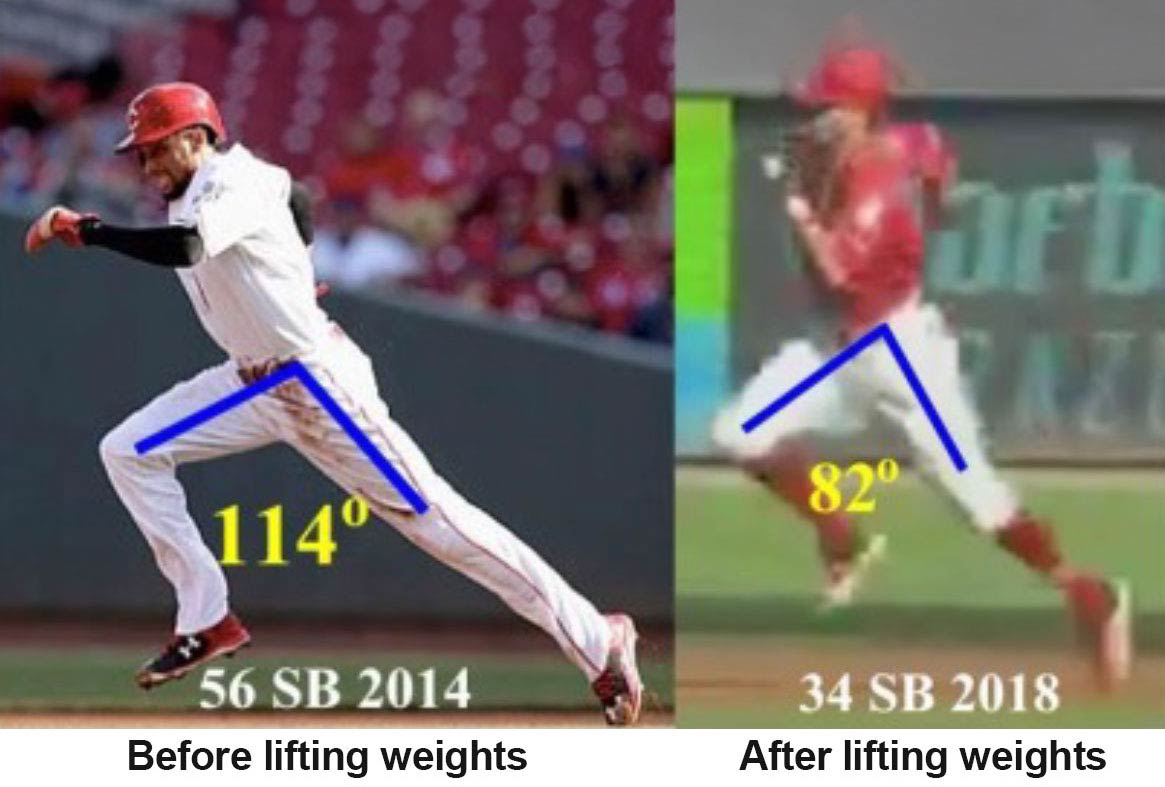
Figure 4: Billy Hamilton stole 56 bases in 2014; 4 years after lifting weights, that count dropped to 34.
This shows that a flexible lower body is more powerful than a stiff, muscular upper body.
Bob Prichard is President of Somax Performance Institute in Tiburon, California. He is the author of a sports instruction book, two DVD’s and dozens of articles in sports magazines, as well as a monthly column for The New York Times, and broadcast analyst for NBC Sports Olympics where he correctly predicted the winner of the men’s marathon at the halfway mark.
He holds 2 US patents for sports training aids.
Prichard also developed Microfiber Reduction, the first program to increase flexibility up to 900% beyond what stretching alone can do. As a result, his 18 Olympic athletes have won 44 Gold Medals and set 11 World Records. His baseball players have improved their batting average 61 points, from .321 to .381, tripled their balls to the warning track and over the fence, improved their 40-yard time 13%, from .492 to 4.27 seconds (equal to Deion Sanders best time), added 4 mph to their top pitch speed while increasing strikes thrown from 55% to 64%, and won their state championship followed by a 51-4 summer season.
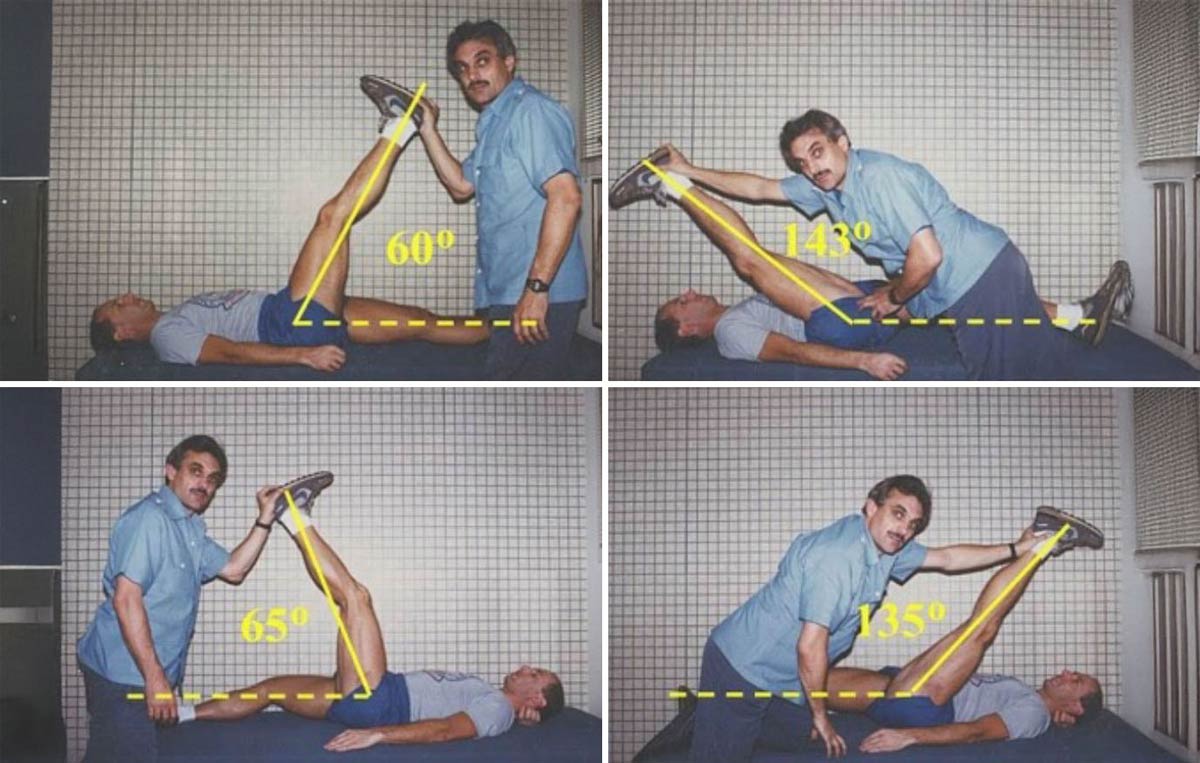 Figure 5: Releasing microfibers (mild scar tissue) can increase the stride angle. |
 Figure 6: Releasing microfibers increases body flexibility, which can improve one’s golf game. |