







1) Balance Training vs Hip Strengthening for CAI
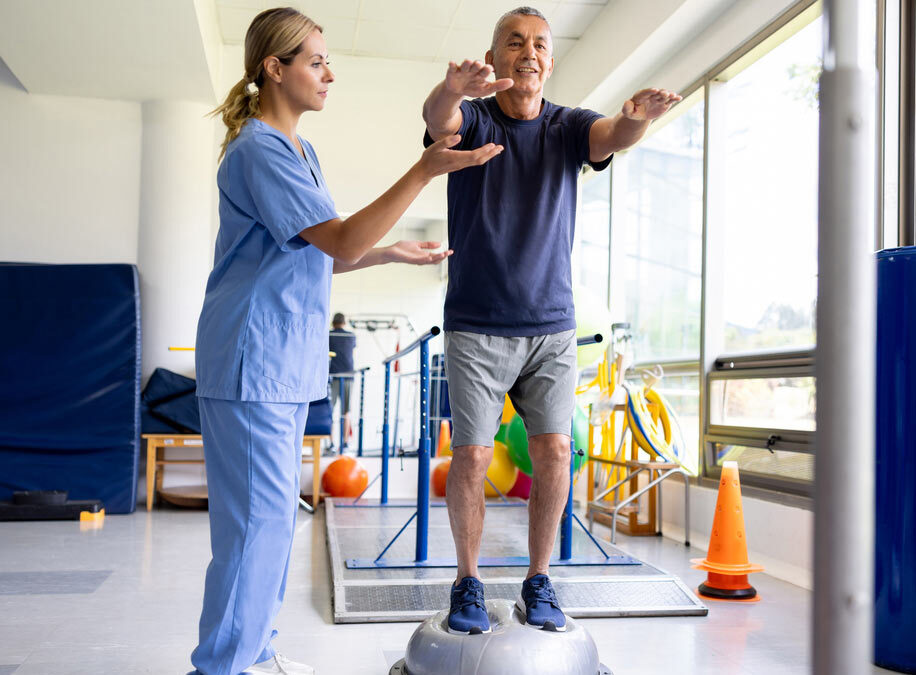
 Reductions in balance performance, hip strength, and ankle function along with increases in disablement and injury-related fear are among the many motor-behavioral and sensory-perceptual impairments associated with chronic ankle instability (CAI). Both balance training (BAL) and hip strengthening (HIP) can improve balance, but how do the 2 modalities compare? That’s the question a research team from Old Dominion University sought to understand in a recent randomized controlled study with 45 volunteers. Before and after the intervention, the involved limbs were tested using patient-reported outcomes for Foot and Ankle Ability Measure [FAAM-ADL, FAAM-S], modified Disablement in the Physically Active Scale [mDPA], Tampa Scale of Kinesiophobia-11 [TSK-11], Fear-Avoidance Beliefs Questionnaire [FABQ], and Self-Efficacy of Balance Scale [SEBS]), Star Excursion Balance Test (SEBT), and isometric hip strength (extension [EXT], abduction [ABD], and external rotation [ER]). The findings showed that BAL significantly improved in SEBT, EXT, ABD, and all patient-reported outcomes. HIP significantly improved in EXT, ABD, ER, FAAM-S, mDPA, FABQ, and SEBS. While balance training and hip strengthening both showed improvements in motor-behavioral and sensory-perceptual impairments in individuals with CAI, the authors concluded that balance training remains the most effective option for clinicians.
Source: Suttmiller AMB, Johnson KR, Chung S, et al. Comparing the Effects of Progressive Balance and Hip Strengthening Rehabilitation in Individuals With Chronic Ankle Instability. J Sport Rehabil. 2024;34(2):67-76. doi: 10.1123/jsr.2024-0049.
2) Aqua- vs Land-Based Cooldown Exercise
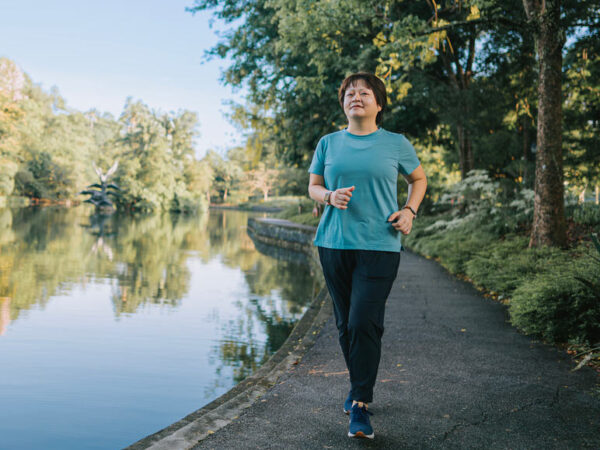 Sixteen college male athletes joined an 8-day study at the University of Hong Kong that compared the effects of aqua- and land-based exercises for postexercise recovery. The crossover design used 2 sets of 2-day experimental protocols that were separated by a 1-week washout. Muscle soreness, creatine kinase, anaerobic performance, countermovement-jump height, and flexibility were assessed at various time points. Based on the assessments, the research team concluded that aqua and land jogging have similar recovery effects on muscle soreness and performance-based parameters.
Source: Chin EC, Chung-Nam Lai S, et al. Comparing the Effects of Aqua- and Land-Based Active Cooldown Exercises on Muscle Soreness and Sport Performance: A Randomized Crossover Study. Int J Sports Physiol Perform. 2024 Sep 19;19(12):1381-1390. doi: 10.1123/ijspp.2024-0020.
3) Telehealth for Anti-Obesity Meds?
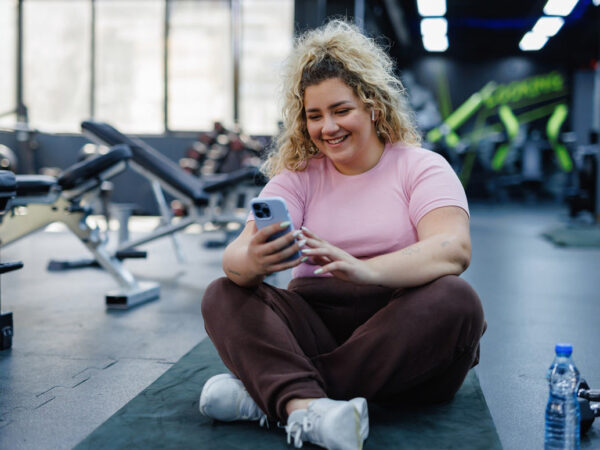 Nearly 50% of adults in the United States are actively trying to lose weight and 45% are interested in taking some of the newer anti-obesity medications (AOM)—including 59% of those trying to lose weight. Adoption of telehealth appointments has risen steadily since the pandemic as has the use of the newest AOM treatments (glucagon-like peptide-1 receptor agonist [GLP-1-RA]-based drugs). But does telehealth work with the use of AOMs for weight loss?
Using data from 59,590 participants in a WW International Clinic (formerly Weight Watchers) telehealth program, researchers found that average weight loss across AOMs was 8.9% at 3 months, 14.1% at 6 months, 17.7% at 9 months, and 19.4% at 12 months.
The researchers concluded that telehealth-delivered treatment of obesity that includes current AOMs appears to produce comparable results with those seen in phase 3 clinical trials, suggesting that the results can be generalized beyond clinical trial and in-person settings.