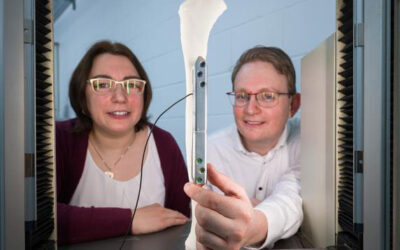
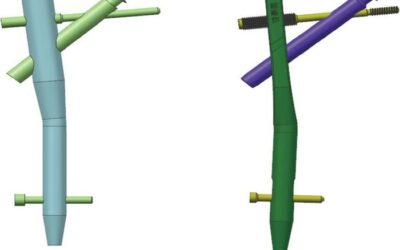
A research team from various universities and health institutes in China have announced a new innovation as a potential panacea for unstable intertrochanteric femur fractures in the elderly: the Proximal Femur Bionic Nail (PFBN). With the aging population, intertrochanteric femur fractures have become a critical public health concern, prompting a surge in research focused on trauma orthopedics.
Lower Extremity Review
New Shoe Technology May Mitigate DFUs
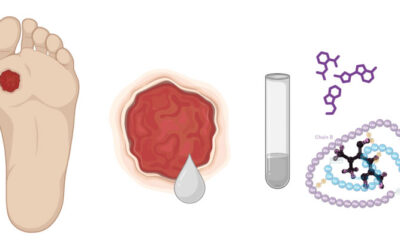
Researchers have developed a new shoe insole technology that helps reduce the risk of diabetic foot ulcers (DFUs), a dangerous open sore that can lead to hospitalization and leg, foot, or toe amputations. “The goal of this innovative insole technology is to mitigate the risk of diabetic foot ulcers by addressing 1 of their most significant causes: skin and soft tissue breakdown due to repetitive stress on..
Electric Bandage Holds Promise for Treating Chronic Wounds
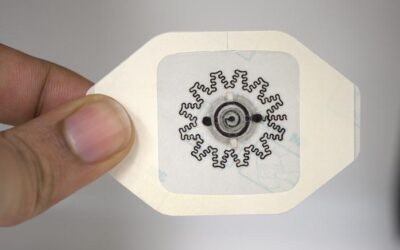
Researchers at North Carolina State University (NC State) and Columbia University have developed an inexpensive bandage that uses an electric field to promote healing in chronic wounds. In animal testing, wounds that were treated with these electric bandages healed 30% faster than wounds treated with conventional bandages.
Noninvasive Continual Blood Pressure Testing Device
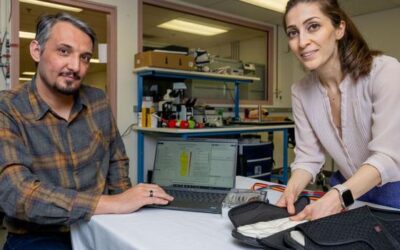
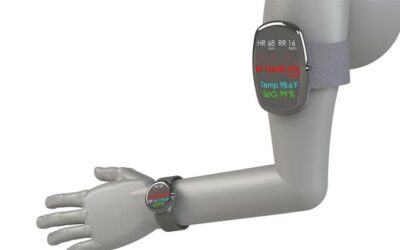
A multidisciplinary team of California Institute of Technology (Caltech) researchers has figured out a method to noninvasively and continually measure blood pressure anywhere on the body with next to no disruption to the patient. A device based on the new technique holds the promise to enable better vital-sign monitoring at home, in hospitals, and possibly even in remote locations where resources are limited.
Inotec Secures $33 Million in Series C Financing to Accelerate US Expansion
Inotec AMD, Cambridge, UK, whose product NATROX® O2 is a topical oxygen therapy (cTOT) for advanced wound care, recently announced the successful close of a $33 million Series C financing round. The funding, led by existing investors, Amadeus Capital Partners, Meltwind, Puhua Capital, and the Wealth Club, marks a major milestone in the company’s mission to heal every chronic wound and improve patients’ lives on a global scale.
Researchers Introduce Programmable Materials to Help Heal Broken Bones
Natural materials like bone, bird feathers, and wood have an intelligent approach to physical stress distribution, despite their irregular architectures. However, the relationship between stress modulation and their structures has remained elusive. A new study that integrates machine learning, optimization, 3D printing, and stress experiments allowed engineers to gain insight into these…
Combination of Diabetes Drugs Show Promise for Healing DFUs
People with chronic diabetic foot ulcers (DFUs) could soon have a new way to treat their wounds for faster healing and fewer hospital stays. Researchers from Michigan State University (MSU) and South Shore Hospital in South Weymouth, Massachusetts, have found that the combination of 2 common diabetes drugs—injectable insulin and orally-administered metformin—increases the amount of…
Lower Limb Exoskeleton Designed for Patients with Reduced or Absent Mobility
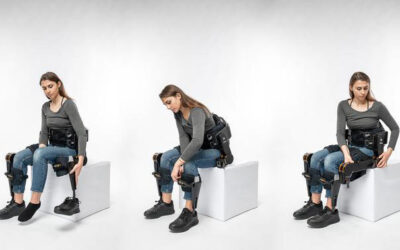
TWIN is a new robotic exoskeleton for lower limbs, designed and developed by Rehab Technologies IIT – INAIL, the joint laboratory between the Istituto Italiano di Tecnologia (IIT, Italian Institute of Technology) and the Prosthetic Center of INAIL (the prosthetic unit of the National Institute for Insurance against Accidents at Work). The motorized exoskeleton is an external structure capable of…
UD Researchers Developing Force-sensing Devices for Prosthetic Legs
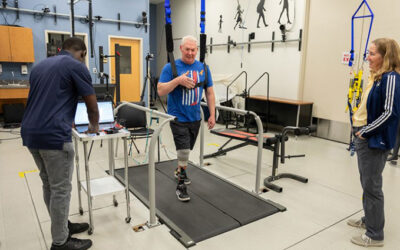
John Horne lost his right leg to bone cancer when he was a freshman in high school. This personal experience spawned his career and passion for advocating for those with limb loss. The president of Independence Prosthetics-Orthotics on the University of Delaware’s (UD) Science, Technology, and Advanced Research (STAR) Campus has seen prostheses improve significantly since…
Micro-massaging Artificial Muscles Help Fractured Leg Bones Heal Better
An interdisciplinary team of medical specialists, engineers, and computer scientists at Saarland University, Saarbrücken, Germany, are developing smart implants that can continuously monitor and actively promote bone healing—by, for example, micro-massaging the fracture site. The team of engineers led by Stefan Seelecke, Prof. Dr.-Ing., iMSL, chair of intelligent material systems and…
Seams in Clothing Can Capture Body Movement
Everyday clothing may soon be able to capture and record body movements according to new research from the Universities of Bristol and Bath, United Kingdom. Harmless low voltages are passed through conductive threads that are stitched into garment seams to create electrical circuits.
Prosthesis Driven by Nervous System Allows Natural Gait
Using a new type of surgical intervention and neuroprosthetic interface, Massachusetts Institute of Technology (MIT) researchers, in collaboration with colleagues from Brigham and Women’s Hospital, have shown that a natural walking gait is achievable using a prosthetic leg fully driven by the body’s own nervous system. The surgical amputation procedure, known as the…
UD-developed Biomaterials Approved for Wound Management Products
The U.S. Food and Drug Administration has approved 2 new wound management products that include patented hydrogels invented by University of Delaware (UD) material scientist Darrin Pochan, PhD, and Joel Schneider, PhD, a former UD faculty member now at the National Cancer Institute. The unique hydrogel materials are made of peptides—the building blocks of proteins—that…
Hanger Ventures Invests in Bionic Power
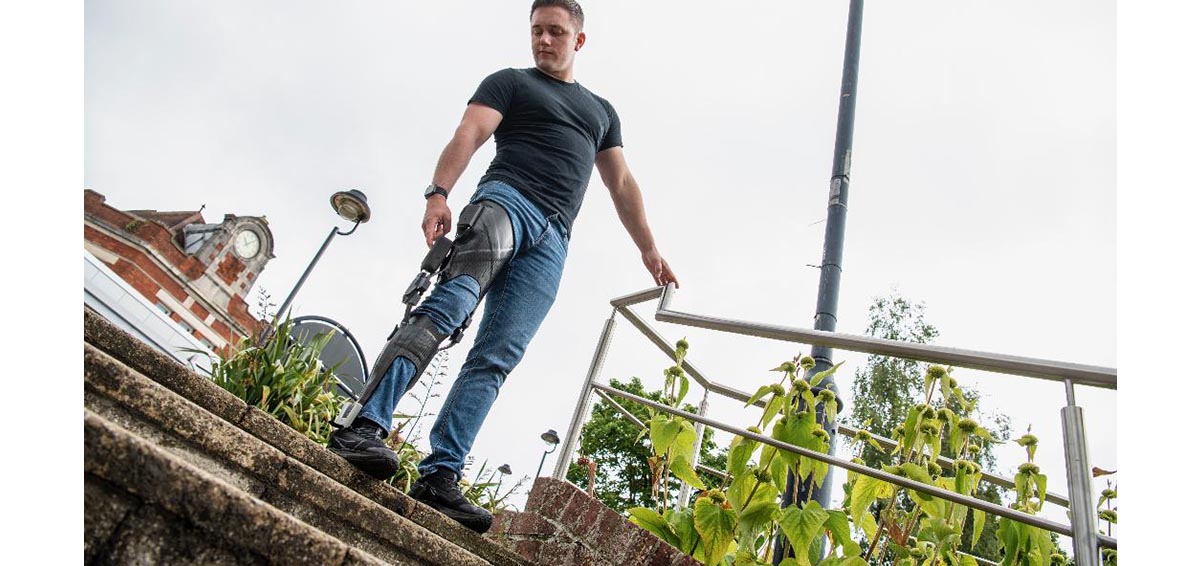
Hanger Ventures, a Hanger, Inc. business whose primary objective is to advance orthotics and prosthetics innovation and improve patient outcomes, recently announced its debut investment in Bionic Power, a Canadian-based firm. A developer of active lower body smart orthotic devices that enhance personal mobility, Bionic Power is raising Series A Round funding, with Hanger Ventures committing as the lead investor.
Biomaterial Technology, Rehabilitation Medicine to Aid in Muscle/Nerve Regeneration
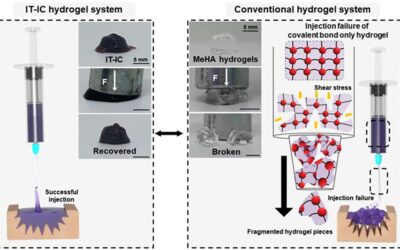
Researchers from the Institute of Basic Science (IBS) in South Korea have developed a novel approach to healing muscle injury by employing “injectable tissue prosthesis” in the form of conductive hydrogels and combining it with a robot-assisted rehabilitation system. Let’s imagine you are swimming in the ocean.
Join
Subscribe For Updates
Stay in the loop with the latest news and updates! Subscribe now to receive exclusive content, special offers, and important announcements straight to your inbox. Don’t miss out – join our community today for all the latest updates delivered directly to you.