








 By Reed Kennedy Volunteer Executive Director of Hope to Walk
It began with a simple question to Phil Johnson, a Certified Prosthetist-Orthotist in private practice in Blacksburg, Virginia: “Can you help a boy in Guatemala who lost his leg?” Phil, who never shies away from a challenge, said yes. He traveled to Guatemala and successfully crafted a prosthetic leg for the 14-year-old boy. But the story didn’t end there. The very next day, 18 more children arrived at the door with their parents, all hoping for the same life-changing help. In that moment, Phil felt a calling–one that would change the course of his life.
That was 26 years ago. When Phil returned home, he couldn’t shake what he had witnessed. He became determined to address a heartbreaking reality: millions of amputees in developing countries will never be able to afford a prosthetic leg. Over the next decade, he developed innovative, low-cost solutions–eventually securing 11 patents.
Ten years ago, he founded Hope To Walk (HTW), a nonprofit dedicated to restoring mobility and dignity to amputees around the world. Phil left his private practice to lead the organization full-time. Today, HTW operates with an entirely volunteer-based U.S. team–from its executive director to the many individuals who manufacture prosthetic components in a workshop in Blacksburg.
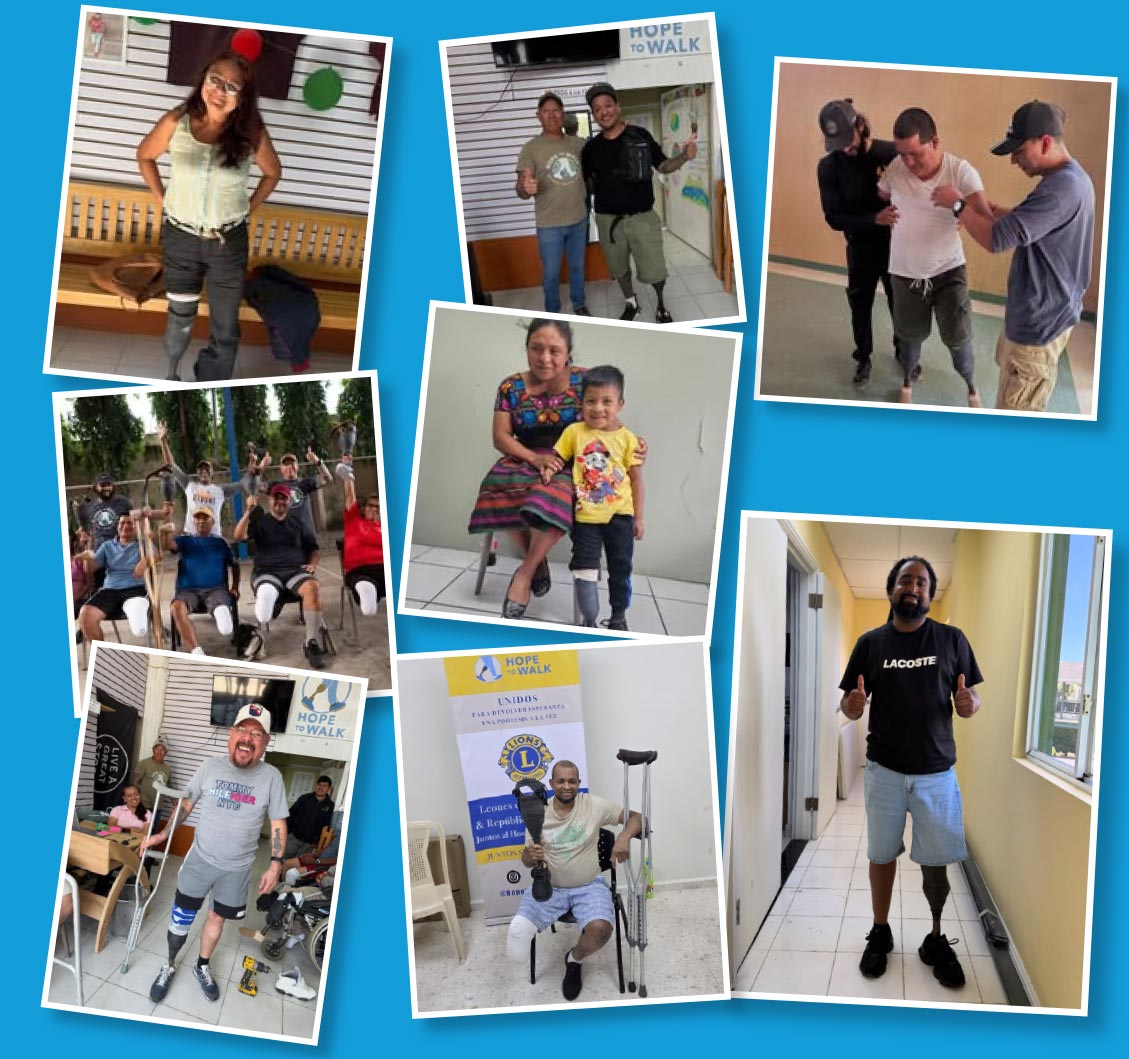 HTW’s work is focused primarily in Guatemala, Honduras, and Tanzania. In many of these communities, physical disabilities carry a heavy social stigma. Amputees are often shunned or viewed as “cursed,” leaving them isolated and unable to work or provide for their families. A prosthetic leg changes everything. It restores not only the ability to walk, but also dignity, independence, and hope. Recipients can return to work, care for their families, and rejoin their communities. In many cases, it truly is the difference between exclusion and belonging.
Globally, there are an estimated 58 million amputees–most of whom lack access to affordable prosthetic care. Tragically, that number continues to grow, driven in part by the global rise in diabetes.
HTW is working to change that. In 2025, the organization nearly tripled the number of amputees served compared to the previous year. By the end of this year, 3 new clinics are expected to be operational–expanding access to care even further. In February, through a partnership with Lions Clubs in New York City and Santo Domingo, HTW helped 49 amputees in the Dominican Republic receive prosthetic legs–an average of 5 patients per day. Plans are already underway to serve 100 patients there over a 2-week period in 2027, while also training a local technician to ensure the clinic becomes fully self-sustaining.
Looking ahead, HTW aims to double the number of amputees served again this year. New clinic initiatives are planned for Malaysia, Vietnam, and the Philippines, with a focus on building sustainable, locally operated programs. Hope To Walk survives through the generosity of donors who believe in its mission: to give the gift of mobility–and a renewed life–to those who need it most.
Visit their WEBSITE and watch a short 2-minute VIDEO to see the impact firsthand.
Related posts:
Shape-Shifting Scaffold Fights Infection, Rebuilds Bone
Smart Textiles Sense How Users Are Moving

ACTIVATOR MOBILITY AND REHABILITATION POLES

Smart Bandage with Plant Power Heals Chronic Wounds

LEREXPO Conversations: Emerging Radiolucent Technologies and Bone Grafting Techniques