







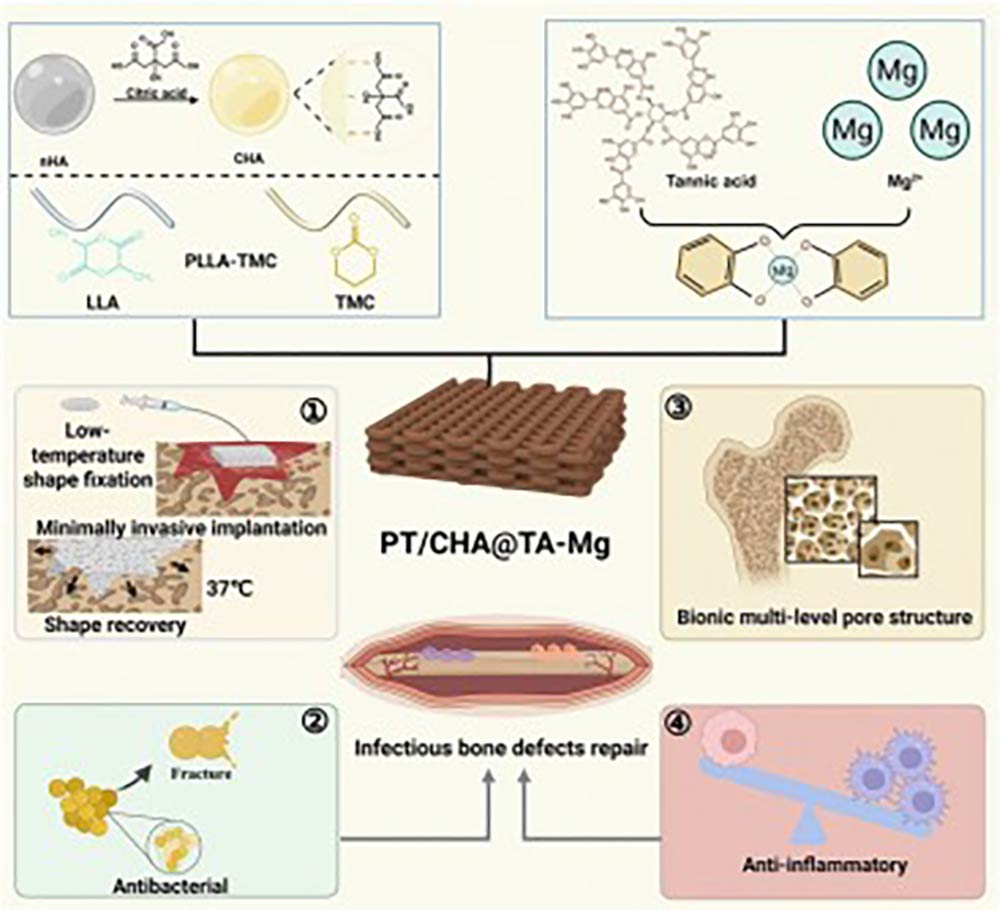
Schematic illustration of the design and therapeutic mechanism of the PT/CHA@TA-Mg scaffold. Image courtesy of Burns & Trauma.
Researchers from Chongqing Medical University and Chengdu University in China have developed a body-temperature responsive, 3D-printed shape-memory scaffold coated with a metal polyphenol network to treat infectious bone defects. Using a combination of low-temperature 3D printing and surface biofunctionalization, the scaffold was designed to adapt to irregular bone defects while providing antibacterial activity, immune regulation, and osteogenic support. The study demonstrates both in vitro and in vivo efficacy in controlling infection and promoting bone regeneration.
The newly developed scaffold is composed of a biodegradable shape-memory polymer blended with citric acid–modified hydroxyapatite, producing a porous structure that closely mimics cancellous bone. At physiological temperature (37 degrees C), the scaffold rapidly recovers its original shape, allowing it to tightly fill irregular bone defects and improve mechanical integration after implantation. This adaptive behavior directly addresses the mismatch issues common in traditional rigid implants.
To combat infection, the scaffold surface is coated with a tannic acid–magnesium metal–polyphenol network. This coating exhibits strong antibacterial activity against common pathogens, including Staphylococcus aureus and Escherichia coli, while enabling pH-responsive release in acidic, infection-associated microenvironments. Beyond pathogen clearance, the coating also plays a crucial immunomodulatory role by shifting macrophage polarization away from a pro-inflammatory state and toward a regenerative phenotype.
Importantly, the scaffold supports robust osteogenic differentiation. Enhanced mineral deposition, elevated alkaline phosphatase activity, and increased calcium nodule formation were observed in stem cell cultures. In an infected rat bone defect model, the scaffold significantly reduced bacterial burden, suppressed inflammatory cytokines, and promoted new bone formation, as confirmed by micro-CT and histological analyses. Together, these results demonstrate a coordinated, multistage healing process driven by a single intelligent implant.
The shape-memory, bioactive scaffold offers broad potential for clinical translation in orthopedic trauma, chronic osteomyelitis, and revision surgeries following implant-related infections.