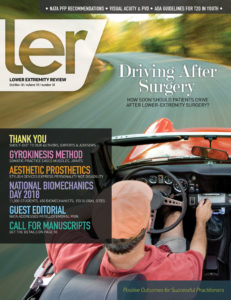
October/November 2018
Click here to download the complete issue as a PDF
Cover Story
The answer doesn’t come easily; official guidelines are lacking. Ultimately, patients bear responsibility for the decision, but you can still offer them valuable advice for keeping safe. “Doctor, when can I start driving again?” That’s a common question patients ask when they’re headed for lower-extremity surgery. But it’s not always an easy one to answer.
By Keith Loria
Guest Editorial
Patellofemoral pain (PFP), also known as anterior knee pain, is one of the most common but complex knee problems to manage. PFP affects approximately 23% of the general population and 29% of adolescents. Moreover, females are twice as likely to develop PFP as males.
By Lori A Bolgla, PT, PhD, MAcc, ATC, and Michelle C Boling, ...
THANK YOU…and Onward to 2019!
Lower Extremity Review extends heartfelt thanks to our readers, advertisers, countless medical experts, and—listed below—our many authors and the members of the LER Editorial Advisory Board. Without the support of all of you, LER would not be possible. Thank you for your encouragement, involvement, and loyalty during 2018—a year of transition for the publication, for sure.
We look forward to 2019: to hearing your ideas and to delivering clinical reviews, news, and opinion to keep you informed of best practices and help you improve outcomes. We encourage you to let us know what we’re doing right (and to tell us when you disagree or when we just plain get it wrong). Our mission is always to help you help your patients.
Here’s to a happy, healthy 2019!
Rich Dubin, Publisher + Janice T. Radak, Editor
Authors
- Marianne Adams, MA, MFA
- Thomas Gus Almonroeder, PT, DPT, PhD
- Andrea Baellow, MS
- Hank Black
- Lori A. Bolgla, PT, PhD, MAcc, ATC
- Michelle C. Boling, PhD, LAT, ATC
- Benn Jason Scott Boshell, MSc, BSc (Hons)
- Barbara Boughton
- Uli Brüderlin
- Andrew K. Buldt, BPod(Hons), PhD
- Kathleen Cameron, MPH
- Nicholas A. Campitelli, DPM, FACFAS
- Nachiappan Chockalingam, PhD
- Ralf Colin
- D. Chris Cothern PT, CES, PES
- Tyler Coye, BA
- Sally Crawford, MS
- Patrick A. DeHeer, DPM, FACFAS, FASPS, FFPM RCPS (Glasg)
- Paul DeVita, PhD
- Matthew Dilnot, DPM
- Jill R. Dorson
- Ian Engelman, MS, CPO
- Vicki Foerster, MD, MSc
- Kathrin Freyler
- Neal R. Glaviano, PhD, AT, ATC
- Albert Gollhofer
- Cary Groner
- Terry P. Haines
- Laura Hochnadel
- Jonathan L. Hook, DPM, MHA
- Ken Johnson, PT
- Anne Krause
- Jonathan Labovitz, DPM, FACFAS, CHCQM
- Keith Loria
- Curt Martini, DPM
- James McGuire, DPM, PT, LPed, FAPWHc
- Hylton B. Menz, BPod(Hons), PhD, DSc
- Tom Michaud, DC
- Karen Mickle, BSc (Hons), PhD
- Joseph M. Mozena
- Harry L. Penny, DPM, DABPM, FAPWHc
- Elizabeth W. Peterson, PhD, OTR/L, FAOTA
- Donald C. Pompan, MD
- Ramona Ritzmann
- J. Kim Ross, DC, PhD
- Gary M. Rothenberg, DPM, CDE, CWS
- Susan Saliba, PhD, MPT, Med
- Susan Sanford, PT, LAc, C.SMA
- Jay Segel, DPM
- Richard Schilling, DPM, FACFAS
- Jarrod Shapiro, DPM, FACFAS, FACFAOM
- William Smith, MSPT, CPed
- Scott A. Spencer, DPM
- Emily Splichal, DPM
- Phil Stevens, MEd, CPO, FAAOP
- Thomas Stocker
- Rene Stolwyk
- Audris Tien, DPM
- Sarah Marie Tighe, SPT
- Harald Töpfer
- Robert A. Weil, DPM
- Nicole Wetsman
- Bruce Williams, DPM, DABPS
- Cylie M. Williams
- Joseph G. Wilson, DPM
- T. Craig Wirt, DPM, PhD
- Mariana Wingood, DPT, PT, GCS, CEEAA
- Lori Yarrow, DC, BPE
- Julia Yuncken
Editorial Advisory Board
- Craig R. Bottoni, MD
- Jonathan L. Chang, MD
- Sarah Curran, PhD, FCPodMed
- Stefania Fatone, PhD, BPO
- Timothy E. Hewett, PhD
- Robert S. Lin, CPO
- Jeffrey A. Ross, DPM, MD
- Erin D. Ward, DPM
- Bruce E. Williams, PDM
Feature Articles
New somatic practice uses repeated movements, breath awareness and rhythmic patterns to loosen joints and ease muscle tension. The GYROKINESIS® Method* is a unique form of somatic practice that is gaining popularity around the world. The Gyrokinesis Method promotes a holistic approach to health and well-being that could be useful to a variety of populations.
By ...
Aesthetic devices respond to emotional needs and can lead to “positive conversations”. In the early 1900s in the United Kingdom, the National Health Service considered glasses and spectacles medical devices—designed to be functional, but without any consideration of style and experience.1 As a result, said Stefania Sansoni, PhD, companies that made eyeglasses didn’t think about their ...
National Biomechanics Day (NBD) 2018—April 11, 2018—continued building excitement for the field by engaging 11,000 young students across 150-plus sites around the globe. The home-grown events allow high school (and younger) students to experience first-hand a field that underlies orthopedics, exercise physiology science, physical therapy, and countless other fields that involve human movement and performance.
Clinical evidence suggests that this intervention (foot care plus advice on diet, exercise & smoking) is highly effective at reducing the progression into acute care and can reduce the incidence of amputation by 60%.
By Lisa Farndon, John Stephenson, Oliver Binns-Hall, Kayleigh Knight, and Sally Fowler-Davis
From the Literature
Patellofemoral pain (PFP), one of the most common knee problems in active people, is also one of the most challenging conditions to manage, due to its complex nature. To support athletic trainers and other healthcare providers who treat the problem, the National Athletic Trainers’ Association (NATA) has published recommendations and a framework for identifying risk ...
Poor vision has long been known as a risk factor for poor balance. This is particularly true in older adults as they perform complex balancing tasks, such as standing on 1 foot. A team of Canadian researchers wanted to determine whether poor vision would be more strongly related to standing balance in older adults who had ...
Youth-onset type 2 diabetes (T2D), defined as T2D that develops before 20 years of age, is a growing medical challenge in the United States. A national study reported a 4.8% increase in newly diagnosed cases of T2D in this age group from 2002 to 2012.
In an 8-year quality improvement follow-up study of reported surgical adverse events (AEs) at the US Veterans Health Administration (VHA), researchers found 277 AEs and 206 “close calls.” The data show a continuing of the downward trend from 1.74 to 0.47 AEs with harm for every 100,000 procedures, compared to the previous similar VHA studies ...
A Connecticut allergy practice has agreed to pay $125,000 and enter a corrective action plan to settle an alleged Health Insurance Portability and Accountability Act (HIPAA) Privacy Rule violation. According to the US Department of Health and Human Services (HHS), the violation occurred when one of the practice’s physicians disclosed a patient’s protected health information ...
New Products
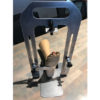
New from PAL Heath Technologies is the Foot Orientation Apparatus (patent pending, serial number 62/739,962) to be used with PAL’s Xtremity 3D foot scanner. The lightweight and portable apparatus was developed to obtain subtalar neutral positioning of the foot, ensuring foot scans are more accurate for the physician and more comfortable for the patient.
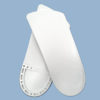
KLM Laboratories continues to help practitioners meet the ever-changing needs of each patient. The Posted CP-3300 orthotic shell is the newest addition to the KLM prefabricated product family. This semi-flexible polypropylene shell has a 2-degree inverted rear foot post that is lightweight and low bulk. The design of the horseshoe shape will allow for heel ...
The Neuropathic Walker is a more advanced and comfortable solution to the CROW Walker. The Neuropathic Walker is integrated with custom molded 3/16” solid polypropylene and 1/4” Aliplast lining with the same trim lines as a CROW Walker. We use high-quality leather that is molded over the solid polypropylene.
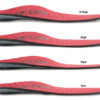
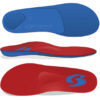
Some of your patients need custom orthotics. Others will achieve equal outcomes, at lower cost, with pre-fabricated insoles. Tread Labs offers semi-custom insoles that provide excellent relief from plantar fasciitis and other foot ailments. They are the perfect solution for customers who do not need, or cannot afford, custom devices.
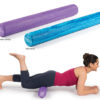
OPTP has added a new 4″ diameter foam roller to its elite Pro-Roller line, available in standard and soft densities. The 36″ x 4″ roller is closer to the ground than the regular 36″ x 6″ diameter roller, for a safer, more stable feeling. They are well suited for the elderly, beginners, or individuals with ...
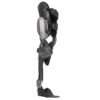
The new C-Brace by Ottobock HealthCare uses the world’s first mechatronic stance and swing phase control orthosis (SSCO) system, introduced with the original C-Brace, to control stance and swing phase with microprocessor sensor technology. Building upon the features of the first-generation C-Brace, the new C-Brace is smaller and lighter, allowing it to be worn under ...
Cadence Insoles introduces a new model to its line of exclusive, retail-only, over-the-counter orthotics. The EX MP provides semi-rigid support, durable high-rebound/low-compression set polyurethane foam, and an antimicrobial, low-friction CoolMax top cover with a built-in metatarsal pad. The EX MP is only available for purchase from physicians’ offices and select retailers; it is not available ...
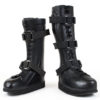
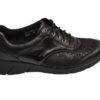
German comfort footwear company Waldlaufer introduces the stylish new Kagan lace-up, a therapeutic shoe without the therapeutic look, designed to accommodate the footwear needs of women with extra-wide feet, bunions, and hammertoes. Like every Waldlaufer shoe, the Kagan is handcrafted in Europe using the finest leathers and super-light, air cushion soles.
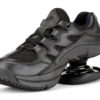
Z-CoiL shoes feature an innovative spring in the heel. Like shock-absorbers for the body, Z-CoiL’s reduce impact by 50%, enabling the wearer to walk, run, and stand for hours in comfort. Now those suffering from foot, leg, and back pain can reduce pain and injury without pills, shots, or surgery. It sounds too good to ...
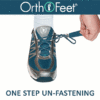
Orthofeet therapeutic shoes offer unique functional features: Tie-Less Lacing System offers an easy way of fastening the shoe without the need for lacing up – and ideal solution for patients who have difficulty tying laces. Two-Way Fasting uses straps on both the medial and lateral sides of the shoe. Heel-Strap enables adjusting the grip around the heel, eliminating ...
Industry Snapshot
Noteworthy products, association news, and market updates