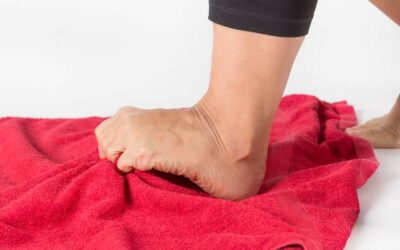
A small study of 25 boys (age 10-12y) with flexible flat foot (FF) sought to understand the impact of intrinsic- versus extrinsic-first corrective exercises on on muscle morphometry and navicular drop (ND). The boys underwent a 12-week exercise program that shifted focus midway. The results were significant. Leading with intrinsic exercises led to sustained improvement throughout the…
Lower Extremity Review
Metal Hypersensitivity and Joint Implants
Metal hypersensitivity (MH) is a controversial topic with limited evidence. It is more commonly observed in failed arthroplasties. The most common metal involved in MH is nickel. Orthopaedic implants contain nickel because of its ability to provide increased strength and durability. MH is a type IV hypersensitive reaction.
TKA Outcomes Among Self-Reported Nickel Allergy Patients
In a study that looked at the data on more than 18,000 patients, researchers found that patients who have a self-reported nickel allergy can be advised that, on average, their clinical outcome scores will improve similarly to patients who do not have a self-reported nickel allergy, and revision rates will be similar.
Salto Talaris Fixed-Bearing Total Ankle Arthroplasty: 10-Yr Results
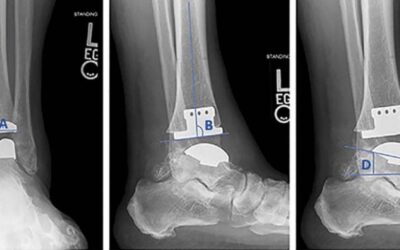
In this longer-term follow-up of a limited cohort (48 patients/50 ankles, average age at index surgery: 64 years), Salto Talaris fixed-bearing total ankle arthroplasty demonstrated good long-term survival (Kaplan-Meier estimated survivorship was 84.2%) with relatively low rates of revision or other complications. Patient-reported outcome and range of motion measures revealed good stability.
Silastic Joint Arthroplasty for End-Stage Hallux Rigidus
Osteoarthritis of the first metatarsophalangeal joint (MTPJ) is a common forefoot problem affecting patients in later years. It leads to pain, gait problems, and difficulty with activities of daily living. Treatment is controversial and varies according to patient symptoms and surgeon preference. Arthrodesis remains the gold standard but it has its own complications.
A Word About Injury After Concussion…
In 2022, a report in the International Journal of Sports Physical Therapy found that college athletes who suffered a concussion possessed a 58% greater risk of sustaining a lower extremity musculoskeletal injury than those who did not have a history of concussion (RR = 1.58[1.30, 1.93]). Now, a new study by Gardner et al reports that for college male football players the odds of upper extremity injury in the…
Reliability/Validity of OneStep SmartPhone App Assessed
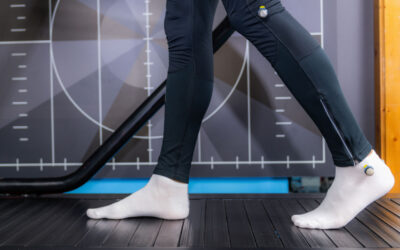
An easy-to-use and reliable tool is essential for gait assessment of people with gait pathologies. This study aimed to assess the reliability and validity of the OneStep smartphone application compared to the C-Mill-VR+ treadmill (Motek, Nederlands) among patients undergoing rehabilitation for unilateral lower extremity disability.
Study Examines Footwear Preferences in People with Knee OA
Although footwear can improve pain and function in individuals with knee osteoarthritis (OA), perspectives about footwear in this population have not been explored. This qualitative study explored preferences, attitudes and beliefs about footwear in adults with knee OA.
Running in Minimal Shoes Vs Barefoot: Significant Difference
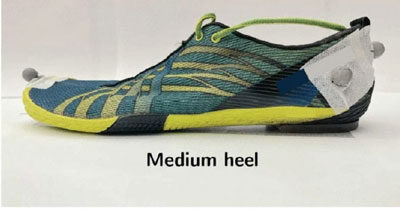
Shoes affect the evolved biomechanics of the foot, potentially affecting running kinematics and kinetics that can in turn influence injury and performance. An important feature of conventional running shoes is heel height, whose effects on foot and ankle biomechanics remain understudied. Here, we investigate the effects of 6–26 mm increases in heel height on ankle dynamics in 8 rearfoot strike runners who ran…
Microvascular Permeability in Diabetic Muscle
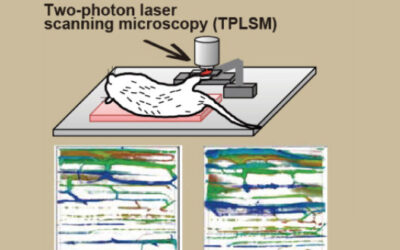
Microvascular permeability in diabetic muscle was investigated using our original 2-photon scanning laser microscopy method. Compared with controls, the leakage volume was increased in diabetic muscle, which was atrophic with smaller capillary diameter, endothelial cell thickening, and the appearance of more endothelial intercellular gaps or clefts, and large vesicles.
Pulmonary Complications After Femur Fracture Repair in Patients ≥80 Years
As the population of those age 80+ increases, surgeries for femur fractures will rise as well. A new 2-year retrospective cohort study in 479 patients (mean age 86 years) looked at the incidence and risk factors for common postoperative pulmonary complications—pneumonia, atelectasis, pulmonary edema, pleural effusion, and venous thromboembolism (VTE), as well as respiratory failure and 9-day mortality form a single hospital.
Diabetic Foot Ulcers in the Time of COVID-19
A recent scoping review of the literature sought to understand the impact the COVID-19 pandemic had on the care of diabetic foot ulcers (DFUs). While the research team is from Ireland, they review literature from around the globe. Specifically, they analyzed data from 19 published studies, most on single site populations.
Assessing Gait Kinetics With IoT-Based Wireless System
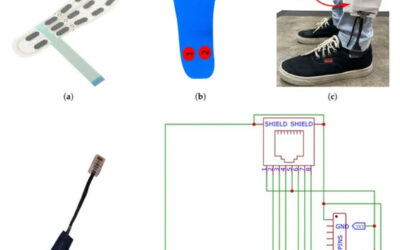
In a new study from Brazil, researchers developed an Internet-of-Things (IoT)-based gait analysis system employing insole pressure sensors to assess gait kinetics. The system integrates piezoresistive sensors within a left foot insole, with data acquisition managed using an ESP32 board that communicates via Wi-Fi through an MQTT IoT framework (MQTT is messaging protocol for machine-to-machine communication).
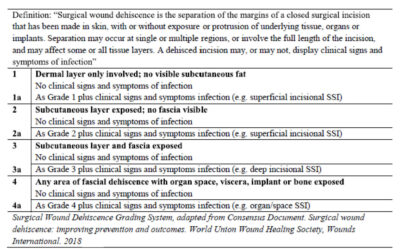
Can a Common Definition Improve Surgical Wound Dehiscence Diagnosis?
Surgical wound dehiscence (SWD) can affect up to one-third of foot-related surgeries, making it a major complication and potential threat to patient outcomes. One key reason: delayed diagnosis, which has been attributed to varying definitions. In 2018, the World Union Wound Healing Societies (WUWHS) presented a consensus-based definition and classification for SWD in 2018 to address this issue, see Figure 1.
Can Thermography Predict Diabetic Foot Ulcer Risk in Patients with Diabetes?
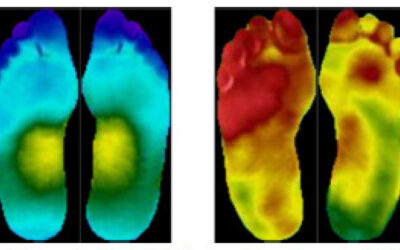
Prevalence of diabetic foot ulcers (DFUs) in patients with diabetes mellitus (DM) is growing, and the use of thermography has sparked interest in this non-invasive diagnostic method for early DFU risk assessment and management. The systematic review, conducted by an international research team, sought to explore the use of thermography to predict DFU risk in patients with DM. The research question was…
Join
Subscribe For Updates
Stay in the loop with the latest news and updates! Subscribe now to receive exclusive content, special offers, and important announcements straight to your inbox. Don’t miss out – join our community today for all the latest updates delivered directly to you.