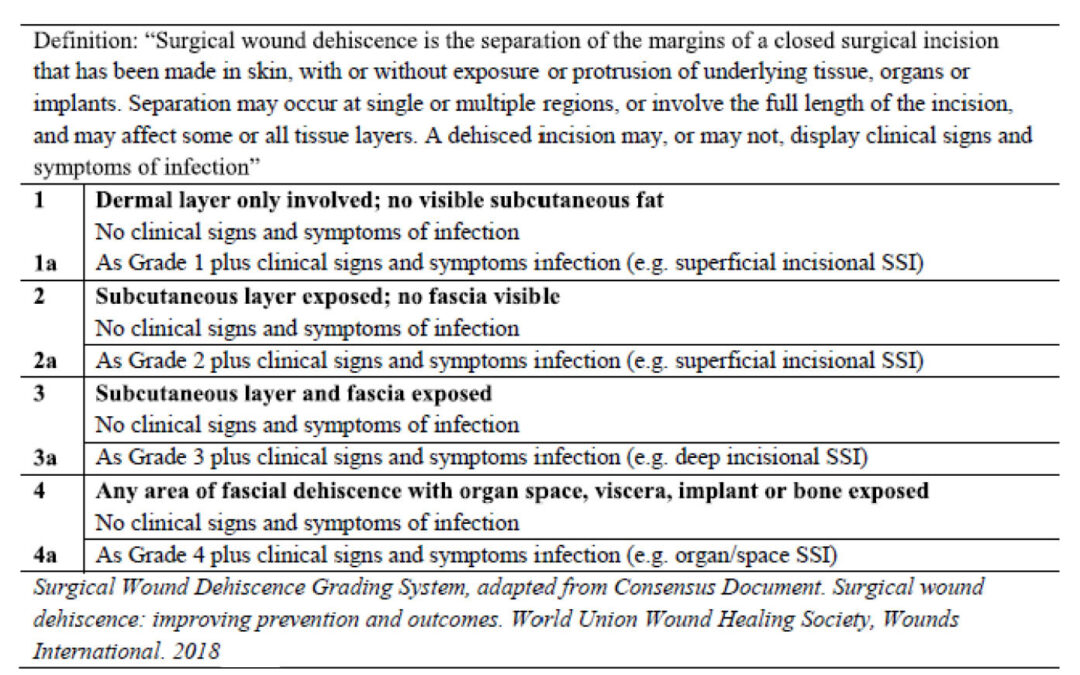









Figure 1: WUWHS SWD definition and grading system.1
Surgical wound dehiscence (SWD) can affect up to one-third of foot-related surgeries, making it a major complication and potential threat to patient outcomes. One key reason: delayed diagnosis, which has been attributed to varying definitions. In 2018, the World Union Wound Healing Societies (WUWHS) presented a consensus-based definition and classification for SWD in 2018 to address this issue, see Figure 1.
Now, 2 new studies from an extended research team in the Netherlands have examined the uptake of this definition into clinical practice.
In the first, a scoping review of the literature, Muller-Sloof et al1 examined 34 articles: 28 systematic reviews, 2 randomized clinical trials, 3 retrospective studies, and 1 book chapter; there was no restriction on year of publication. SWD was defined in different ways, such as “breakdown/disruption of the surgical wound” (n = 17), ”separation/splitting apart of the wound edges” (n = 13), “gaping/re-opened wound” (n = 7), mechanical failure (n = 2), or infection (n = 1). Other studies defined SWD in relation to its depth (skin layers involved) or length over the incision, both complete and partial (n = 9). Only 1 study referenced the WUWHS definition. Further, they found that SWD continues to be (falsely) equivalent to surgical site infection (SSI). They note that SWD and SSI can occur simultaneously in the same wound and that dehisced wounds are not always infected, as infected wounds are not always dehisced.
These authors found a variety of definitions for SWD continued to be used, at least in the literature. They found little adoption of the WUWHS definition following its introduction in 2018 and concluded that uniform use of an unambiguous definition in clinical practice will improve the ability to correctly diagnose SWD independently of SSI. Proper differentiation between SWD and SSI is crucial for appropriate treatment decisions, including conservative care, surgical intervention, and, if necessary, antibiotics. They also write that the WUWHS classification provides criteria to identify SSI, which are in line with the Centers for Disease Control and Prevention guidelines for SSI diagnosis and that both are recommended for use in clinical practice in order to accurately differentiate between SWD and SSI.
In the second study,2 the team used a quasi-experimental pretest-posttest format to investigate the inter-rater reliability among healthcare professionals (HCP) and wound care professionals (WCP) when assessing wound photos on the presence or absence of SWD before and after training on the WUWHS-definition.
Wound expert teams compiled a set of 20 photos (SWD+: 19; SWD−: 1) and a video training. Subsequently, 262 healthcare professionals received the pretest link to assess wound photos. After completion, participants received the posttest link, including a (video) training on the WUWHS-definition, and reassessment of 14 photos (SWD+: 13; SWD−: 1).
Primary outcomes included 1) pretest-posttest inter-rater-reliability among participants in assessing photos in congruence with the WUWHS-definition 2) the impact of training on assessment scores. Secondary outcome was familiarity with the WUWHS-definition.
They reported that 131 participants (65 HCPs, 66 WCPs) completed both tests. The posttest inter-rater reliability among participants for correctly identifying SWD was increased from 67.6% to 76.2%, reaching statistical significance (P-value: 0.001; 95 % Confidence Interval [1.8–2.2]). Sub-analyses per photo showed improved SWD posttest scores in 13 photos, while statistical significance was reached in 7 photos. Thirty-three percent of participants knew the WUWHS definition.
Because the definition provides diagnostic criteria for accurate SWD diagnosis, the group concluded that training on the WUWHS definition increased inter-rater reliability in correctly diagnosing surgical wound dehiscence. They encouraged widespread use of the definition as a means to improve uniformity in care for patients with SWD.
Sources (Use is per CC BY 4.0)
- Muller-Sloof E, de Laat E, Zwanenburg P, et al. Exploring the definition of surgical wound dehiscence in literature: a scoping review. J Tissue Viability. 2024: https://doi.org/10.1016/j.jtv.2024.09.006. Eprint ahead of publication.
- Muller-Sloof E, de Laat E, Baljé-Volkers C, Hummelink S, Vermeulen H, Ulrich D. Inter-rater reliability among healthcare professionals in assessing postoperative wound photos for the presence or absence of surgical wound dehiscence: a pretest – posttest study. J Tissue Viability. 2024:S0965-206X(24)00106-2. doi: 10.1016/j.jtv.2024.07.001.