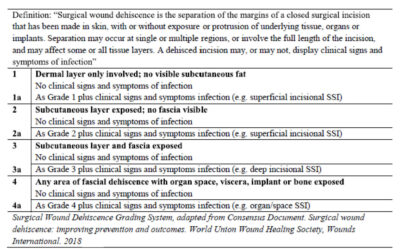
Surgical wound dehiscence (SWD) can affect up to one-third of foot-related surgeries, making it a major complication and potential threat to patient outcomes. One key reason: delayed diagnosis, which has been attributed to varying definitions. In 2018, the World Union Wound Healing Societies (WUWHS) presented a consensus-based definition and classification for SWD in 2018 to address this issue, see Figure 1.
Lower Extremity Review
Can Thermography Predict Diabetic Foot Ulcer Risk in Patients with Diabetes?
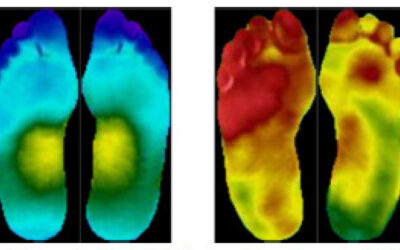
Prevalence of diabetic foot ulcers (DFUs) in patients with diabetes mellitus (DM) is growing, and the use of thermography has sparked interest in this non-invasive diagnostic method for early DFU risk assessment and management. The systematic review, conducted by an international research team, sought to explore the use of thermography to predict DFU risk in patients with DM. The research question was…
Aerobic Exercise Boosts Muscle Regeneration in Aged Mice
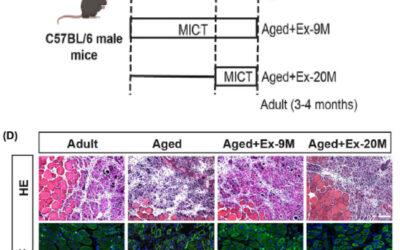
Aerobic exercise effectively reverses the decline in endurance capacity and mitigates muscle atrophy in aged mice. It inhibits CCN2 secretion from senescent muscle stem cells, thereby enhancing skeletal muscle regeneration and preventing fibrosis in aged mice. AICAR supplementation mimics the beneficial effects of aerobic exercise.
Does Texting While Walking Affect Gait’s Plantar Pressure Parameters?
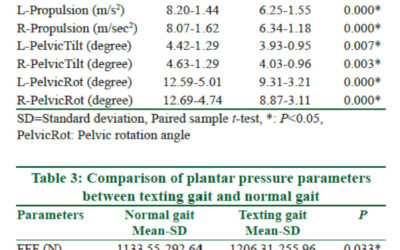
This study aims to examine the possible effects of mobile phone use on plantar pressure and spatiotemporal parameters during walking. Materials and methods: Thirty volunteers (18 males and 12 females) participated in the study. A 10-m walking path was prepared, and a messaging connection was established. Volunteers were asked to write 3 posts without word or character mistakes and to walk on the path as much as…
Smartphone Usage Negatively Impacts Standing Postural Balance
Researchers from Arizona State University and Carnegie Mellon University have found that modern smartphone usage can negatively impact standing postural balance—and that impact varies by the type of ground condition. They had 16 healthy young individuals perform 2 tasks on their smartphones while standing on 4 different types of ground surfaces…
When Sneakers and Science Collide: Game-Changing Tech at the 2024 Olympics
The 2024 Paris Olympics were nothing short of thrilling. Snoop Dogg and Martha Stewart hilariously guided us through the City of Lights with their unique blend of humor and charm. Athletes swam in the Seine, volleyball matches unfolded under the shadow of the Eiffel Tower, and breakdancing made its Olympic debut.
By Sarah Clark, MS, ATC
Technology Advances in Environment of Continuous Quality Improvement
Technology stems from the inherent human desire to improve on what we already know. As our pool of knowledge grows, new bases are formed that set the stage for the next innovation. The desire to find better, cheaper, faster solutions transcends every field. People sometimes notice the big changes and reflect on how crude it was before, not always realizing how many steps it took to make that change happen.
By Wade Bader, CPO
Accessibility of Technology for Real World Care
The last 15 years have represented an exciting period of innovation in the field of sports medicine and sport science. We have witnessed the increased accessibility of advanced technologies that were previously available only in high-grade research-lab environments and top-level clinics and centers.
By Antonio Robustelli, MSc, SCS
Reducing Falls with Remote Motion Analysis
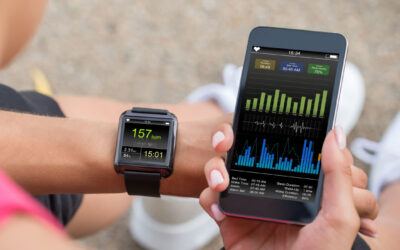
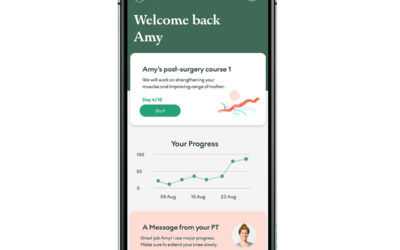
Since we announced our partnership with OneStep in April 2023, FOX Rehabilitation has seen strong results for our residents, with their smartphones turned into clinical-grade motion analysis labs. OneStep’s innovative remote care platform has empowered our clinicians to extend patient care beyond in-person visits using remote therapeutic monitoring (RTM), improving clinical outcomes, increasing patient engagement, lowering healthcare costs, and continuing to grow FOX’s reputation as a healthcare innovator.
By William Dieter, PT, DPT, GCS, FSOAE
PCR Testing for Podiatric Nail & Skin Disorders
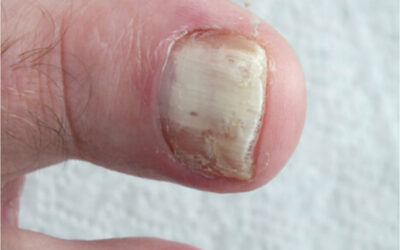
PCR (Polymerase Chain Reaction) testing is a transformative innovation in diagnosing nail and skin disorders within podiatry. Introduced for podiatric medicine about 15 years ago, PCR enables the rapid amplification of specific DNA sequences, making it a powerful tool for identifying fungal and bacterial infectious agents that cause various dermatological conditions.
By William P. Scherer, DPM, MS
Advancements in Surgical Solutions and Patient Rehabilitation
Over the last 15 years, the foot and ankle landscape has witnessed a seismic shift marked by ingenious solutions that have transformed surgical techniques, introduced a new breed of innovative products, and reshaped patient recovery. Close collaboration with surgeon partners has been key in the development of multiple innovations.
By Gary Justak
Smartphone Scanning for Orthotics
Prescription orthotics have always been a crucial part of my sports podiatry practice. Athletes of all sports, levels, and ages expect comfort and positive results with their foot, ankle, knee, and postural problems from using their orthotics. Let’s also include enhanced performance among those benefits.
By Robert Weil, DPM
Continuous Topical Oxygen Therapy for Wound Care
The utility of supplemental oxygen to support wound healing has been well-documented in the literature. Following injury, poor blood circulation, edema, injured microcirculation, and contraction of vessels in traumatized tissue limit oxygen distribution to a wound, thereby reducing the wound’s capacity to heal.
By Windy Cole, DPM, CWSP
MPFF Introduced into U.S. for Venous & Lymphatic Disease
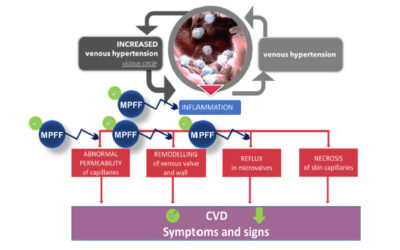
As a board-certified cardiovascular surgeon specializing in venous and lymphatic disease, I firmly believe that the introduction of micronized purified flavonoid fraction (MPFF) into the U.S. market represents perhaps the most important innovation in daily practice we’ve seen in the last 10 years.
By John Chubak, MD, FACS
3-D Printing Allows For Anatomically Precise Products
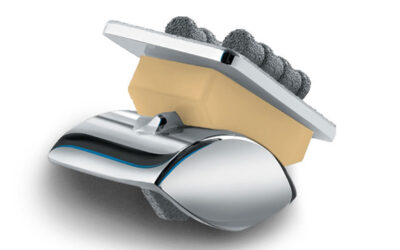
In the past 15 years, lower extremity healthcare has seen numerous innovative products that have improved patient outcomes. Determining which product has had the greatest impact is debatable, but 3-dimensional (3D) printed technologies stand out. These include non-customized implants, custom implants, patient-specific instruments and cut guides, and anatomic biomodels.
By Patrick DeHeer, DPM
Join
Subscribe For Updates
Stay in the loop with the latest news and updates! Subscribe now to receive exclusive content, special offers, and important announcements straight to your inbox. Don’t miss out – join our community today for all the latest updates delivered directly to you.