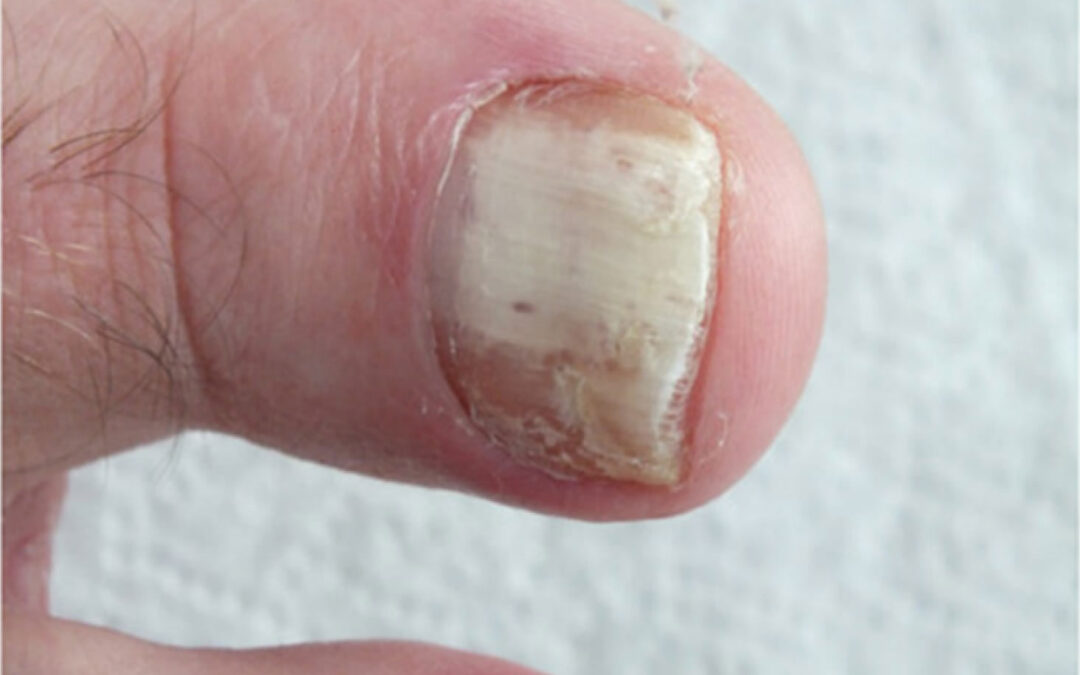








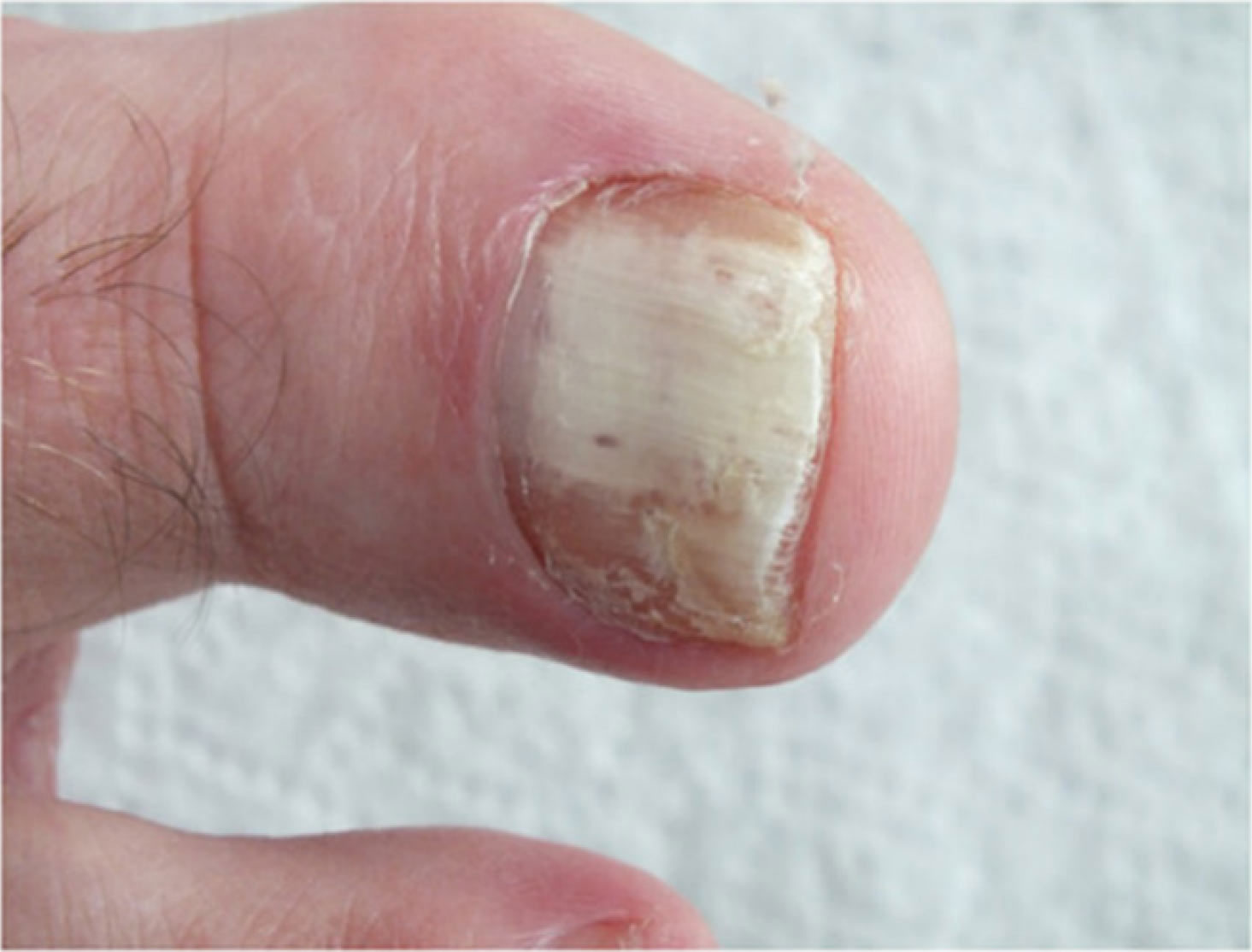
Figure 4. White superficial onychomycosis (WSO) or leukonychia trichophytica caused by Trichophyton rubrum. Mixed form of WSO with distal subungual onychomycosis; 63-year-old patient. From Nenoff P, Reinel D, Mayser P, et al. S1 guideline onychomycosis. JDDG: Journal der Deutschen Dermatologischen Gesellschaft. 2023;21:678–692. https://doi.org/10.1111/ddg.14988.
By William P. Scherer, DPM, MS
PCR (Polymerase Chain Reaction) testing is a transformative innovation in diagnosing nail and skin disorders within podiatry. Introduced for podiatric medicine about 15 years ago, PCR enables the rapid amplification of specific DNA sequences, making it a powerful tool for identifying fungal and bacterial infectious agents that cause various dermatological conditions. This capability is also crucial for diagnosing infectious diseases, including viral infections like COVID-19, where timely and accurate detection can significantly impact public health responses.
In podiatry, PCR testing is especially valuable for accurately diagnosing fungal nail infections (onychomycosis) and skin infections, such as athlete’s foot and cellulitis (Figure 4). Traditional KOH prep and fungal culture methods can be inaccurate and sometimes take several weeks for results, while PCR testing provides rapid and precise identification of pathogens (genus and species), with a higher sensitivity and specificity than older methods, allowing for individualized treatment plans that can improve patient outcomes. This is crucial in cases where timely diagnosis can prevent the spread of infection or more severe complications.
Additionally, PCR technology can help differentiate between different types of fungi (including Terbinafine-resistant strains) and bacteria, ensuring that patients receive the most effective antifungal or antibiotic therapies. This specificity reduces the risk of misdiagnosis and ineffective treatments, which can prolong suffering and lead to chronic conditions. This ensures that patients receive prompt diagnoses and appropriate care, particularly important for those with compromised health, such as geriatric patients with diabetes.
William P. Scherer, DPM, MS, is a Senior Podiatric Medical Advisor at Bako Diagnostics in Delray Beach, Florida. Before joining Bako, he had practiced podiatric medicine and surgery for more than 25 years in Delray Beach.