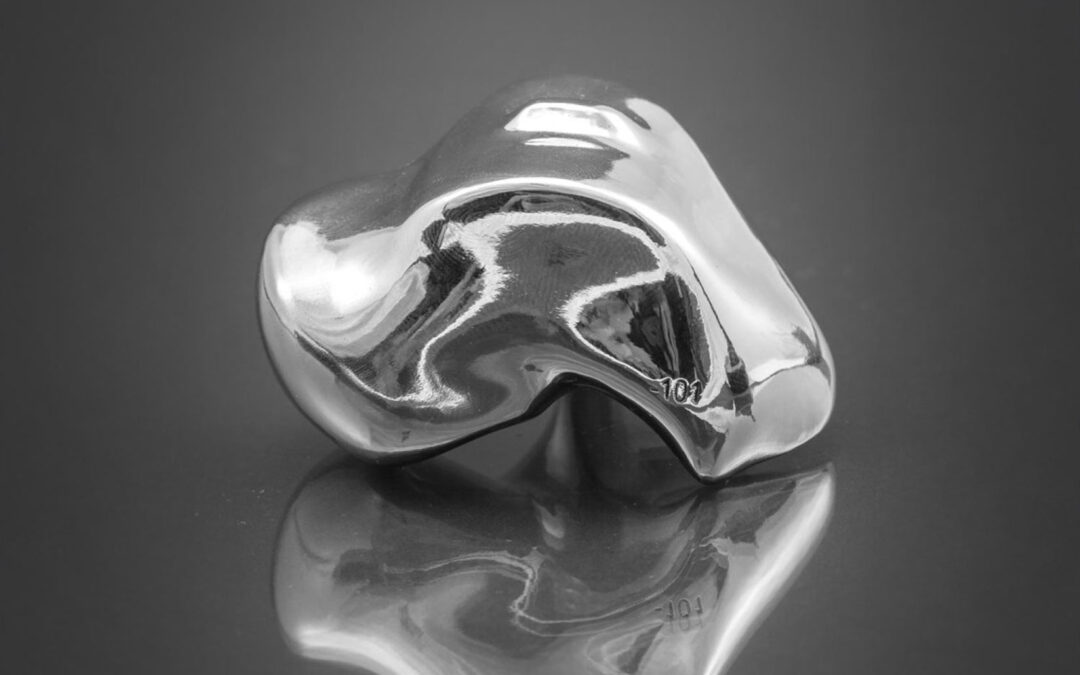








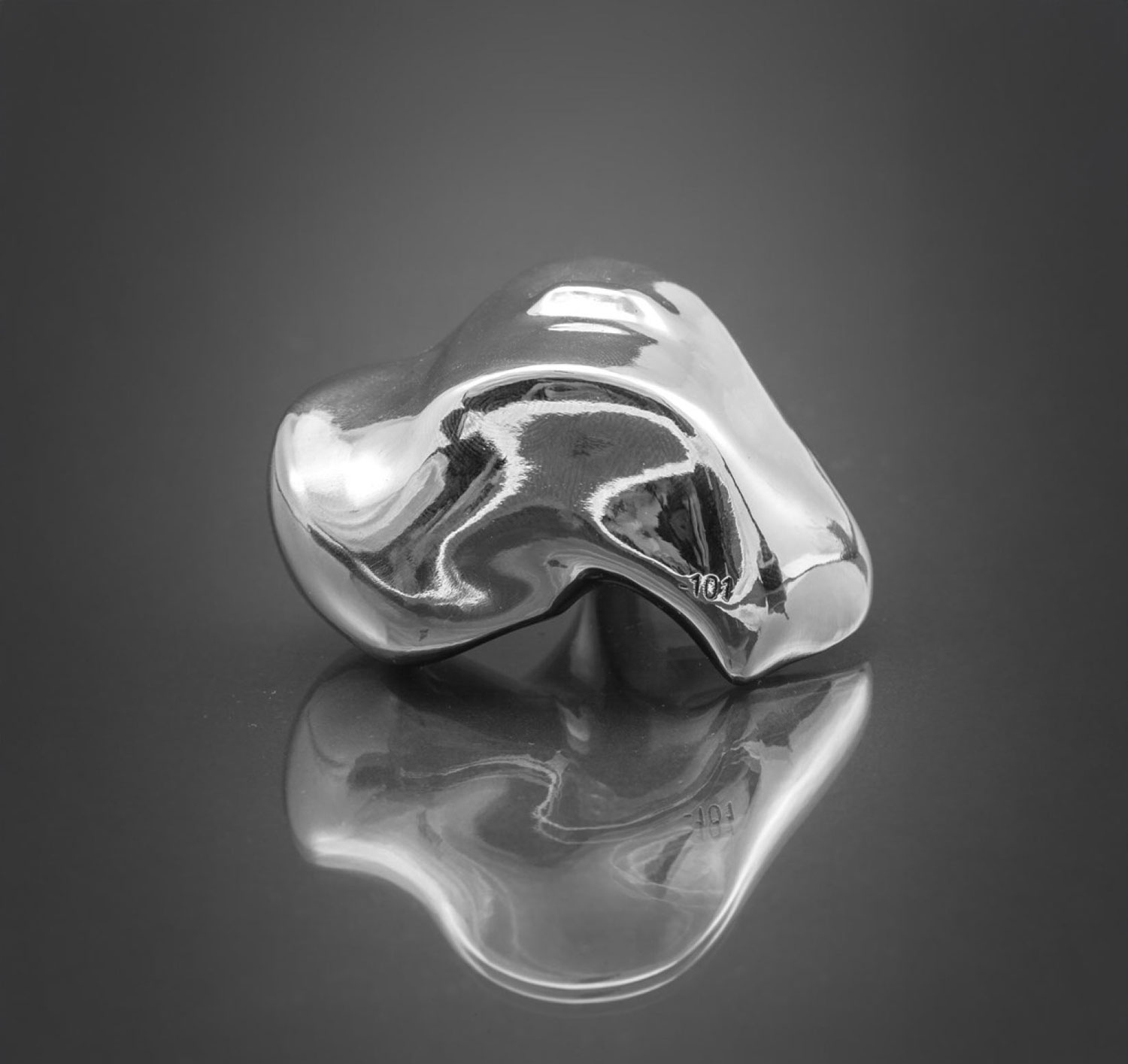
A close-up of a 3D-printed cobalt chrome talus bone implant printed by Restor3D. The company, spun out of Duke University in 2017, specializes in custom implants used for trauma and oncology cases, and off-the-shelf 3D-printed implants that have been cleared by the FDA.
By Patrick DeHeer, DPM
In the past 15 years, lower extremity healthcare has seen numerous innovative products that have improved patient outcomes. Determining which product has had the greatest impact is debatable, but 3-dimensional (3D) printed technologies stand out. These include non-customized implants, custom implants, patient-specific instruments and cut guides, and anatomic biomodels.
3D printing utilizes 2 methods: additive manufacturing, where material is built up in layers, and subtractive manufacturing, where material is removed from a base to create patient-specific products.
The complexity of the foot and ankle often leads to significant deformities due to disease, trauma, or biomechanical issues, which previously lacked reliable solutions. Now, engineering teams can create anatomically precise products based on CT scans and radiographs, collaborating closely with surgeons to tailor these devices to individual needs.
In complex cases involving segmental bone loss, deformity correction, and arthrodesis, 3D-printed implants enable predictable results that help maintain limb function and enhance patients’ quality of life. Osseous integration, or direct bonding of bone to an implant, offers an advantage over traditional bone grafts, making 3D-printed implants a valuable tool in complex reconstructive surgeries.
Patrick DeHeer, DPM FACFAS, FFPM RCPS (Glasg) is now Medical Director at Upperline – Indiana and Podiatric Residency Director at Ascension St. Vincent Hospital in Indianapolis.