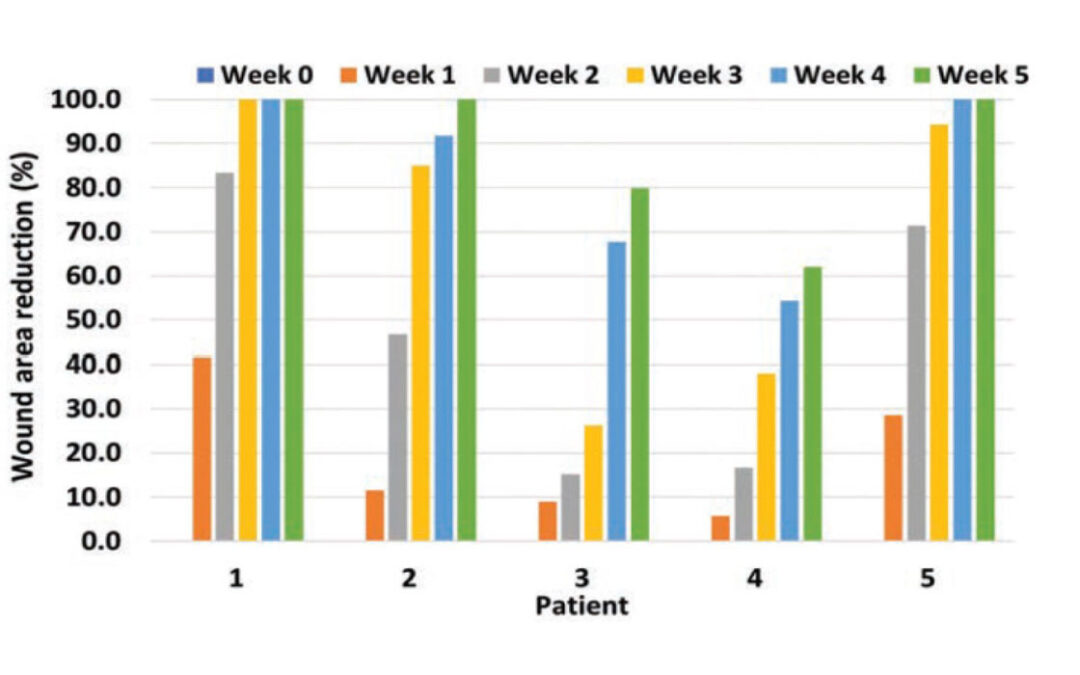








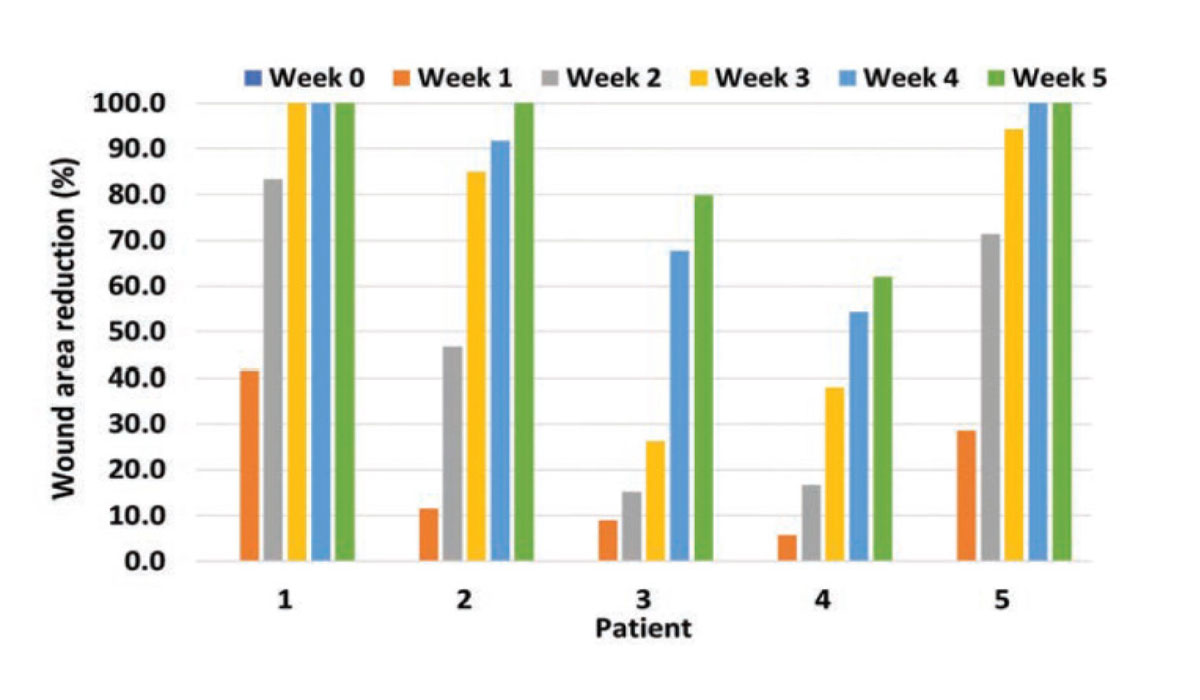
Figure 2. Percentage wound area reduction over the 5-233k observation period. Reprinted from Cole W, Woodmansey E. Monitoring the effect of continuous topical oxygen therapy with near-infrared spectroscopy: a pilot case series in wound healing. Wounds. 2024;36(5):154-159. doi: 10.25270/wnds/23150. © 2024 HMP Global. All rights reserved.
By Windy Cole, DPM, CWSP
The utility of supplemental oxygen to support wound healing has been well-documented in the literature. Following injury, poor blood circulation, edema, injured microcirculation, and contraction of vessels in traumatized tissue limit oxygen distribution to a wound, thereby reducing the wound’s capacity to heal. Oxygen plays an essential role in multiple wound-healing processes including oxidative killing of bacteria, cellular signaling through growth factors and cytokines, and proliferation, collagen deposition, and angiogenesis. Thereby, increasing oxygen levels via supplemental oxygen in the ischemic tissue reverses hypoxic conditions, reduces ischemic pain, supports the healing process, reduces inflammation, and decreases the risk of infection and biofilm.
Various methods of supplying supplemental oxygen therapy include hyperbaric oxygen therapy (HBOt) and topical oxygen therapy (TOT). HBOt involves delivering systemic oxygen to the patient via a high-pressure chamber for 90 minutes 5 days a week. HBOt is available at specialty clinic or hospital locations and is not portable. Thus, HBOt is not suitable for home or community use. However, continuous topical oxygen (cTOT) devices are now widely available. cTOT represents a significant advancement in delivering supplemental oxygen treatments to patients suffering with chronic wounds. cTOT devices are innovative, easy to use, and lightweight, delivering continuous oxygen directly to the wound bed. cTOT devices are portable, thus oxygen delivery is maintained 24 hours a day, 7 days a week, allowing the patient to continue to perform activities of daily living uninterrupted. The treatment is low-risk and is easy to use in a wide range of care settings and in a variety of chronic wound types. Understanding the utility of cTOT as an alternative method of chronic wound pain management has the potential to impact a large segment of the population who do not have access to effective treatment options.
Dr. Cole has practiced in Northeast Ohio for over 22 years. She is an adjunct professor and Director of Wound Care Research at Kent State University College of Podiatric Medicine. She is double board certified by the American Board of Foot and Ankle Surgery and the American Board of Wound Management. She is an ACCWS board member and a Fellow of the Royal College of Physicians and Surgeons Glasgow. She has been a dedicated wound care advocate for two decades with interests focused on medical education, diabetic foot care, wound care, limb salvage, & clinical research.