Fitter International’s Fitterfirst Extreme Balance Board Pro was designed for balance and sports training, aimed for use at home or at fitness facilities. With a challenging 360-degree rotation, this is the most advanced board offered by the company.
Lower Extremity Review
Hatchbacks Slide V
Hatchbacks adaptive footwear was developed for the special needs children’s and youth community. This footwear utilizes an exclusively engineered last (foot form) based on extensive patient fittings that offer extra depth and width along with innovative functional features.
PRO-PODS Release and Stabilization Exercise Tools
OPTP has introduced the PRO-PODS Release & Stabilization Tools. Sold as a pair, these lightweight and portable exercise tools feature a textured domed top and a smooth, flat bottom. Measuring 6 ½” x 3 ½” x 2″, the oval-contour shape fits under both hands and feet comfortably, allowing for a…
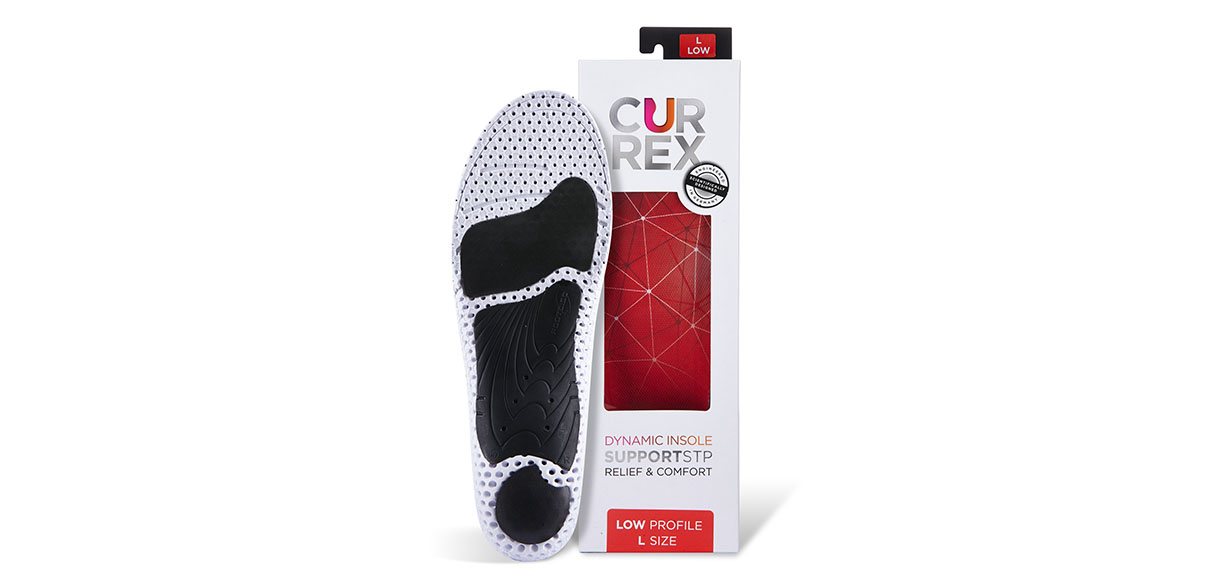
CURREX SupportSTP Insoles
CURREX SupportSTP insoles are designed to support the foot and its natural movement. Designed for comfort and relief from foot pressure, SupportSTP may help reduce pain from plantar fasciitis. These insoles deliver stability as well as premium shock absorption and cushioning for endless walking, golfing, or light work.
Moflex Foot and Ankle Training
Moflex, which stands for Motion Flexibility, is a portable device that helps improve foot stability and ankle mobility. It can be used in fitness, sports training, daily function, and injury rehabilitation and prevention. The device is based on the science of correcting proper foot loading patterns.
How Well Did You Read This Issue?
Test your knowledge of information from this issue of Lower Extremity Review and the world in general with our new crossword puzzle feature.
#1: Why Biomechanics Matter— What Are the Clinical and Athletics Ramifications
We all strive for healthy and happy lives, and many of us are fortunate to reach these goals. For these people, living in the physical world is not a challenge but a pleasure. The world does not overwhelm them; rather, it interacts and plays with them in enjoyable ways. To quote Walt Whitman, we “swim with the swimmers, wrestle with the…
By Paul DeVita, PhD
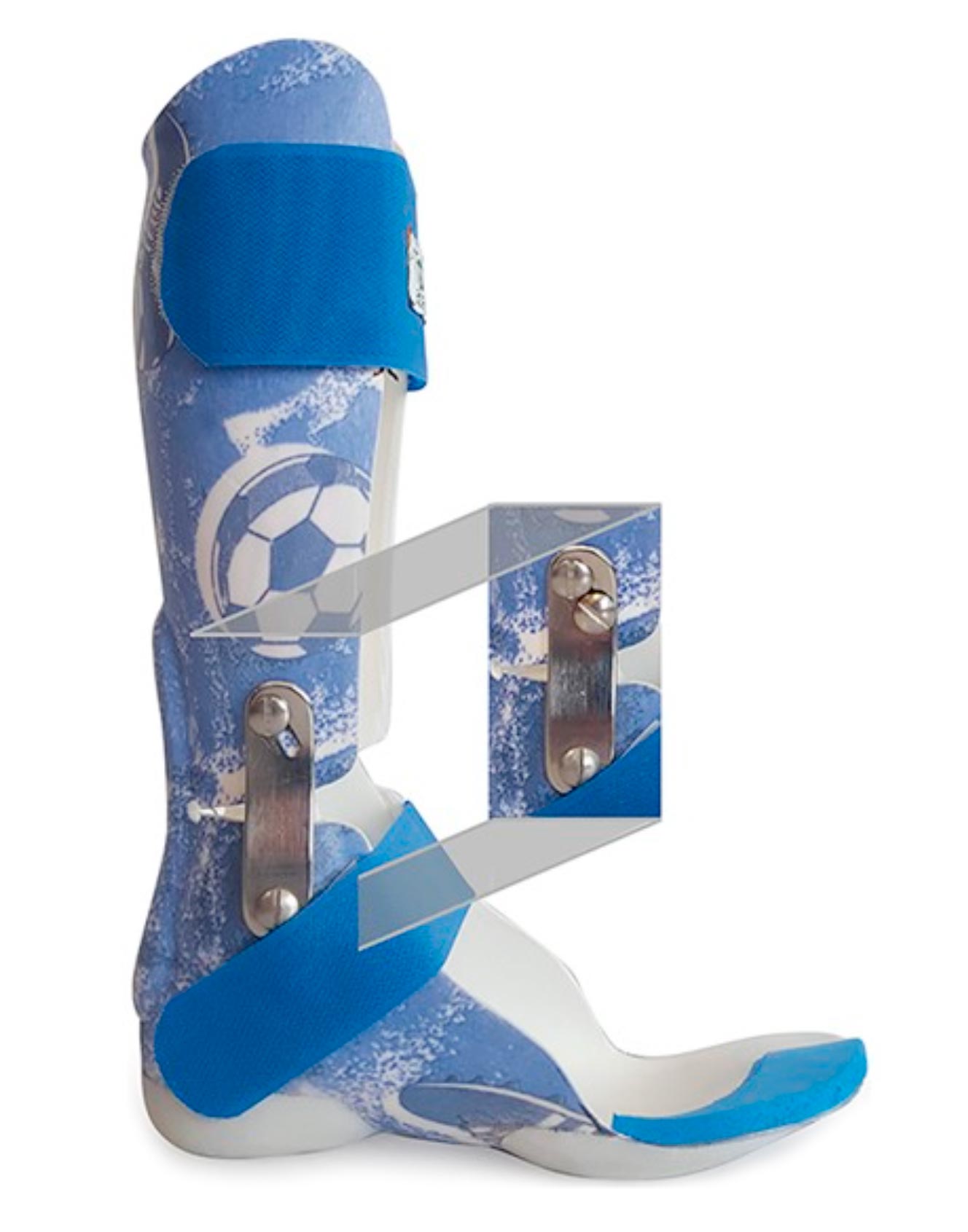
AFO Configuration Can Improve Efficacy of the Orthotic Intervention on Gait Patterns in CP Patients
Cerebral Palsy (CP) represents the most common cause of motor disability in childhood with dysfunctional gait being one of the main problems. Early adoption of intervention programs adapted to the patient’s functional limitation and disability represent the current standard of care; therapeutic approaches include Ankle-Foot Orthoses (AFOs) for which the evidence shows they…
By Keith Loria
Negative-Pressure Wound Therapy in Diabetic Foot Ulcers
Use of negative-pressure wound therapy (NPWT) is growing in the management of complex wounds as well as foot and ankle surgery. Researchers from Rush University Medical Center in Chicago and Wake Forest Baptist Health Center in North Carolina recently published a review of the evidence for NPWT in Foot & Ankle International. Their findings related to diabetic foot and neuropathic ulcers are excerpted here.
Updated Treatment Guideline for OA Published
The American College of Rheumatology (ACR) and the Arthritis Foundation (AF) partnered to update and publish the 2019 ACR/AF Guideline for the Management of Osteoarthritis [OA] of the Hand, Hip and Knee. Last published in 2012, the updated guideline includes contributions to the literature since the last publication, and for the first time direct patient participation was incorporated.
By Laura Fonda Hochnadel
What you need to know about coronavirus disease 2019 (COVID-19)
Coronavirus disease 2019 (COVID-19) is a respiratory illness that can spread from person to person. The virus that causes COVID-19 is a novel coronavirus that was first identified during an investigation into an outbreak in Wuhan, China. COVID-19 is spreading from person to person in parts of the United States. Risk of infection with COVID-19 is higher for people who are close contacts of someone known to have COVID-19, for example healthcare workers, or household members.
How Well Did You Read This Issue?
Test your knowledge of information from this issue of Lower Extremity Review and the world in general with our new crossword puzzle feature.
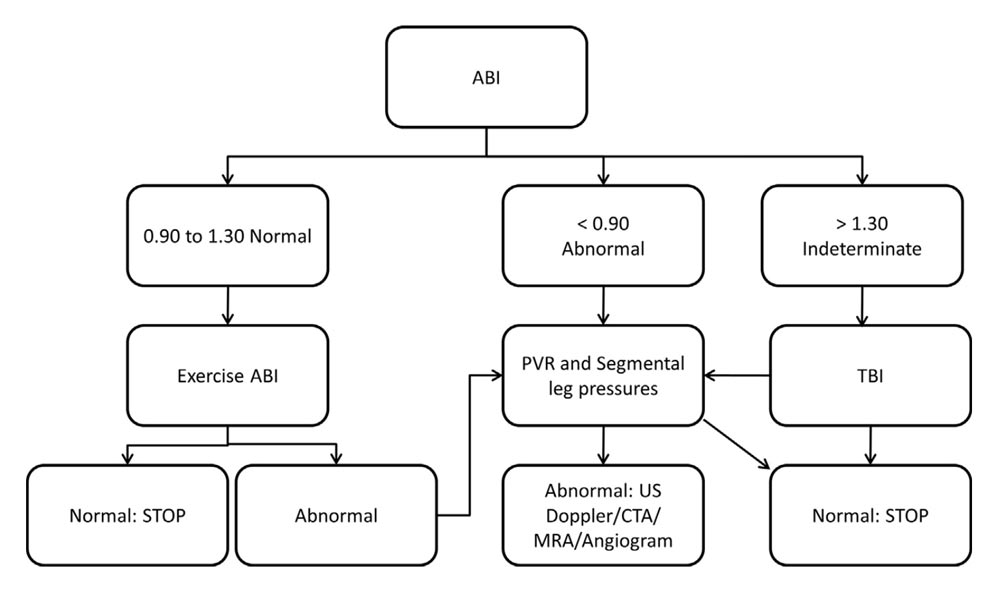
Lower Extremity Noninvasive Vascular Testing Update
Peripheral arterial disease may be a common finding among those over 50, but it remains underdiagnosed. Choosing the right diagnostic test is key. Eight million men and women in the United States have lower extremity peripheral arterial disease (PAD).1 PAD is a common finding among patients over age 50, yet it is frequently underdiagnosed.
By Brittany Mammano, DPM, PGY-1, and Saba Sadra, DPM, MSc
Injury Prevention Keeps Dancers on Their Toes
Unique partnership between University Hospitals’ Sports Medicine Team and the Cleveland Ballet focuses on performer preparation to avoid long-term problems. Efficient movement in ballet is easy to recognize, as every step the dancer takes flows seamlessly into the next, representing a perfect balance of muscular engagement and release.
By Douglas J. Guth
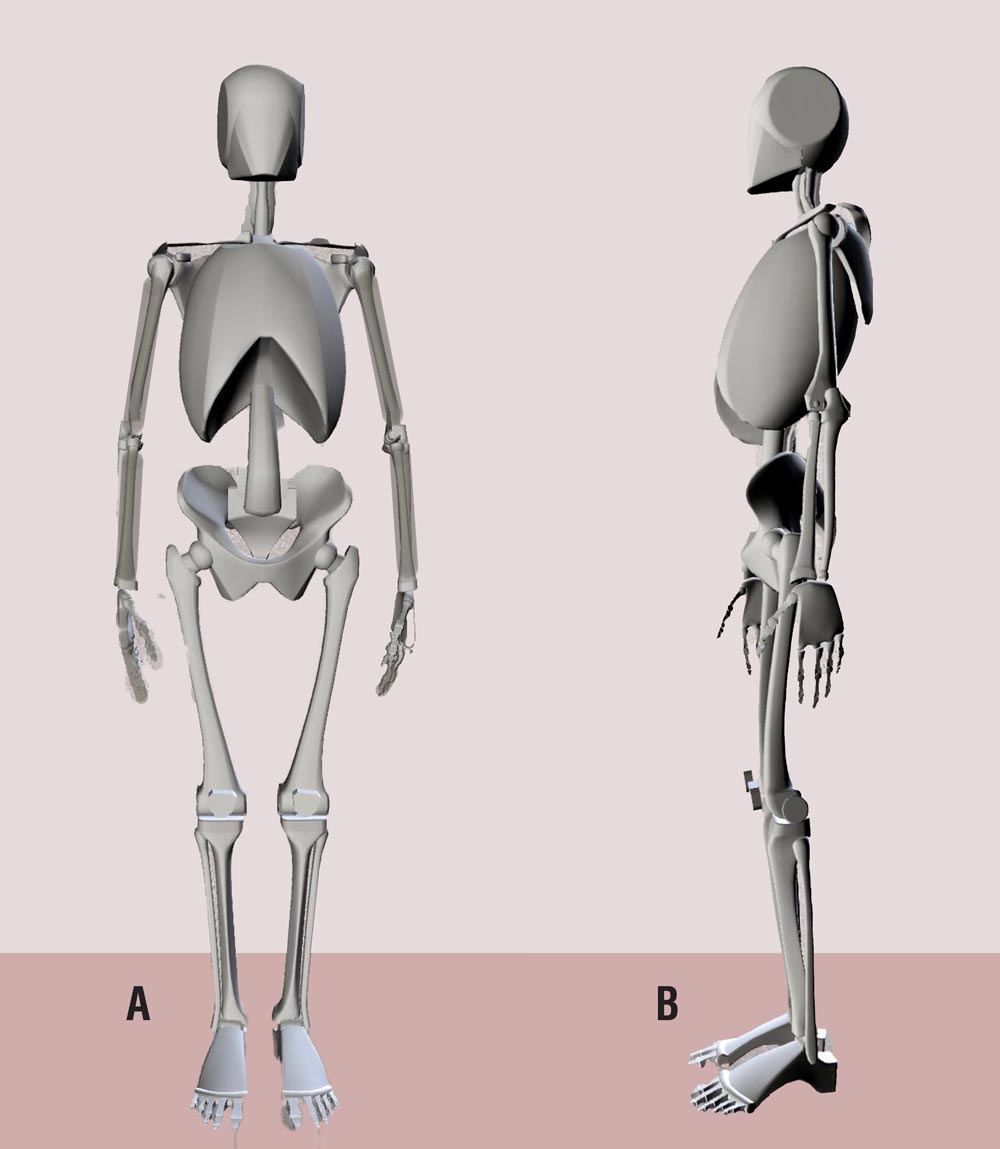
CLINICAL PERSPECTIVE: Assessing Relaxed Standing Alignment and Posture in Autism Spectrum Disorder
Use the scale provided here to help you assess standing posture, including the nature and extent of deviation from normal, in children with a developmental disability. Proper standing alignment requires that muscles, bones, and joints are in correct relation to each other, creating elongation and symmetry while counteracting the detrimental force of gravity.
By Dalia Zwick, PT, PHD
Join
Subscribe For Updates
Stay in the loop with the latest news and updates! Subscribe now to receive exclusive content, special offers, and important announcements straight to your inbox. Don’t miss out – join our community today for all the latest updates delivered directly to you.