Promising New Treatment for Diabetic Wounds

Promising New Treatment for Diabetic Wounds

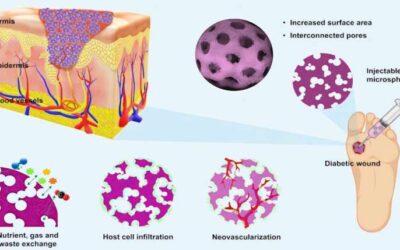
Researchers at the Terasaki Institute for Biomedical Innovation (TIBI) have developed a revolutionary injectable granular filler that could transform the way diabetic wounds are treated, potentially improving patient outcomes. The research team from TIBI and the University of Nebraska Medical Center (UNMC) developed a…
read more
Swedish Research Team Develops Soft, Robotic Ankle Exoskeleton

Swedish Research Team Develops Soft, Robotic Ankle Exoskeleton

A team of researchers from KTH Royal Institute of Technology (KTH) and Karolinska Institutet, both located in Stockholm, Sweden, have developed a soft, robotic ankle exoskeleton consisting of actuation and transmission systems to assist 2 degrees of freedom simultaneously: dorsiflexion and eversion, then performed several proof-of-concept experiments on non-disabled persons.

read more
New Flexible Sensor Can Improve Compression Therapy

New Flexible Sensor Can Improve Compression Therapy

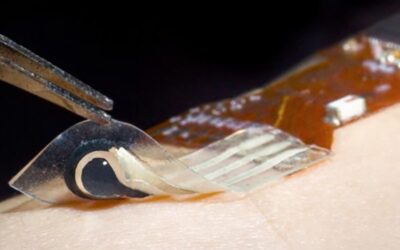
Scottish scientists have developed a low-cost, flexible device that can help prevent blood clots for patients after an operation. Their polymer-based sensor fits underneath bandages and compression stockings like a sticking plaster, and a handheld reader measures whether the bandage is exerting the correct pressure on the body.

read more
“Lighting Up” Bacteria in Wounds for Better Infection Prevention

“Lighting Up” Bacteria in Wounds for Better Infection Prevention

When physicians debride a wound, such as a diabetic foot ulcer, they remove as much bacteria as possible. However, they face a key limitation—not all bacteria can be seen by the human eye, and some may be missed during the debridement. Now, Keck Medicine of University of Southern California research suggests there may be a more effective method to detect bacteria during wound debridement.

read more
Bridges Consumer Healthcare Acquires KT Tape

Bridges Consumer Healthcare Acquires KT Tape

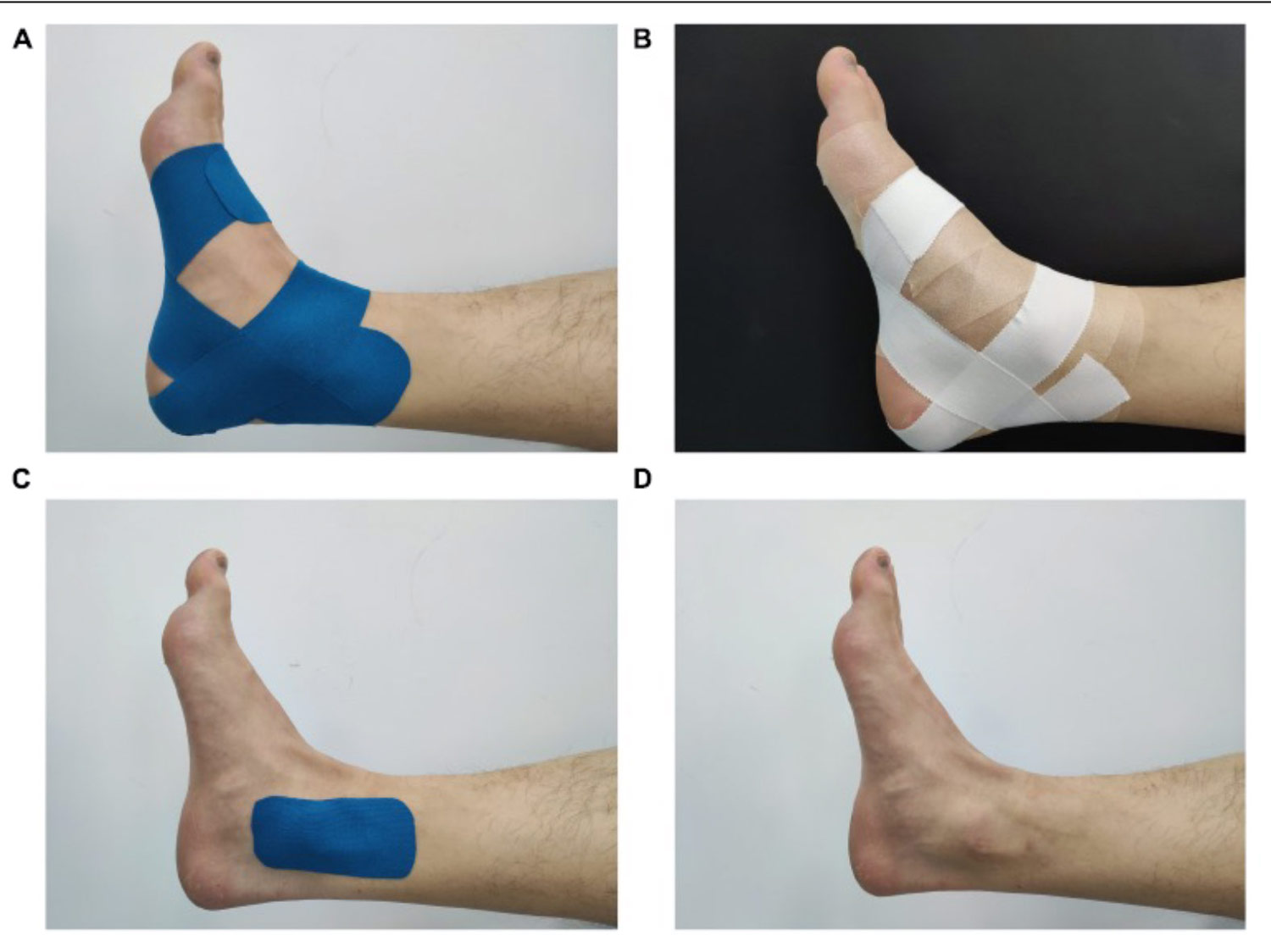
Bridges Consumer Healthcare, Chattanooga, TN, a consumer healthcare platform comprised of 9 over-the-counter (OTC) and personal care brands, has acquired KT® Tape, American Fork, UT, a kinesiology tape brand designed to provide drug-free pain relief and support for muscles, tendons, and ligaments.

read more
Walking in Lockstep

Walking in Lockstep

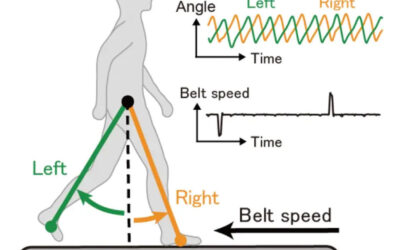
Researchers at Osaka University, Japan, have used experimental data and Bayesian inference to study the control of leg motion during walking, and find that intervention occurs only when discoordination exceeds a certain threshold, which may improve rehabilitation methods.

read more
New Prosthetic Foot Inspired by the Human Anatomy

New Prosthetic Foot Inspired by the Human Anatomy

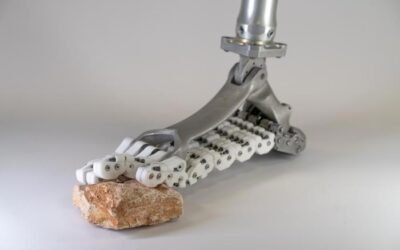
The new SoftFoot Pro is a motorless, flexible, waterproof prosthetic foot that is inspired by the anatomy of the human extremity. Designed by the Istituto Italiano di Tecnologia (IIT, Italian Institute of Technology), Genoa, its design is unique on an international level and aims to serve both as a flexible technological prosthesis for people with limb loss and as a solution for humanoid robots of the future.

read more
Synthetic Plugs Offer Alternative to Total Knee Replacements

Synthetic Plugs Offer Alternative to Total Knee Replacements

Osteochondral defects (OCDs) can cause damage to cartilage and underlying bone, leading to chronic pain and loss of joint function. Depending on the extent of damage, individuals must undergo surgical treatment, the most extensive being total knee replacement. Toward this end, Melissa Grunlan, PhD, a professor in the Department of Biomedical Engineering at Texas A&M University, received a…

read more
Flexible Skin Sensor Detects Biomarkers, Offers Hope for Noninvasive Disease Monitoring

Flexible Skin Sensor Detects Biomarkers, Offers Hope for Noninvasive Disease Monitoring

Researchers from the National University of Singapore (NUS) and the Agency for Science, Technology and Research (A*STAR) have developed a novel sensor, which is produced using a scalable and cost-effective manufacturing process called screen printing. It enables the continuous, real-time detection of solid-state epidermal biomarkers (SEB)—a new category of health indicators.

read more
Smart Bandage Can Detect How a Wound is Healing

Smart Bandage Can Detect How a Wound is Healing

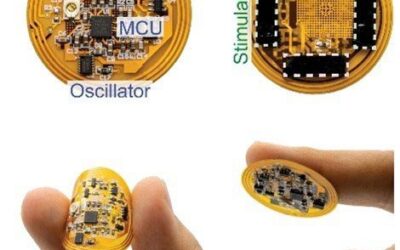
Researchers at Stanford University report that they have developed a wireless smart bandage that has shown promise in speeding up tissue repair by monitoring the wound healing process and treating the wound simultaneously. The researchers said that their device promotes faster closure of wounds, increases new blood flow to injured tissue, and enhances skin recovery by significantly reducing scar formation.

read more
Dancing Molecules Heal Cartilage Damage

Dancing Molecules Heal Cartilage Damage

In November 2021, Northwestern University researchers introduced an injectable therapy, which harnessed fast-moving “dancing molecules,” to repair tissues and reverse paralysis after severe spinal cord injuries. Now, the same research group has applied the therapeutic strategy to damaged human cartilage cells. The treatment was shown to activate the gene expression necessary to regenerate…

read more
Bio Leg Named 2025 Best of Innovation by CES Innovation Awards

Bio Leg Named 2025 Best of Innovation by CES Innovation Awards

BionicM, Tokyo, Japan, announced that its powered prosthetic knee, Bio Leg®, was named a 2025 Best of Innovation in Accessibility & AgeTech by the CES Innovation Awards® 2025 program. The prosthesis offers a new walking experience through its power-assist feature, which sets it apart from traditional prosthetic devices. In May 2024, it received U. medical insurance coverage approval.

read more
New Biomaterial Promotes Cartilage Growth

New Biomaterial Promotes Cartilage Growth

Northwestern University scientists have developed a new bioactive material that successfully regenerated high-quality cartilage in the knee joints of a large-animal model. Although it looks like a rubbery goo, the material is actually a complex network of molecular components, which work together to mimic cartilage’s natural environment in the body.

read more

Join

Subscribe For Updates

Stay in the loop with the latest news and updates! Subscribe now to receive exclusive content, special offers, and important announcements straight to your inbox. Don’t miss out – join our community today for all the latest updates delivered directly to you.