







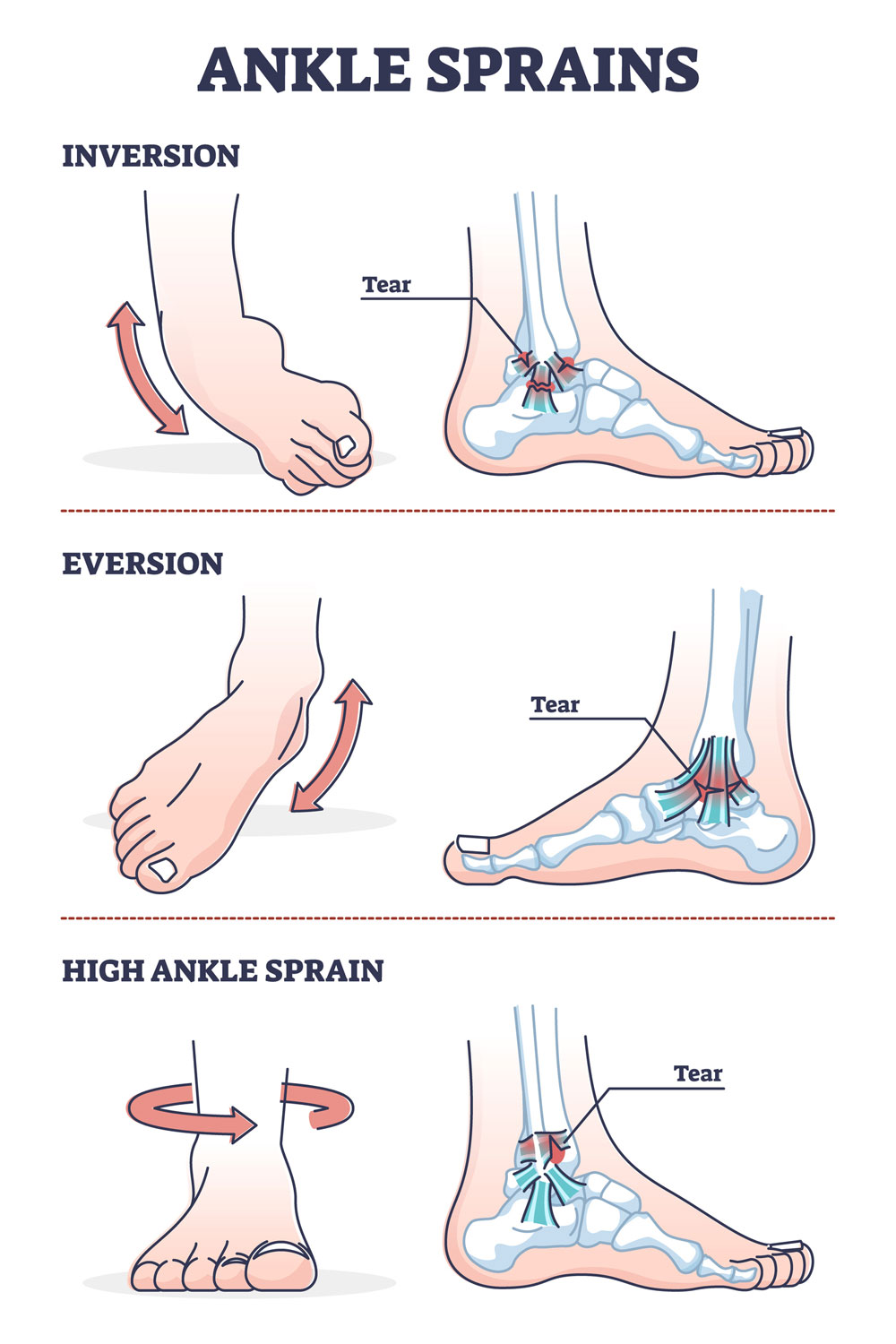
 Background: Syndesmosis ankle sprains account for 25% of all ankle sprains in National Collegiate Athletic Association (NCAA) football athletes. Typical return-to-play (RTP) time for an ankle syndesmosis sprain is approximately 8 weeks. However, in a small randomized controlled trial, it was found that the platelet rich plasma (PRP) treatment group (one injection) had a mean RTP time of 40.8 ± 8.9 days. Ultrasound guided therapeutic PRP injections are an up-and-coming treatment to decrease RTP time in syndesmosis ankle sprains.
Patient: A 19-year-old male, Division-1 collegiate football player, sophomore, with a diagnosed syndesmosis ankle sprain. The athlete presented with right lower leg pain during an on-field evaluation by the team athletic trainer (AT) during practice. The athlete had no previous right lower leg injuries. During practice, another player fell on the athlete’s foot while it was plantar flexed and externally rotated. Following the incident, the athlete was unable to bear weight and was removed from the field for further evaluation. The anterior portion of the athlete’s right ankle was swollen and tender to palpate over the anterior distal tibiofibular ligament. The evaluating AT performed a Kleiger’s and Squeeze test, both were positive. Imaging revealed no fractures, but an MRI revealed a grade 2 syndesmosis ankle sprain on November 10th, 2021.
Intervention & Treatment: The team physician and AT decided 5 days after the injury, a PRP injection would add to the course of treatment and afford the athlete an opportunity to return at an accelerated rate. Following the PRP injection the athlete was partially weight bearing for one week. The athletes’ pain, swelling, and range of motion (ROM) were examined each day prior to rehabilitation by the AT. At the start of rehabilitation, the athlete focused on light ROM, open kinetic chain exercises, and swelling control. Each week the athlete was able to progress through the rehabilitation plan, incorporating the Hydroworx and alter-gravity treadmill to further advance the athlete to weight-bearing and closed kinetic chain exercises. Typical interventions in the literature do not include the Hydroworx and alter-gravity treadmill with PRP injection. By the beginning of week 4, the athlete started RTP activity and functional training on the turf. By the end of week 4, the athlete was able to return for non-contact practice with physician clearance due to no swelling, point tenderness, and increasing function. The athlete had physician clearance for full participation in games 34 days post-injury.
Outcomes or Other Comparisons: The athlete in the case presented was able to return for full-contact practice within 29 days of the initial injury with the use of PRP injection, Hydroworx, and alter-gravity treadmill therapy.
Conclusions: Syndesmotic ankle sprains can take a great deal of time to heal; however, the use of ultrasound guided PRP therapeutic injection, Hydroworx, and alter-gravity treadmill allowed the athlete in this case to RTP at an accelerated rate. It is important to consider other factors that were involved such as early diagnosis of the injury, decision of the medical staff to use PRP, and the rehabilitation regimen. The athlete was able to return within 29 days of injury compared to the average 40 days but was consistently participating in rehabilitation twice a day, five days a week. Adherence to the rehabilitation program was essential for progression each week.
Clinical Bottom Line: The addition of PRP into a treatment plan, including Hydroworks and alter-gravity treadmill, for syndesmosis ankle sprains could be considered an alternative approach for an accelerated RTP although more research needs to be conducted to confirm the full benefits of PRP.
Source: Malven K, Pollard-McGrandy AM, Rice L, Roskelly J, Nogle S, Covassin T. Syndesmosis Sprain in a 19-Year-Old Division 1 Collegiate Football Player: Type 2 Clinical CASE Study Abstract. J Athl Train. 2023;58(6S):264.