







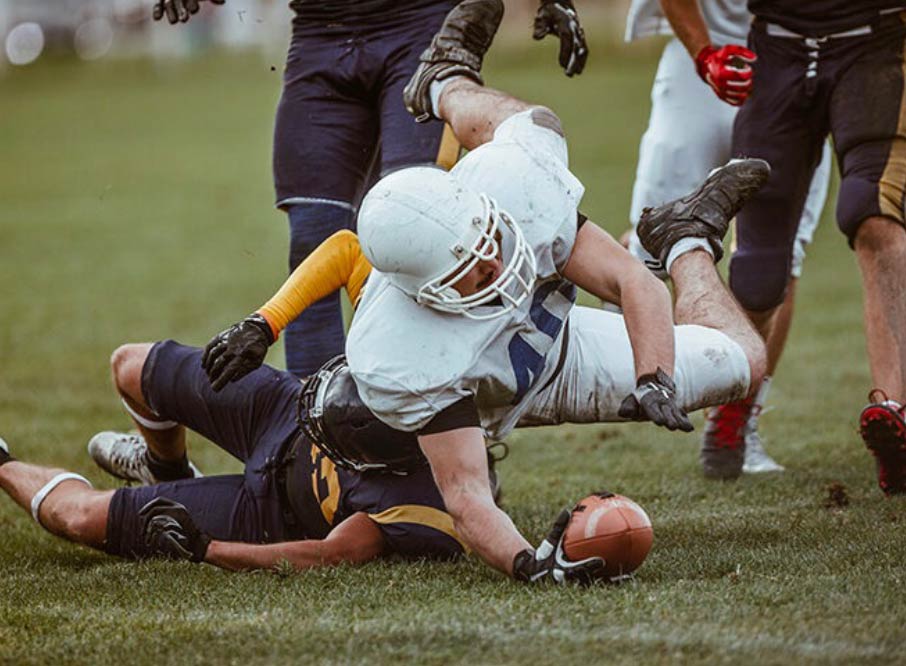
 INTRODUCTION: Single-sport specialization during adolescence has been increasingly adopted by youth athletes in pursuit of collegiate scholarships and professional careers. However, this early commitment to one sport has been associated with increased exposure to repetitive stress, potentially contributing to higher injury rates at elite levels. While the short-term musculoskeletal risks of early specialization have been documented, its long-term consequences in professional football athletes remain unexamined. This study investigates whether early sport specialization during high school is associated with increased likelihood of orthopaedic injuries among NFL athletes.
METHODS: A retrospective cohort analysis was conducted on 2,556 NFL players drafted between 2011 and 2023. Players were categorized based on verified high school athletic participation as “multi-sport” (one additional varsity sport beside football) or “single-sport” (football only). Orthopaedic injury data, including both total injuries and major injuries (defined as ≥4 missed games or Injured Reserve placement), were obtained from ESPN and ProSportsTransactions.com. To account for differential career exposures, injury incidence was calculated per 1,000 career snaps played. Poisson regression, with an offset for snap count, was used to compare injury incidence rate ratios (IRRs) between groups. Sensitivity analyses were performed across draft rounds and positions.
RESULTS: Multi-sport athletes demonstrated significantly lower rates of total injuries (1.113 ± 1.655 vs. 1.565 ± 2.201 per
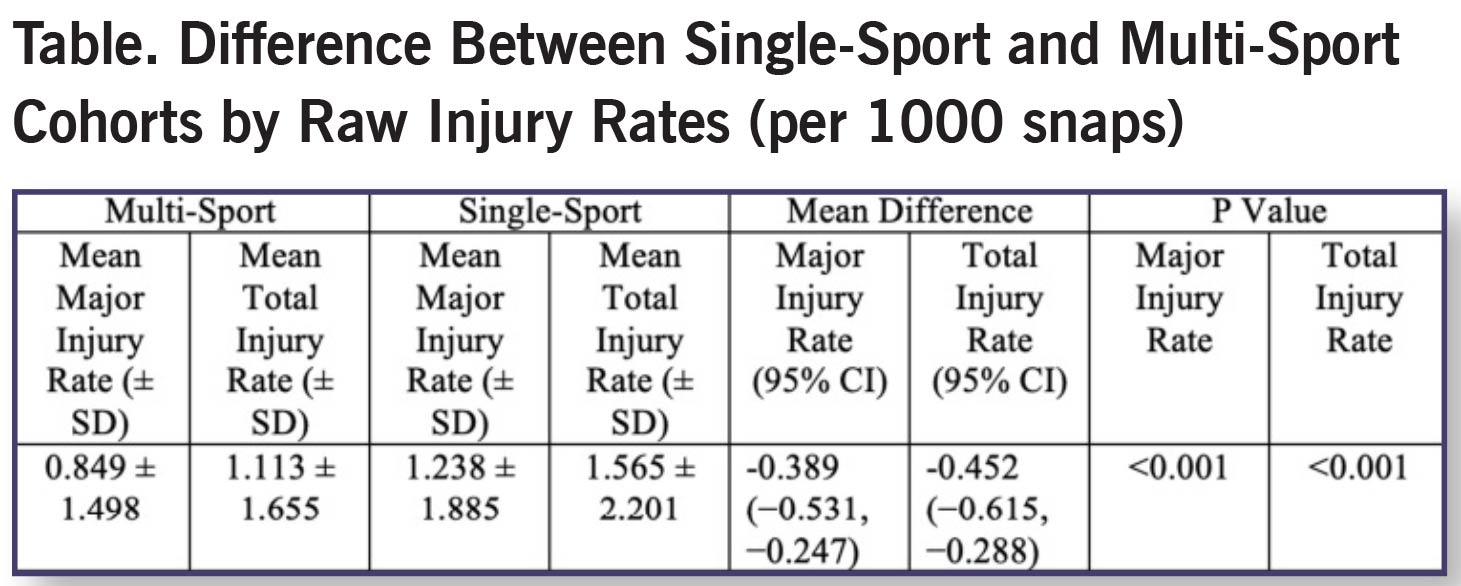 1,000 snaps, P <0.001) and major injuries (0.849 ± 1.498 vs. 1.238 ± 1.885, P <0.001) compared to their single-sport counterparts. Poisson regression was associated with a 20% reduction in total injury incidence (IRR 0.801, 95% CI 0.757–0.849, P <0.001) and a 23.5% reduction in major injury incidence (IRR 0.765, 95% CI 0.714–0.818, P <0.001) in multi-sport athletes. These differences were consistent across most position groups, excluding quarterback and offensive linemen. No significant difference was found between draft round and injury rate.
DISCUSSION AND CONCLUSION: NFL athletes who participated in multiple sports during high school were significantly less likely to sustain both total and major orthopaedic injuries on a per-play basis. This suggests that early sport diversification may lead to superior motor learning, joint stabilization, and musculoskeletal resilience. The findings add to growing evidence discouraging early single-sport specialization and support youth athletic development models that prioritize movement diversity and gradual progression in training intensity. Orthopaedic surgeons and sports medicine professionals should incorporate early sport history into risk stratification models and consider this factor when advising young athletes and their families. Further longitudinal research is warranted to explore the biomechanical and physiological mechanisms by which early sport diversification protects against injury at the elite level.
Source: Chundi G, Dawar A, Jones T, Fuller Z, Lingam S, Galdi B. Early sports specialization is associated with increased orthopaedic injury incidence in nfl athletes. Presented at 2026 Annual Meeting of the American Academy of Orthopaedic Surgeons. New Orleans, LA: March 2-6, 2026.